




01. Edit your form online
Type text, add images, blackout confidential details, add comments, highlights and more.

Type text, add images, blackout confidential details, add comments, highlights and more.

Draw your signature, type it, upload its image, or use your mobile device as a signature pad.

Send it via email, link, or fax. You can also download it, export it or print it out.
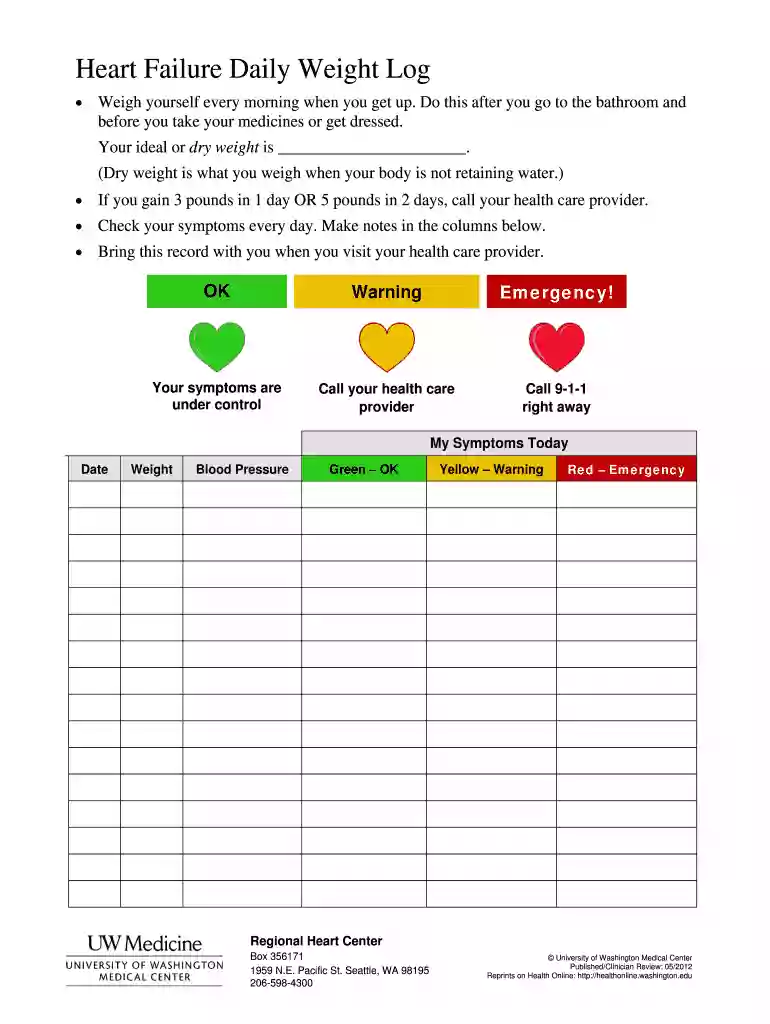
The "Heart Failure Daily Weight Log" serves as a crucial tool for individuals diagnosed with heart failure. This form is designed to track daily weight changes, which can indicate fluid retention and potential health issues. Regular monitoring helps patients and healthcare providers make informed decisions about treatment adjustments and lifestyle changes.
The log should be used daily, ideally at the same time each morning. Users should record their weight accurately, using the same scale and wearing similar clothing, to ensure consistency. Patients should also note any symptoms such as swelling, shortness of breath, or fatigue, as these can provide vital information about their heart health.
Consistent use of the log can detect early signs of fluid retention, which is often a precursor to worsening heart failure. By maintaining accurate records, patients can prevent complications and adjust their treatment plans before serious issues arise. This proactive approach can directly improve the patient’s overall quality of life.
John, a 65-year-old heart failure patient, noticed a consistent increase in his morning weight over a week. By reviewing his log, he identified a five-pound increase. He contacted his healthcare provider, who adjusted his medication to manage the fluid retention, preventing further complications.
While not a legal document, the log can serve as an essential part of medical records when discussing treatment plans or medication adjustments with healthcare providers. It is crucial for patients to maintain accuracy and honesty in their entries to ensure it remains a valuable resource.
Digital versions of the log offer convenience through apps or online platforms, providing features like automatic reminders and easy sharing with healthcare providers. However, a paper version may be preferred by those who find it easier to jot down information manually. Both versions aim to provide the same critical data for patient monitoring.
At DocHub, your data security is our priority. We follow HIPAA, SOC2, GDPR, and other standards, so you can work on your documents with confidence.
Physical examination should include measurement of the patients blood pressure and pulse, cardiac examination for conges- tive heart failure, and evaluationRead more
Heart Failure Daily Weight Log. Target Weight: If you gain two pounds in one day, or five pounds in one week, call your doctor. Weight today Symptoms today.Read more
If you gain 3 pounds in 1 day OR 5 pounds in 2 days, call your health care provider. Check your symptoms every day. Make notes in the columns below. BringRead more


