
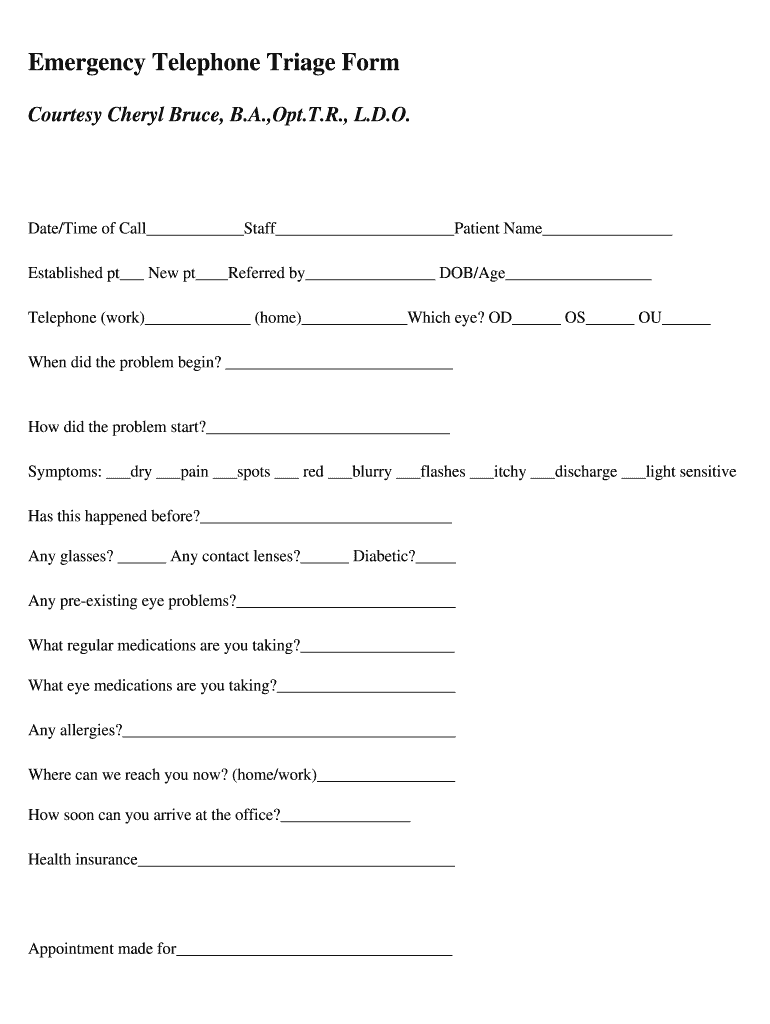







Definition and Purpose of the Nursing Telephone Triage Template
The nursing telephone triage template serves as a vital tool for healthcare professionals to assess patient needs effectively over a phone call. It facilitates structured communication during triage procedures, ensuring that nurses can efficiently gather essential information from patients regarding their health concerns. By standardizing the process, this template helps in prioritizing care based on the severity of symptoms and aids in clinical decision-making.
Typically, a nursing telephone triage template includes sections for patient identification, contact details, a summary of symptoms, relevant medical history, and notes for follow-up or referral. Utilizing a comprehensive template allows triage nurses to streamline their workflow, enhance documentation accuracy, and improve patient safety.
Importance in Emergency Scenarios
- Quick Decision-Making: In emergencies, the template aids in rapidly identifying critical cases that require immediate attention.
- Consistent Documentation: By adhering to a standard format, the documentation remains clear and consistent across various cases, minimizing risks of miscommunication.
How to Use the Nursing Telephone Triage Template
Employing the nursing telephone triage template effectively involves several steps that guide nurses in gathering pertinent information during calls with patients.
- Initiate the Call and Collect Patient Information: Start by confirming the patient's identity, including their name, date of birth, and contact number. This establishes a clear communication channel.
- Document Symptoms and Concerns: Encourage the patient to describe their symptoms in detail. Record this information in the appropriate sections of the template.
- Assess Medical History: Inquire about any pre-existing conditions, allergies, or medications the patient is currently taking. This context helps in evaluating potential complications or contraindications.
- Educate and Advise: Based on the gathered information, provide guidance on the best next steps—whether that's scheduling an appointment or directing the patient to urgent care.
- Follow-Up Notes: Make notes on follow-up actions, such as referral to a specialist or additional instructions for the patient. Record any advice given and document patient understanding.
Tips for Effective Use
- Ensure Clarity: Use simple language and encourage patients to elaborate on their symptoms.
- Use Active Listening: Repeat back key details to verify accuracy and ensure that important information is not overlooked.
Key Elements of the Nursing Telephone Triage Template
An effective nursing telephone triage template comprises several critical elements that enhance its utility. Each section serves a specific function in guiding the call process and ensuring thorough documentation.
- Patient Information Section: This includes basic demographics such as name, age, gender, and contact information. Accurate details are essential for follow-up and record-keeping.
- Symptom Description: This part prompts the patient to articulate their current concerns. It may include a checklist of common symptoms to aid in quick assessment.
- Medical History: A section dedicated to prior health issues, ongoing treatments, and allergies helps triage nurses evaluate the patient’s background comprehensively.
- Assessment Criteria: The template may include guidelines for assessing symptom severity, prioritizing urgent cases, and determining the need for immediate intervention.
- Follow-Up Actions and Notes: Documentation of the triage conclusion, recommended actions, and any scheduled follow-ups ensures continuity of care.
Example Structure
- Patient Information
- Symptom Checklist
- Medical History
- Triage Assessment
- Recommended Follow-Up Actions
Steps to Complete the Nursing Telephone Triage Template
Completing the nursing telephone triage template involves methodical steps that ensure all necessary information is collected for a thorough assessment of the patient's condition.
- Verify Patient Identity: Confirm the patient's identity and ensure they have access to their medical history if needed.
- Begin Symptom Inquiry:
- Ask open-ended questions.
- Use prompts to guide the discussion towards specific symptoms.
- Collect Medical History: Go through the medical history section, asking key questions about previous conditions, surgeries, and current medications.
- Document Everything: As the conversation progresses, fill out the template with accurate data. Ensure spelling and information are correct to avoid confusion later.
- Evaluate and Conclude: Once all information is captured, summarize your assessment based on the format of the template. Make clear recommendations for the patient.
Common Pitfalls to Avoid
- Incomplete Documentation: Ensure no section is left blank, as this could lead to safety issues.
- Ignoring Patient Concerns: Always give patients the time to express their concerns fully; this builds trust and often leads to valuable insights.
Who Typically Uses the Nursing Telephone Triage Template
The nursing telephone triage template is predominantly utilized by healthcare professionals, particularly in settings that require efficient patient assessment over the phone.
- Registered Nurses: Often the first point of contact for patients, nurses use the template to triage cases effectively.
- Triage Coordinators: Individuals responsible for managing patient flow and inquiries benefit from structured templates to maintain efficiency.
- Urgent Care Facilities: Nurses in urgent care settings frequently rely on these templates to assess patients calling in with various concerns.
- Telehealth Providers: With the rise of telemedicine, nurses and allied health professionals utilize telephone triage templates to perform remote assessments.


Broader Impact
Using the nursing telephone triage template not only enhances individual patient interactions but also contributes to overall healthcare efficiency by streamlining triage processes in various healthcare settings.
Legal Use of the Nursing Telephone Triage Template
Legal considerations in utilizing the nursing telephone triage template are crucial, as proper documentation and adherence to guidelines can protect both the healthcare provider and the facility.
- Compliance with HIPAA: Ensure all patient information is treated confidentially and securely. Documenting calls must adhere to the Health Insurance Portability and Accountability Act regulations.
- Liability Issues: Accurate and detailed records are vital for legal protection. In the event of a dispute or malpractice claim, well-documented triage conversations can serve as key evidence.
- Informed Consent: Nurses must ensure that patients understand the guidance provided during triage and document their comprehension and consent for recommendations made.
Recommended Practices
- Training and Protocols: Regular training on documentation and legal standards should be provided to all staff using the nursing telephone triage template.
- Review and Update Processes: Regularly review the template to ensure it complies with current legal standards and best practices in patient care.




