





Definition & Meaning
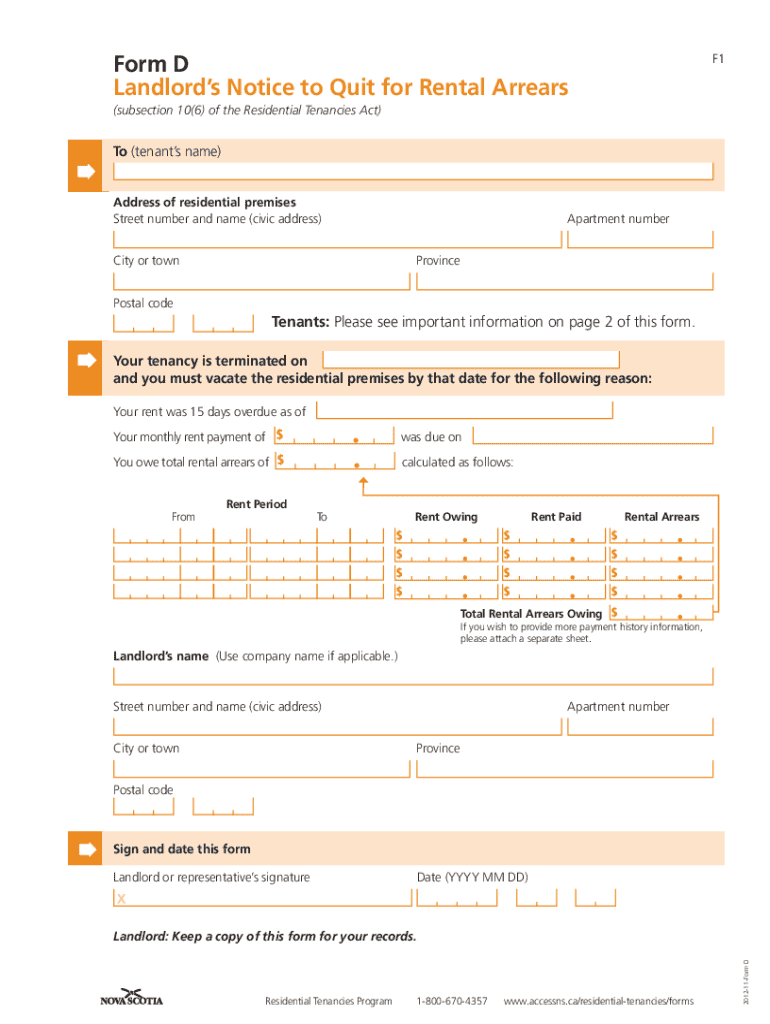
Form D in Nova Scotia is typically used in the context of rental agreements under the Residential Tenancies Act. This form serves as a formal notice from a landlord to a tenant regarding tenancy issues such as rental arrears. The document is pivotal for landlords seeking to inform tenants about overdue payments and initiate termination procedures if necessary. Understanding the implications and correct use of Form D is essential for compliance with legal rental practices within Nova Scotia.
Key Elements of the Form
Form D includes essential information such as the full name and address of both tenant and landlord, the amount of rental arrears, and the termination date of the tenancy if the arrears are not paid. These components ensure the form is complete and legally sound. Additionally, landlords must provide a precise calculation of the rental arrears, which often includes unpaid rent, late fees, and any other applicable charges.
How to Use the Form D Nova Scotia
Step-by-Step Instructions
- Identify the Parties: Clearly fill in the names and addresses of the tenant and landlord.
- Document the Arrears: Specify the exact amount of overdue rent, including a detailed breakdown of charges.
- Specify the Termination Date: Indicate the date by which the arrears must be paid to avoid tenancy termination.
- Serve the Notice: Deliver the completed form to the tenant through acceptable methods, such as hand delivery or registered mail.
- Keep Records: Retain copies of the form and any evidence of delivery for future reference or legal proceedings.
Practical Examples
- Example 1: A landlord uses Form D to notify a tenant who is three months behind on rent. The form includes details of the outstanding payments and serves as a formal request to clear the arrears by a specified date.
- Example 2: A tenant receives Form D, responding promptly by paying the due amount to avoid eviction, demonstrating the form’s role in facilitating communication and resolution.
Important Terms Related to Form D Nova Scotia
- Rental Arrears: Refers to unpaid rent that accrues over time when a tenant fails to meet scheduled payment commitments.
- Notice to Quit: A formal request from the landlord for the tenant to vacate the property due to specific infractions like unpaid rent.
- Residential Tenancies Act: Provincial legislation governing rental agreements, outlining rights and responsibilities for both landlords and tenants.
Legal Use of Form D Nova Scotia
Employing Form D adheres to the legal framework set by the Residential Tenancies Act in Nova Scotia. It provides a swift, structured process for landlords to address rental arrears and initiate tenant removal if necessary. Utilizing this form appropriately protects legal interests and supports fair rental practices.
Compliance Considerations
- Ensure completeness: All fields must be accurately filled.
- Delivery Method: Use legally acceptable methods to serve the form to tenants to ensure its validity.
- Timing: Allow adequate time for tenants to respond and rectify the arrears, aligning with provincial guidelines.
How to Obtain the Form D Nova Scotia
Methods to Acquire the Form
- Online Platforms: Downloadable from government websites or legal document services.
- Legal or Housing Agencies: Available through local offices providing tenant-landlord resources.
- Professional Assistance: Acquired through legal advisors or property management consultants.
Required Documents
Preparing to use Form D may require supplemental documentation such as the rental agreement, payment records, and any prior communications regarding overdue payments. These support the form’s claims and provide evidence for legal proceedings, if necessary.
Penalties for Non-Compliance
Failing to comply with the procedures associated with Form D can result in significant repercussions. Landlords may face legal action for not adhering to the notice requirements, while tenants might experience eviction if they do not respond promptly to the form.
Avoiding Penalties
- For landlords: Maintain accurate documentation and follow legal serving procedures.
- For tenants: Promptly address rental arrears or dispute inaccuracies in the notice through the appropriate legal channels.
Examples of Using the Form D Nova Scotia
- Case Study 1: A landlord sends multiple Form D notices over a year, each resolved through tenant payments, preventing eviction.
- Case Study 2: A tenant contests the form’s calculation in a tribunal, highlighting the importance of accurate arrears documentation and tenant rights.
These examples demonstrate the form’s role as both a resolution tool and a legal instrument, emphasizing the necessity of proper use and understanding in tenant-landlord relations.