
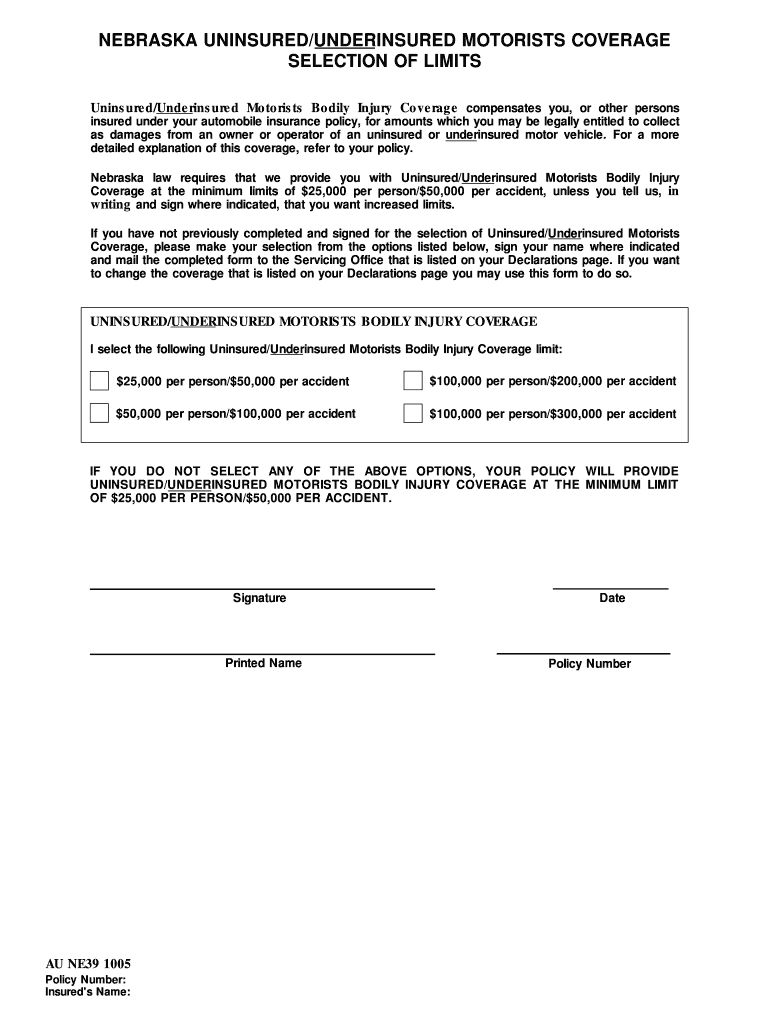







Definition and Purpose of the Coverage Change Form
The coverage change form, often referenced in insurance policies, is a document used to modify the types or amounts of coverage listed on a declarations page. This form is essential for policyholders who need to adjust their insurance coverage to better align with their current needs or circumstances. For example, if a policyholder wishes to increase their liability coverage or add additional protections, this form facilitates such changes, ensuring the declarations page accurately reflects the updated policy details.
How to Use the Coverage Change Form
To utilize the coverage change form effectively, it's important to understand the fields and requirements it contains. Begin by reviewing your current declarations page to identify the sections of your policy you wish to modify. The form will typically require you to specify the desired changes, such as increasing coverage limits or adding new types of coverage. Make sure to complete all sections of the form and verify for accuracy to prevent any delays in processing your request.
How to Obtain the Coverage Change Form
The form can usually be obtained from your insurance provider. Many insurance companies offer their forms online for easy access. You can visit the insurer’s website or contact your insurance agent directly to request a copy. In some cases, insurance portals may allow you to fill out and submit the form electronically, simplifying the process further and reducing the reliance on physical paperwork.
Steps to Complete the Coverage Change Form
- Review Your Current Policy: Examine your declarations page to determine what changes you need to make.
- Fill Out the Necessary Fields: Provide personal information and specify the changes in coverage.
- Verify Information: Double-check all entries for accuracy, ensuring that each field is complete and correctly filled.
- Submit the Form: Follow submission guidelines provided by your insurer. If submitting electronically, simply upload it to your insurer’s portal; otherwise, mail it to the designated address.
Reasons to Change Coverage via the Form
Changing your coverage is often necessary due to various life events or insights. For instance, you might increase your coverage when purchasing a new home, adding a teenage driver to your policy, or after assessing potential risks more accurately. Adjusting your policy ensures that it provides sufficient protection and may offer potential cost savings in the long term by avoiding underinsurance.
Typical Users of the Coverage Change Form
The form is commonly used by both individual policyholders and businesses. Homeowners, vehicle owners, and business entities frequently need to adjust their insurance coverage in response to evolving needs. For businesses, these forms are crucial for adapting coverage based on growth, changes in operational risk, or new legal requirements.
Important Terms Related to the Form
- Declarations Page: A section of an insurance policy that outlines the coverage types, limits, premium amounts, and insured entities.
- Policyholder: The individual or entity that owns an insurance policy.
- Coverage Limits: The maximum amount an insurer will pay for a covered loss.
State-Specific Rules for Using the Form
Insurance regulations and requirements can vary significantly from one state to another. Policies governed by state laws may affect coverage types available or mandate minimum coverage levels. For example, some states might require specific endorsements or additional documentation when requesting coverage changes. Always check for state-specific insurance regulations to ensure compliance.
Examples of Using the Coverage Change Form
- Scenario 1: Adding flood insurance to a homeowner’s policy before the rainy season begins.
- Scenario 2: A small business increasing its liability insurance after hiring additional employees to account for increased workplace risk.
- Scenario 3: A family adjusting auto insurance coverage to include a new teenage driver, potentially impacting premiums and coverage requirements.
Submission Methods for the Coverage Change Form
The form can be submitted through various methods such as online submission via the insurance company’s website, mailing it directly to the insurer's processing center, or handing it over in person at your insurance agent’s office. Electronic submissions are often preferred for quicker processing, and many insurers provide an in-app option for policyholders to make these changes easily.
Penalties for Non-Compliance
Failure to update your coverage as needed can lead to significant issues such as inadequate protection during a claim situation or even policy cancellation. It is critical to address any changes proactively to avoid penalties related to underinsurance, lapses in coverage, or non-compliance with state insurance mandates.
Software Compatibility for Form Submission
Many insurance companies offer compatibility with digital tools such as DocHub for completing and submitting forms. Using platforms that integrate with popular software solutions, like Google Drive, facilitates seamless document handling and form management. This compatibility ensures a streamlined workflow, making it easier to process forms without dealing with paper or complex conversion issues.




