




01. Edit your form online
Type text, add images, blackout confidential details, add comments, highlights and more.

Type text, add images, blackout confidential details, add comments, highlights and more.

Draw your signature, type it, upload its image, or use your mobile device as a signature pad.

Send it via email, link, or fax. You can also download it, export it or print it out.
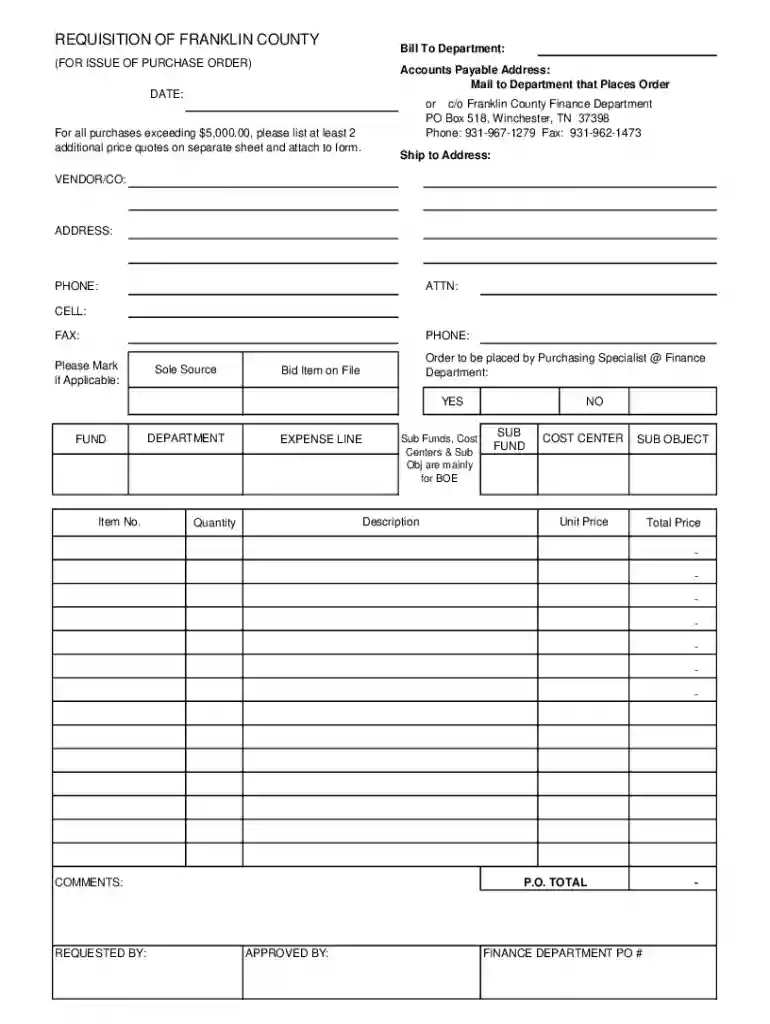
A requisition order is a formal request used in the procurement process to authorize the purchase of goods or services. It is typically the first step in acquiring resources, serving as an internal document that communicates the need for a purchase within the organization. This document ensures that the procurement team has all necessary information to process the request, including details about the items required, quantities, vendor choices, and cost estimates.
Requisition orders often include essential details such as the requester's name, department, detailed item descriptions, and the business justification for the purchase. By standardizing this process, organizations can maintain budget controls and ensure compliance with purchasing guidelines.
Requisition orders play a crucial role in streamlining the procurement process. When a department or team within a company identifies a need for certain items or services, they initiate this request form. The procurement team reviews it to confirm that the purchase aligns with organizational goals and budgets.
Once approved, the requisition order typically transforms into a purchase order, which is sent to the selected vendor. This formalizes the transaction and typically includes additional legal terms and conditions not outlined in the initial requisition. Using structured requisition orders helps track spending, mitigate fraud risks, and optimize resource allocation.
To obtain a requisition order, employees usually need to follow their company's established internal procedures. This often involves accessing a digital form through their company's procurement software or intranet portal. Employees fill out the form with detailed information on the required items or services.
Organizations might require additional documentation, such as quotes from multiple vendors, to accompany the requisition order. This step ensures due diligence and price competitiveness. Once completed, the form is submitted through appropriate channels for managerial or departmental approval.
Identify the Requirement: Clearly define the need for goods or services, including quantities and specifications.
Select Vendors: Research and select potential vendors, obtaining quotes if necessary, to ensure competitive pricing and quality.
Complete the Form: Fill out the requisition order form with all relevant details such as item descriptions, quantities, preferred vendors, estimated cost, and justification for the purchase.
Attach Documentation: Include necessary documentation such as vendor quotes or approvals required for larger purchases.
Submit for Approval: Send the completed requisition order to the appropriate authority for approval within the organization.
Await Approval or Revisions: Once submitted, the order is reviewed, and approvals or requests for additional information may follow.
Proceed to Purchase Order: Upon approval, the requisition order may be converted into a purchase order, officially initiating the purchasing process.
Requisition orders are vital for maintaining financial discipline, transparency, and efficiency in procurement. They serve as an audit trail and help avoid unauthorized or wasteful spending. Additionally, these forms facilitate a structured approach to purchasing, ensuring all stakeholders are informed and in agreement before a purchase is made. They also enable better tracking and reporting of expenditures against budget projections.
In practice, a requisition order might be used by a marketing department in a company to purchase promotional materials. An IT department may utilize it to acquire new software licenses. Educational institutions often use requisition orders to procure laboratory equipment, ensuring that all purchases are systematically recorded and verified before being processed.
Understanding certain terms is crucial when creating or managing requisition orders:
These elements help in aligning procurement activities with organizational goals and financial protocols, ensuring effective resource management.
We've got more versions of the What is a Requisition Order in the Procurement Process? form. Select the right What is a Requisition Order in the Procurement Process? version from the list and start editing it straight away!
At DocHub, your data security is our priority. We follow HIPAA, SOC2, GDPR, and other standards, so you can work on your documents with confidence.
A requisition is used to establish requirements and begin the procurement process. All purchases estimated to be $10,000.00 or above require some form of
A purchase requisition (PR) is an internal document that initiates the procurement process by communicating a need to the purchasing staff. It is required forRead more


