Title 5A DCMR Chapter 1, 128 2026

Get Form
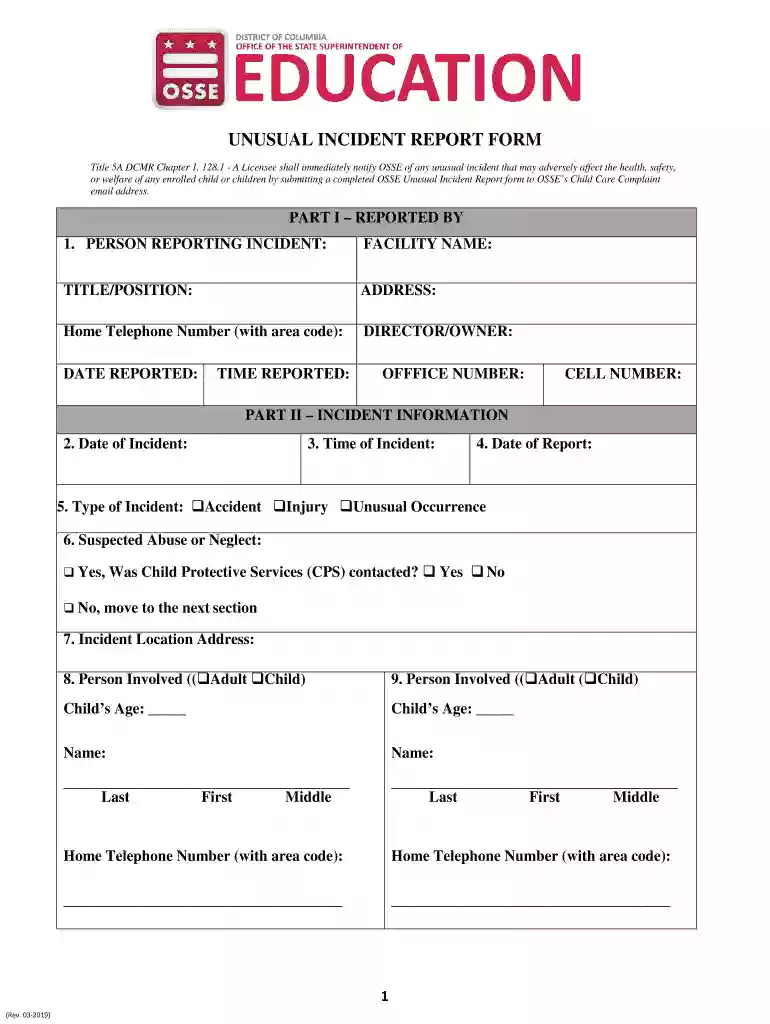
osse unusual incident report Preview on Page 1

Here's how it works

01. Edit your osse unusual incident report online
Type text, add images, blackout confidential details, add comments, highlights and more.

02. Sign it in a few clicks
Draw your signature, type it, upload its image, or use your mobile device as a signature pad.

03. Share your form with others
Send dc unusual incident report via email, link, or fax. You can also download it, export it or print it out.

Definition and Meaning of Title 5A DCMR Chapter 1, 128

Title 5A DCMR Chapter 1, 128 refers to a specific regulation under the District of Columbia Municipal Regulations (DCMR), primarily focusing on education-related policies. This regulation outlines the guidelines and standards for various educational institutions and programs operating within Washington, D.C. It is crucial for ensuring that educational practices align with legal and ethical standards, and it encompasses detailed provisions on curriculum development, teacher qualifications, and student rights. Understanding this regulation helps educational entities comply with local government requirements and maintain quality standards in educational delivery.

How to Use Title 5A DCMR Chapter 1, 128

Using Title 5A DCMR Chapter 1, 128 necessitates familiarity with its provisions. Educational institutions and administrators should:

  1. Review the Regulation: Start by thoroughly reading and understanding the specific requirements detailed in the regulation. This includes provisions related to curriculum standards, teacher certification, and student assessment protocols.
  2. Implement Required Practices: Incorporate the stipulated practices and standards into the institution's policies and daily operations to ensure compliance.
  3. Regular Updates and Training: Conduct regular training sessions for staff to stay informed about any updates or changes to the regulation. Keeping abreast of updates ensures continued compliance and avoids potential legal issues.

Steps to Complete Compliance with Title 5A DCMR Chapter 1, 128

Complying with Title 5A DCMR Chapter 1, 128 involves several steps:

  1. Assessment and Review: Begin by assessing your current practices against the regulation's requirements to identify any areas of non-compliance.
  2. Documentation and Record-Keeping: Maintain detailed records and documentation as evidence of compliance.
  3. Implementation Plan: Develop and implement an action plan to address any gaps identified during the assessment.
  4. Monitoring and Evaluation: Regularly monitor practices and evaluate compliance efforts to ensure ongoing adherence to regulatory standards.

Key Elements of Title 5A DCMR Chapter 1, 128

The key elements of Title 5A DCMR Chapter 1, 128 include:

  • Curriculum Standards: Guidelines for designing and implementing curricula that meet educational objectives.
  • Teacher Qualifications: Requirements for teacher certifications and ongoing professional development.
  • Student Rights and Responsibilities: Policies safeguarding student welfare and outlining their rights and responsibilities within the educational system.
  • Assessment and Evaluation: Standards for assessing student performance and institutional effectiveness.

Who Typically Uses Title 5A DCMR Chapter 1, 128

Users of Title 5A DCMR Chapter 1, 128 primarily include:

  • School Administrators: Responsible for ensuring that their schools comply with regulatory standards.
  • Teachers and Educators: Engage with the regulation to understand curriculum requirements and maintain professional qualifications.
  • Regulatory Authorities: Oversee compliance and provide guidance and enforcement regarding the regulation.

State-Specific Rules for Title 5A DCMR Chapter 1, 128

While Title 5A DCMR Chapter 1, 128 applies specifically within the jurisdiction of Washington, D.C., adherence to this regulation requires consideration of other local regulations and standards that may differ slightly from state to state. It is essential for affected parties to consult local legal experts or educational authorities to fully understand any state-specific nuances.

Examples of Using Title 5A DCMR Chapter 1, 128

Practical examples of using the Title 5A DCMR Chapter 1, 128 include:

  • School Curriculum Development: Schools developing curricula that incorporate the standards set by the regulation.
  • Teacher Professional Development: Teacher training programs aligned with qualifications required under the regulation.
  • Student Policy Enforcement: Implementing student conduct policies that align with the rights and responsibilities outlined in the regulation.

Legal Use of Title 5A DCMR Chapter 1, 128

Legal application of Title 5A DCMR Chapter 1, 128 involves ensuring compliance with all legal standards set by the regulation. Non-compliance can result in legal repercussions such as penalties, funding withdrawal, or other disciplinary actions by educational authorities.

Penalties for Non-Compliance with Title 5A DCMR Chapter 1, 128

Failure to comply with Title 5A DCMR Chapter 1, 128 can result in:

  • Fines and Sanctions: Monetary fines or sanctions imposed on institutions.
  • Operational Restrictions: Restrictions on operations until compliance is achieved.
  • Legal Action: Potential litigation from authorities or affected parties due to non-compliance.

Educational entities should prioritize compliance to avoid these consequences and ensure smooth functioning within the regulatory framework.

See more Title 5A DCMR Chapter 1, 128 versions

We've got more versions of the Title 5A DCMR Chapter 1, 128 form. Select the right Title 5A DCMR Chapter 1, 128 version from the list and start editing it straight away!
Versions Form popularity Fillable & printable
2019 4.5 Satisfied (36 Votes)
2018 4.4 Satisfied (27 Votes)
2011 4 Satisfied (52 Votes)
be ready to get more

Complete this form in 5 minutes or less

Get form

Got questions?

We have answers to the most popular questions from our customers. If you can't find an answer to your question, please contact us.
Contact us
The University is committed to maintaining a safe and healthy living and learning environment for students, faculty, and staff. Each member of the campus community should choose behaviors that contribute toward this end.
Chapter 1A of 12A DCMR shall serve as the administrative and enforcement provisions for the Building Code, Residential Code, Electrical Code, Fuel Gas Code, Mechanical Code, Plumbing Code, Energy Conservation Code and Existing Building Code, except as otherwise provided herein.
Height of Buildings Act (1910) This federal law imposes maximum heights on buildings within Washington, DC based upon the width of the street, to a maximum height of 130 feet (commercial streets) and 90 feet (residential streets), and 160 feet for parts of Pennsylvania Avenue, NW.
The main purpose of building codes are to protect public health, safety and general welfare as they relate to the construction and occupancy of buildings and structures. The building code becomes law of a particular jurisdiction when formally enacted by the appropriate governmental or private authority.
The maximum riser height shall be 8.25 inches (210 mm). The riser shall be measured vertically between leading edges of the adjacent treads. The greatest riser height within any flight of stairs shall not exceed the smallest by more than 3/8 inch (9.5 mm).

Security and compliance

At DocHub, your data security is our priority. We follow HIPAA, SOC2, GDPR, and other standards, so you can work on your documents with confidence.

Learn more
ccpa2
pci-dss
gdpr-compliance
hipaa
soc-compliance
be ready to get more

Complete this form in 5 minutes or less

Get form

People also ask

Like the U.S. Code and state codes, the District of Columbia Code is a subject compilation of enacted legislation, divided into titles, chapters and sections. However, unlike most state codes, the D.C. Code also contains federal statutes which have an impact on the District of Columbia.

dc uir