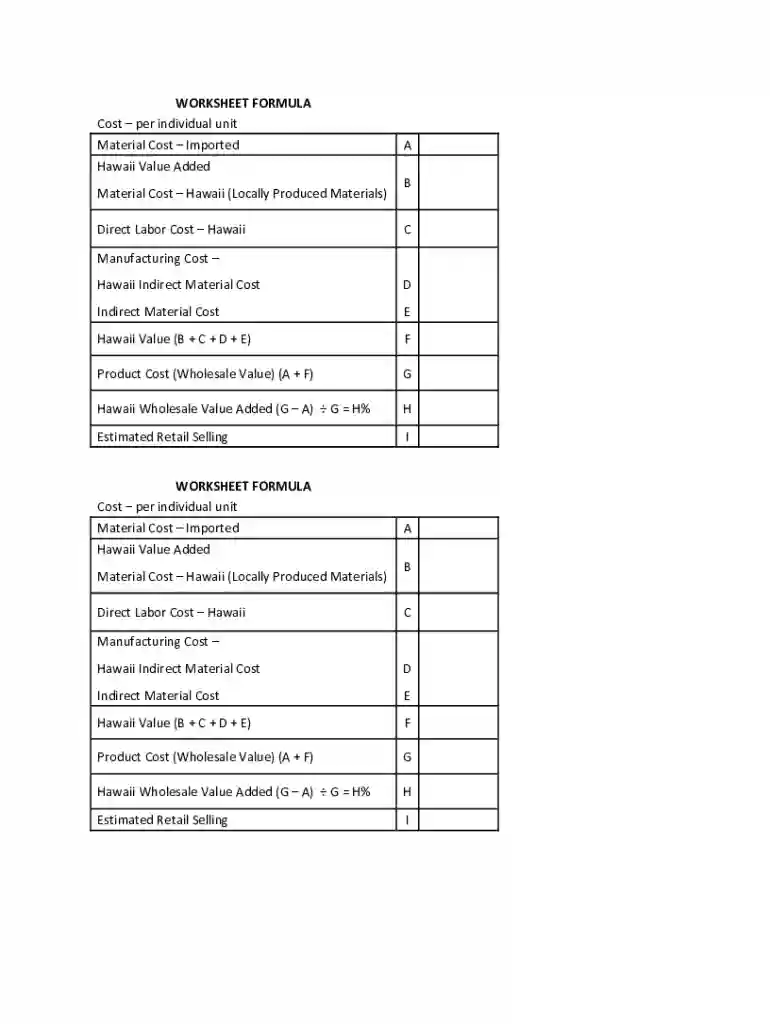
Definition & Meaning
The "Worksheet - Pricing Models for a Successful Business" is a strategic tool designed to help businesses identify, analyze, and implement effective pricing strategies. This worksheet assists in crafting a pricing model that aligns with a business's goals, market position, and customer needs. Pricing models are critical, as they determine how products or services are valued and perceived by customers. The worksheet provides a structured approach to evaluate different factors that influence pricing, such as production costs, competition, and consumer demand. It aims to enhance profitability while maintaining competitiveness in the market.
Key Elements of the Worksheet - Pricing Models for a Successful Business
Understanding the components of the worksheet is essential for its effective use. Key elements may include:
- Cost Analysis: Break down all associated costs, such as production, distribution, and marketing, to understand the baseline for pricing.
- Market Research: Assess the competitive landscape and consumer buying patterns to inform pricing strategies.
- Value Proposition: Identify unique product or service benefits that justify a specific price point.
- Pricing Objectives: Define what the business seeks to achieve, such as maximizing profit, increasing market share, or entering a new market segment.
- Discount Strategies: Explore options for discounts or promotions to attract and retain customers.
- Pricing Sensitivity: Analyze how changes in price might affect customer demand and overall revenue.
Steps to Complete the Worksheet - Pricing Models for a Successful Business
A clear process is vital for efficiently completing the worksheet:
- Gather Data: Compile all relevant information on costs, market conditions, and target audience.
- Define Goals: Establish your pricing objectives and what you aim to achieve through pricing (e.g., penetration, skimming).
- Input Costs: Record all direct and indirect costs associated with your product or service.
- Analyze Competitors: Study competitors' pricing to identify industry standards and gaps.
- Assess Customer Value: Determine what your target audience values most about your offering and how much they are willing to pay.
- Develop Pricing Models: Use the worksheet to create different pricing scenarios and strategies.
- Test and Validate: Run simulations or pilot test prices in small market segments to gauge reactions.
- Implementation and Review: Launch the selected pricing strategy and regularly review its impact to refine if necessary.
Who Typically Uses the Worksheet - Pricing Models for a Successful Business
This worksheet is an essential tool for a variety of business stakeholders:

- Entrepreneurs and Startup Owners: Design pricing strategies that can help in market entry and growth.
- Financial Analysts and Accountants: Evaluate cost structures and market data to provide strategic pricing recommendations.
- Marketing Managers: Develop campaigns and promotions that integrate current pricing strategies.
- Product Managers: Ensure the pricing aligns with the product's value and market positioning.
- Business Consultants: Assist clients in optimizing pricing to improve profitability and competitiveness.
Business Types That Benefit Most from the Worksheet
Different types of businesses can effectively utilize the worksheet to enhance pricing strategies:
- Retail: Optimize product pricing in a competitive consumer market.
- Manufacturing: Evaluate cost-plus pricing strategies to ensure profitability.
- Service Providers: Establish tiered pricing models based on service levels or features offered.
- Technology Firms: Set strategic pricing for software or digital products with subscription models.
- E-commerce: Implement dynamic pricing models in online sales platforms to react to market changes swiftly.
Examples of Using the Worksheet - Pricing Models for a Successful Business
Implementing pricing models using this worksheet often involves case studies and practical examples:
- Market Penetration: A startup uses the worksheet to set a low introductory price to gain market share quickly.
- Product Bundling: A software company evaluates different bundling options to offer combined products at a perceived value discount.
- Premium Pricing: A luxury brand applies the worksheet to justify a premium price by highlighting exclusivity and quality.
- Skimming Strategy: A tech company launches a new gadget at a high price to capitalize on early adopters willing to pay more before gradually lowering prices over time.
State-Specific Rules for the Worksheet - Pricing Models for a Successful Business
Pricing strategies can be influenced by state-specific regulations and market conditions:
- Tax Variations: States may have different sales tax rates, affecting final pricing strategies.
- Regulatory Compliance: Some states impose restrictions on price gouging during emergencies, which businesses must navigate.
- Consumer Protection Laws: State laws around transparency in pricing, such as itemization of costs or prohibiting false discounts, need to be considered.
Software Compatibility for Pricing Worksheets
Leveraging technology can enhance the efficacy of pricing worksheets:
- Spreadsheet Software: Tools like Microsoft Excel or Google Sheets can be used to automate calculations and visualize data.
- Business Modeling Software: Advanced tools such as QuickBooks or specialized pricing software provide functionality to simulate pricing scenarios and analyze profitability.
- Integration with CRMs: Linking worksheets with Customer Relationship Management (CRM) systems can offer insights into customer responses to pricing changes.