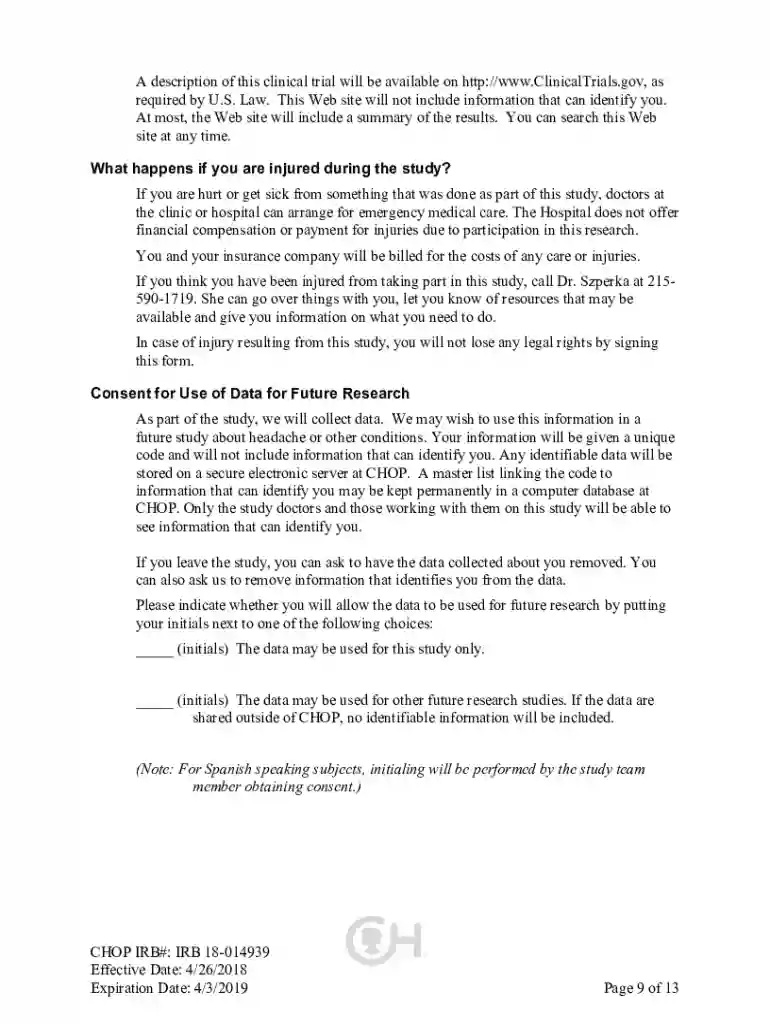
Occipital Nerve Blocks for Acute Treatment of Pediatric Migraine 2026

Get Form
hipaa informed consent form Preview on Page 1

Here's how it works

01. Edit your hipaa informed consent form online
Type text, add images, blackout confidential details, add comments, highlights and more.

02. Sign it in a few clicks
Draw your signature, type it, upload its image, or use your mobile device as a signature pad.

03. Share your form with others
Send it via email, link, or fax. You can also download it, export it or print it out.

Definition & Meaning

Occipital nerve blocks for acute treatment of pediatric migraine involve the administration of a local anesthetic to the greater and lesser occipital nerves located at the back of the head. This procedure is utilized to alleviate severe headache symptoms in children suffering from migraines. By inhibiting pain signals transmitted through these nerves, the treatment aims to provide immediate relief from the acute phase of migraine attacks.

Practical Context

  • Commonly used when traditional migraine medications are ineffective.
  • Typically administered in a clinical setting by a trained healthcare professional.
  • Provides temporary pain relief, often lasting several weeks.

Eligibility Criteria

To participate in the study evaluating occipital nerve blocks, children must meet specific eligibility requirements. These criteria ensure that the treatment is appropriate and safe for each participant.


decoration image ratings of Dochub

Key Eligibility Requirements

  • Children aged six to 17 years with a confirmed diagnosis of migraine.
  • History of frequent and severe migraine episodes affecting daily activities.
  • Previous trial and failure of standard migraine preventive and acute treatments.
  • Parental or guardian consent with an understanding of potential risks.

Exclusion Considerations

  • Presence of scalp infections or dermatological disorders at the injection site.
  • Coexisting medical conditions that could complicate migraine treatment.
  • Previous adverse reactions to local anesthetics.

How to Use Occipital Nerve Blocks for Acute Treatment of Pediatric Migraine

The utilization of occipital nerve blocks requires careful procedural steps to ensure safety and efficacy. A healthcare provider performs the injection with precision, targeting the occipital nerves.

Step-by-Step Procedure

  1. Patient Preparation: Explain the procedure to the child and parent, addressing any concerns.
  2. Positioning: Position the child comfortably, often in a seated or prone position for access to the occipital region.
  3. Site Preparation: Clean the injection site with antiseptic to prevent infection.
  4. Local Anesthetic Application: Administer the anesthetic mixture, often combined with a steroid, at appropriate dosages.
  5. Monitoring: Observe the child for immediate relief signs and any adverse reactions post-injection.

Key Elements of the Occipital Nerve Blocks for Acute Treatment of Pediatric Migraine

The efficacy and safety of occipital nerve blocks hinge on several critical components, each contributing to the overall procedural success.

Fundamental Components

  • Correct Identification of Injection Site: Accurate anatomical knowledge is essential for effective nerve block application.
  • Appropriate Dosage of Anesthetics: Tailoring to each child's weight and migraine severity ensures optimal outcomes.
  • Trained Personnel: Only healthcare providers with specific training in pediatric neurology should carry out injections.

Important Terms Related to Occipital Nerve Blocks

Understanding relevant terminology aids in grasping the full scope and application of occipital nerve blocks.

Essential Terms

  • Greater Occipital Nerve: Primary nerve targeted during treatment.
  • Local Anesthetic: Medications used to numb the occipital nerve, reducing pain transmission.
  • Migraine Aura: Visual or sensory disturbances preceding headache phase; pivotal in diagnosing migrainous states.

Potential Risks and Benefits

Like any medical procedure, occipital nerve blocks present both potential benefits and risks that should be carefully weighed.

Benefits

  • Provides targeted pain relief, leading to reduced medication reliance.
  • Offers a non-invasive alternative with immediate effect on migraine symptoms.

Risks

  • Possible complications include infection at injection site or allergic reactions to anesthetics.
  • Short-lived relief may necessitate repeat injections, potentially increasing cumulative risks.

Examples of Using Occipital Nerve Blocks for Acute Treatment of Pediatric Migraine

Real-life usage of occipital nerve blocks showcases its practicality and outcomes in treating pediatric migraine sufferers.

Case Studies

  • Case Study 1: A 12-year-old with chronic migraine achieves significant, lasting relief post-treatment, allowing return to normal school activities.
  • Case Study 2: An eight-year-old experiences no adverse effects and substantial reduction in symptom severity after nerve block application.

Privacy and Ethical Considerations

Protecting participant information and ensuring ethical treatment are paramount in conducting studies using occipital nerve blocks.

Privacy Measures

  • Adherence to HIPAA guidelines for participant data protection.
  • Ensuring informed consent outlines comprehensive information on risks and procedures.

Application Process & Approval Time

The process of enrolling in the occipital nerve block study is streamlined to minimize delays and maximize participant preparedness.

Steps for Enrollment

  1. Pre-qualification Screening: Initial evaluation to determine eligibility based on the study's criteria.
  2. Consent Acquisition: Securing legally informed consent from guardians.
  3. Scheduling: Setting up an appointment for initial consultation and injection procedure.

Approval Timeline

  • Typically rapid, with study entry and treatment occurring within several weeks of enrollment confirmation.

Legal Use of the Occipital Nerve Blocks for Acute Treatment of Pediatric Migraine

Understanding the legal framework governing the use of occipital nerve blocks ensures compliance with federal and state regulations.

Regulatory Considerations

  • Compliance with FDA guidelines on pediatric treatment applications.
  • Adherence to state-specific health regulations to ensure safe practices.

Different Versions or Alternatives to Occipital Nerve Blocks

Exploring alternative or supplementary treatments allows for comprehensive, tailored migraine management plans.

Alternative Approaches

  • Pharmacologic Treatments: Combination drug therapies utilized as adjunct or alternative strategies.
  • Non-invasive Therapies: Incorporation of behavioral therapy techniques for holistic migraine management.

Who Typically Uses Occipital Nerve Blocks for Acute Treatment of Pediatric Migraine

Identifying the typical demographic enhances understanding of treatment applicability and potential patient outcomes.

Typical User Profile

  • Children with persistent, treatment-resistant migraines requiring intervention beyond standard pharmacotherapy.
  • Those experiencing debilitating migraine episodes impacting schooling and daily activities.

See more Occipital Nerve Blocks for Acute Treatment of Pediatric Migraine versions

We've got more versions of the Occipital Nerve Blocks for Acute Treatment of Pediatric Migraine form. Select the right Occipital Nerve Blocks for Acute Treatment of Pediatric Migraine version from the list and start editing it straight away!
Versions Form popularity Fillable & printable
2018 4.3 Satisfied (35 Votes)
2015 4.6 Satisfied (61 Votes)
be ready to get more

Complete this form in 5 minutes or less

Get form

Got questions?

We have answers to the most popular questions from our customers. If you can't find an answer to your question, please contact us.
Contact us
Sumatriptan is in a class of medications called selective serotonin receptor agonists. It works by narrowing blood vessels in the brain, stopping pain signals from being sent to the brain, and stops the release of certain natural substances that cause pain, nausea, and other symptoms of migraine or cluster headaches.
Greater Occipital Nerve Block (GONB) The most commonly used PNB is the GONB for both acute and chronic migraine treatment.
Occipital nerve blocks can be utilized alone or with standard-of-care therapy for various other headache conditions, such as cluster headaches, episodic headaches or chronic migraines.
GONB with triamcinolone in combination with lidocaine or normal saline with lidocaine results in reducing pain severity and frequency as well as use of analgesics up to two months after the intervention, however any difference attributed to the drug regimens by assessing of the trend of pain characteristics changes.
Successful occipital nerve blocks typically improve pain 20 to 30 minutes after the injection and can last for several hours to several months. Lasting pain relief for occipital neuralgia and cervicogenic headache can require a series of several injections.

Security and compliance

At DocHub, your data security is our priority. We follow HIPAA, SOC2, GDPR, and other standards, so you can work on your documents with confidence.

Learn more
ccpa2
pci-dss
gdpr-compliance
hipaa
soc-compliance
be ready to get more

Complete this form in 5 minutes or less

Get form

People also ask

Of the five beta-blockers used for migraine prevention, propranolol seems to be the most effective. Common side effects of beta-blockers include lightheadedness, fatigue, and sedation. Dosages and effectiveness vary, depending on the type of beta-blocker used.
Who Is a Candidate for an Occipital Nerve Block? Our skilled specialists may recommend an occipital nerve block if you have: Pain that affects the back of the head or one side of the head. Some migraines or cluster headaches.

Related links