
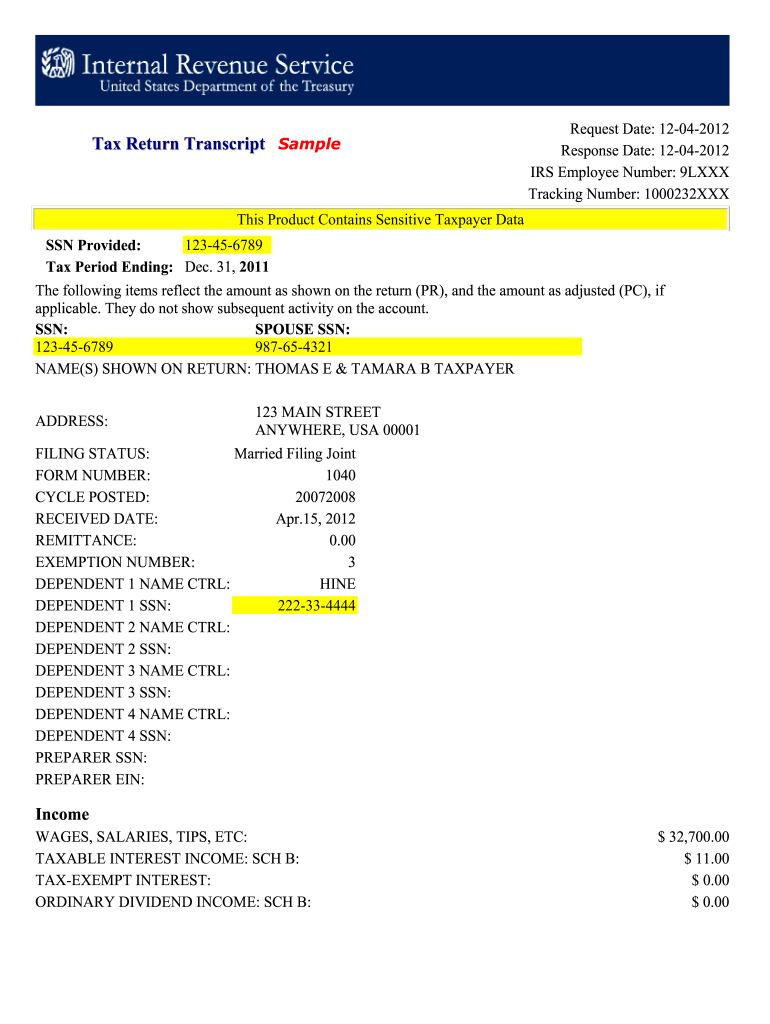







Overview of Tax Return Transcript Samples
A Tax Return Transcript Sample, such as the one from Veri-Tax, provides an essential overview of a taxpayer's financial data for a specific tax period. This document is crucial for individuals and businesses to verify their tax information, especially when applying for loans, financial aid, or other services that require proof of income.
Key Attributes:
- Taxpayer Information: Includes names, Social Security Numbers, and filing status, which provide relevant identification details.
- Income Overview: Summarizes sources of income, such as wages, dividends, or interest, enabling easy assessment of financial standing.
- Deductions and Credits: Lists deductible expenses and tax credits claimed, offering insights into tax liability and potential refunds.
Detailed Breakdown of the Tax Return Transcript Sample
The sample transcript for taxpayers Thomas E. and Tamara B. includes specific sections, each of which contains vital information for users needing to understand their tax situation.
Filing Status
The transcript specifies that the taxpayers are 'Married Filing Joint.' This status typically offers more advantageous tax rates and eligible income thresholds for various credits. It may also impact the couple’s overall tax liability positively versus filing separately.
Income Sources
In the transcript, detailed income sources are categorized as follows:
- Wages and Salaries: Includes information from W-2 forms, indicating total wages earned.
- Interest and Dividends: Records from accounts, detailing any additional income generated from investments.
- Other Income: Any supplemental income reported, such as alimony or rental income.
This level of detail assists taxpayers in verifying income against other financial statements.
Adjustments and Deductions
Deductions play a critical role in determining taxable income. The transcript outlines:
- Standard vs. Itemized Deductions: A reflection on whether the taxpayers chose the standard deduction or listed their specific deductions.
- Adjustments to Income: Such as contributions to retirement accounts or student loan interest.
By clarifying these figures, taxpayers gain a clear view of their taxable income.
Tax Liabilities
Tax liabilities are vital for understanding total obligations owed to the IRS. The transcript breaks this down to show:
- Total Tax: The sum amount calculated based on taxable income and applicable rates.
- Payments and Credits: Documents any tax credits or pre-payments made, illustrating the total amount owed or refunded.
By presenting these figures, the transcript offers a clear financial snapshot.
Importance of the Cycle Code
The cycle code is an integral part of IRS transcripts. It indicates the processing cycle for the tax return and can aid taxpayers in tracking their filing status.
- Where to Find Cycle Code: Usually located in the upper right-hand corner of the transcript, it’s essential for understanding when the IRS last processed the return.
- Utility for Tracking: The cycle code, combined with the cycle date, assists in determining when funds may be deposited or when additional information might be required.
This information can significantly affect financial planning and expectations regarding refunds.
How to Interpret IRS Transcripts
Beyond simply understanding the figures within, properly interpreting a tax transcript is crucial for taxpayers.
- Read the Sections: Familiarize with different parts such as income, deductions, and liabilities.
- Identify Key Codes: Recognize the importance of specific codes, such as the cycle code, to understand processing times.
- Check for Accuracy: Ensure that all figures align with personal records to avoid discrepancies that might raise red flags with the IRS.
Adopting a methodical approach to reading these documents can help taxpayers leverage their data effectively.
IRS Guidelines for Obtaining Transcripts
To obtain a tax return transcript, taxpayers typically need to follow a systematic process:
- Online Access: Use the IRS website to request a transcript through the "Get Transcript" tool for immediate access.
- Mail Requests: Fill out Form 4506-T, which allows for the formal request of transcripts delivered by mail.
- Phone Requests: Call the IRS directly to request transcripts if preferred methods are not suitable.
These guidelines ensure that taxpayers have multiple avenues to access necessary financial information efficiently.
Variations and Types of Transcripts
The IRS offers several types of transcripts, each serving distinct purposes:
- Tax Return Transcript: Summarizes tax return information as filed.
- Account Transcript: Provides a detailed history of the account, including payments and adjustments.
- Record of Account Transcript: Combines information from both tax return and account transcripts.
Understanding the differences among these can guide taxpayers to select the most applicable transcript for their needs.
Taxpayer Scenarios for Utilizing Transcripts
Transcripts can assist various taxpayer scenarios, including:
- Self-Employed Individuals: Can verify income for loans or applications.
- Students Seeking Financial Aid: Often required to prove income for FAFSA applications.
- Retired Individuals: May use transcripts to manage retirement account adjustments or understand tax implications on social security.
Each scenario illustrates the versatility and importance of accessing accurate tax return transcripts.
By understanding how to read and interpret these documents, along with being aware of the relevant codes and types, taxpayers can better manage their financial affairs in alignment with IRS requirements.




