




01. Edit your form online
Type text, add images, blackout confidential details, add comments, highlights and more.

Type text, add images, blackout confidential details, add comments, highlights and more.

Draw your signature, type it, upload its image, or use your mobile device as a signature pad.

Send it via email, link, or fax. You can also download it, export it or print it out.
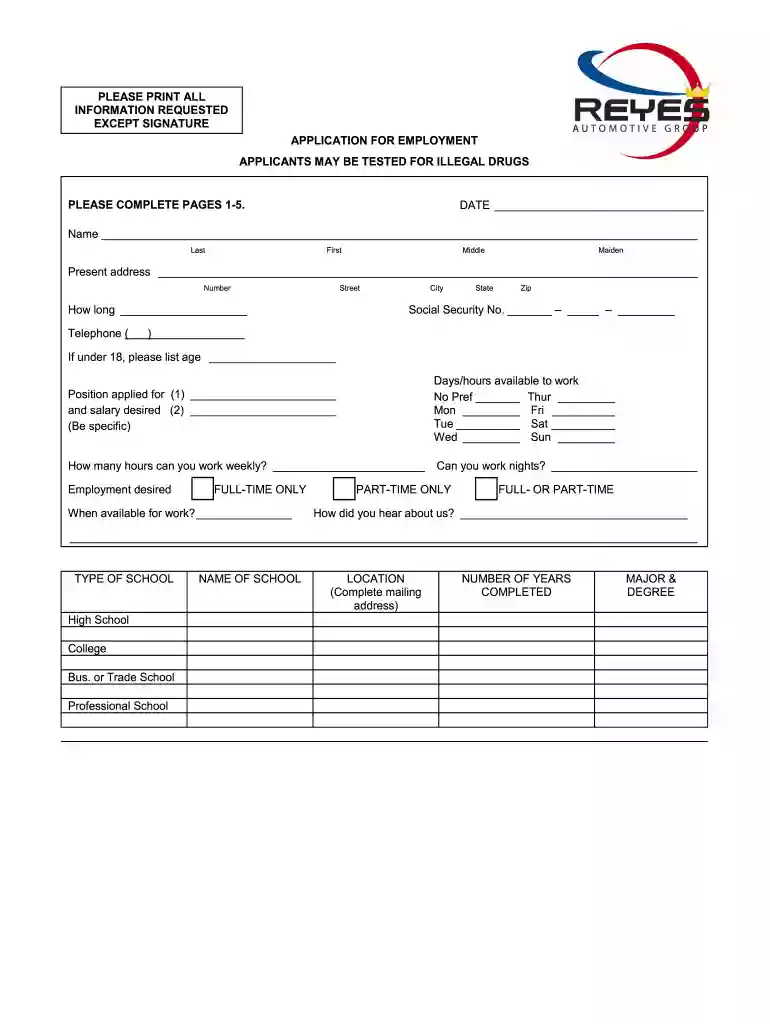
The "automotive application employment form" is a standardized document used by automotive companies to gather essential information from potential employees. This form typically includes sections for personal details, professional qualifications, employment history, and references. It is crucial for ensuring mutual understanding between employers and applicants regarding the job requirements and conditions. The form's comprehensive nature facilitates a fair and structured hiring process, aligning with industry standards and employment laws.
The document serves several purposes:
To effectively use this form, employers and applicants must follow specific steps:
Submitting an accurately completed form increases the chances of a successful application.
Completing this form involves a deliberate sequence of actions:
Mistakes can delay the process, so it’s vital to review the form thoroughly before submission.
This form typically consists of several critical sections:
These sections must be thoroughly completed for the application to be considered valid.
Legally, this form must adhere to regulations such as anti-discrimination laws. Employers must use this form fairly without regard to race, gender, or other protected classes. Compliance with labor laws and equal opportunity statutes is mandatory.
By following legal guidelines, companies ensure that their hiring processes are fair and compliant with federal regulations.
This form is pivotal in streamlining the hiring process in automotive businesses:
The comprehensive data collection it allows assists in making informed hiring decisions.
Several stakeholders engage with this form:
It acts as an integral tool across various sectors within the automotive industry.


State regulations may affect the structure and content of this form, with variations potentially required based on local laws. For example:
Understanding these nuances is crucial for employers to comply with state laws during the hiring process.
Completing and processing this form involves several steps:
Overall, the time frame can vary from a few days to several weeks, depending on the company’s processes and the number of applicants.
At DocHub, your data security is our priority. We follow HIPAA, SOC2, GDPR, and other standards, so you can work on your documents with confidence.
This form is not part of your application for employment and will not be considered in any hiring decision.Any information submitted on this form will beRead more
All students applying to the Automotive Technology Program must provide a copy of their NYS Driver License and a copy of their Driver License Abstract whichRead more
May 8, 2021 All applicants must complete and sign an employment application form. If it is subsequently discovered that any information has beenRead more


