




01. Edit your form online
Type text, add images, blackout confidential details, add comments, highlights and more.

Type text, add images, blackout confidential details, add comments, highlights and more.

Draw your signature, type it, upload its image, or use your mobile device as a signature pad.

Send it via email, link, or fax. You can also download it, export it or print it out.
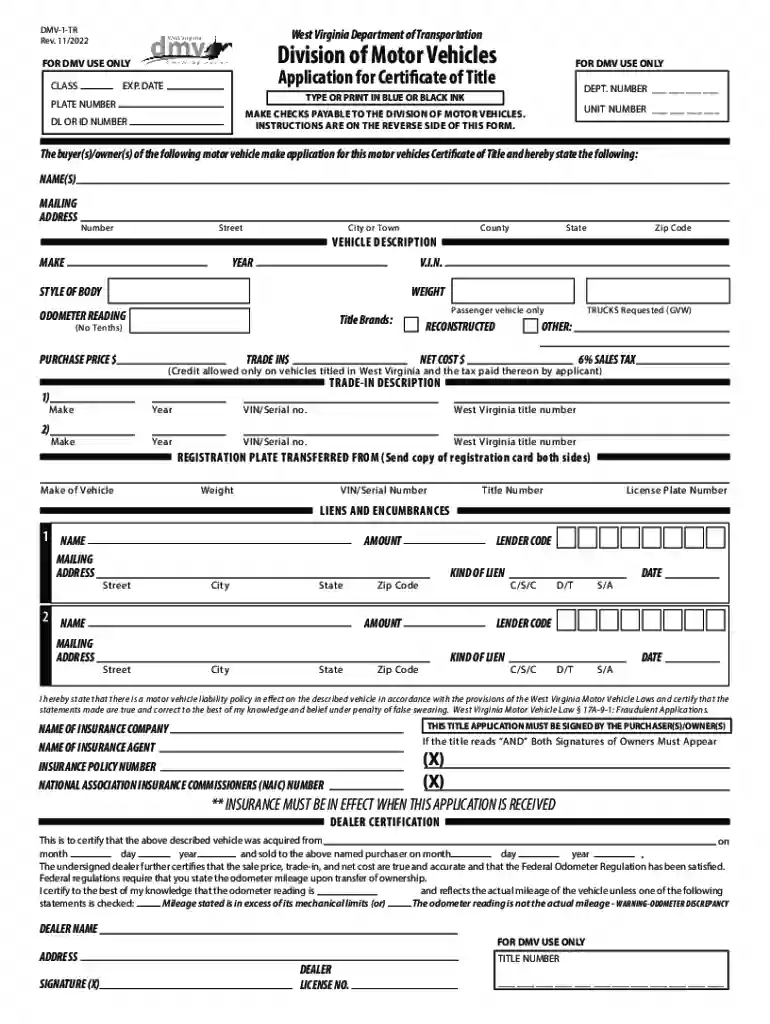
The "Application for Certificate of Title" is an essential document for obtaining legal ownership of a motor vehicle. It serves as proof that the vehicle is registered in your name through the respective state's Division of Motor Vehicles (DMV). This document is necessary when buying, selling, or transferring vehicle ownership. Typically, the certificate includes details such as the vehicle's make, model, year, identification number, and the owner's information. Ensuring you have a valid Certificate of Title is crucial for both personal and legal assurance, as it signifies rightful ownership and enables you to sell or transfer the vehicle when needed.
To obtain the application, visit your local DMV office or access the state's DMV website. Most DMVs provide downloadable forms that can be filled out online or printed for manual completion. Ensure you have relevant information handy, such as the vehicle's details and your identification, as these are usually required to fetch the correct form. Some states may offer digital submissions, which save time and streamline the application process. Once obtained, review the form carefully to ensure you input accurate information to avoid delays in processing.
Gather Required Information:
Fill Out the Form:
Complete Additional Sections:
Review and Sign:
Submit the Application:
Different states may have varying requirements, but commonly needed documents include:
Ensure all documents are original or certified copies as required by your state's DMV to prevent processing issues.
The application ensures compliance with legal standards, which mandates vehicles to be properly registered with a title reflecting the current owner's information. Legally, this process is crucial for:
Failure to properly apply for or update a certificate can lead to fines and legal complications.
The typical users of the application include:
Organizations like rental or leasing companies may also use the application in association with fleet titles.


A well-completed application should include precise details such as:
Each field must be filled accurately to prevent delays or rejections.
Regulations can vary significantly by state, influencing how the form must be filled and submitted. For example:
Always consult local DMV guidelines to ensure compliance with particular state regulations when completing your application.
We've got more versions of the Application for Certificate of Title form. Select the right Application for Certificate of Title version from the list and start editing it straight away!
At DocHub, your data security is our priority. We follow HIPAA, SOC2, GDPR, and other standards, so you can work on your documents with confidence.
Your guide to applying for New York State Certification as a School of Education student at Brooklyn College.
The information collected on this form is necessary to determine applicant eligibility for airman ratings. We estimate it will take 30.Read more
WARNING: Federal and State law requires that you state the mileage in connection with an application for a Certificate of Title. Failure to complete orRead more


