
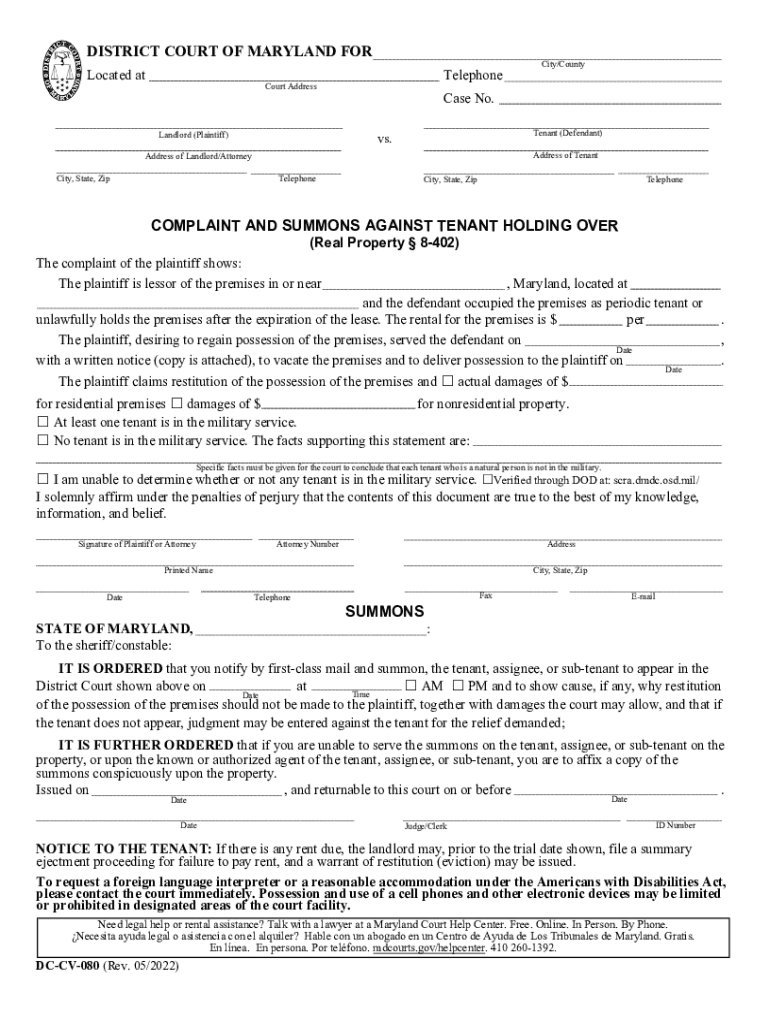







Definition and Meaning
Holding over, in the context of a lease, refers to a tenant remaining in possession of a rental property after the expiration of the lease agreement without the landlord's explicit consent. This situation commonly arises when the tenant continues to occupy the premises, either because they have not yet vacated or because they wish to continue renting on a month-to-month basis. In such cases, the landlord can take legal action to regain possession or alter the terms of the rental agreement.
Legal Use of the Staying Past the End of the Lease (Holding Over)
Staying past the end of a lease, also known as holding over, has specific legal implications depending on the jurisdiction. Certain states allow a tenant to hold over, converting their lease to a month-to-month tenancy under the original terms. However, landlords may pursue eviction if no new lease agreement is made and the tenant remains. This situation can lead to legal disputes where the landlord seeks restitution for the continued occupancy without an updated lease.
Steps to Complete the Staying Past the End of the Lease (Holding Over)
- Review Lease Agreement: Analyze the original lease terms to understand the conditions and implications of holding over.
- Contact Landlord: Clearly communicate intentions to remain or vacate to avoid misunderstandings or legal actions.
- Negotiate Terms: If intending to stay, negotiate new terms or confirm any agreed month-to-month tenancy conditions.
- Document Discussions: Keep written records of all communications and agreements regarding the extended stay.
- Address Legal Notices: Respond promptly to any legal documents or notices received from the landlord.
Key Elements of the Staying Past the End of the Lease (Holding Over)
- Lease Type: Originally, a typical one-year or fixed-term lease.
- Notice Period: Details notice requirements to vacate or change lease terms.
- Rent Payment Conditions: Terms under which rent continues if holding over occurs.
- Eviction Provisions: Legal measures a landlord might pursue if the tenant holds over without consent.
Important Terms Related to Staying Past the End of the Lease (Holding Over)
- Tenancy at Sufferance: When a tenant remains without the landlord's consent after a lease expiry.
- Month-to-Month Tenancy: A flexible lease arrangement renewed every month.
- Eviction: The legal process for removing a tenant from rental property.
- Restitution: Compensation for unlawful holdover occupancy.
Examples of Using the Staying Past the End of the Lease (Holding Over)
- Scenario for Convenience: A tenant intends to buy a new house but needs a few extra months to finalize the process, negotiating month-to-month tenancy.
- Unexpected Delay: The tenant faces unforeseen circumstances preventing an immediate move-out and must negotiate short-term lease extension.
Examples of Legal Action
- Landlord Insists On Eviction: The landlord legally evicts a tenant who refuses to leave after lease expiration and without signing a new agreement.
- Negotiated Extension: A tenant negotiates with a landlord stating their intention to stay longer under a monthly rental arrangement.
State-Specific Rules for the Staying Past the End of the Lease (Holding Over)
Laws governing holding over differ from state to state. For example:
- California: Automatically converts to a month-to-month tenancy, provided the tenant continues to pay rent and the landlord does not object.
- New York: Landlords can charge a higher rate to tenants holding over without an agreement, known as use and occupancy fees.
Penalties for Non-Compliance
When a tenant unlawfully holds over, consequences may include:
- Eviction Proceedings: Initiation of legal eviction to remove tenant.
- Increased Rent: In some areas, landlords can charge a premium for daily residence without a formal agreement.
- Legal Costs: Tenants may be responsible for court costs and legal fees if eviction is pursued.
Who Typically Uses the Staying Past the End of the Lease (Holding Over)
This form is used by:
- Residential Tenants: Needing flexibility due to uncertain future residence plans.
- Commercial Tenants: Negotiate extensions while finalizing relocation arrangements.
- Landlords: Who wish to formally address and manage tenants’ post-lease occupancy.


Rental Situations
- Students: Awaiting end of a school term.
- Business Transitions: Await move to a new corporate space.


