




01. Edit your form online
Type text, add images, blackout confidential details, add comments, highlights and more.

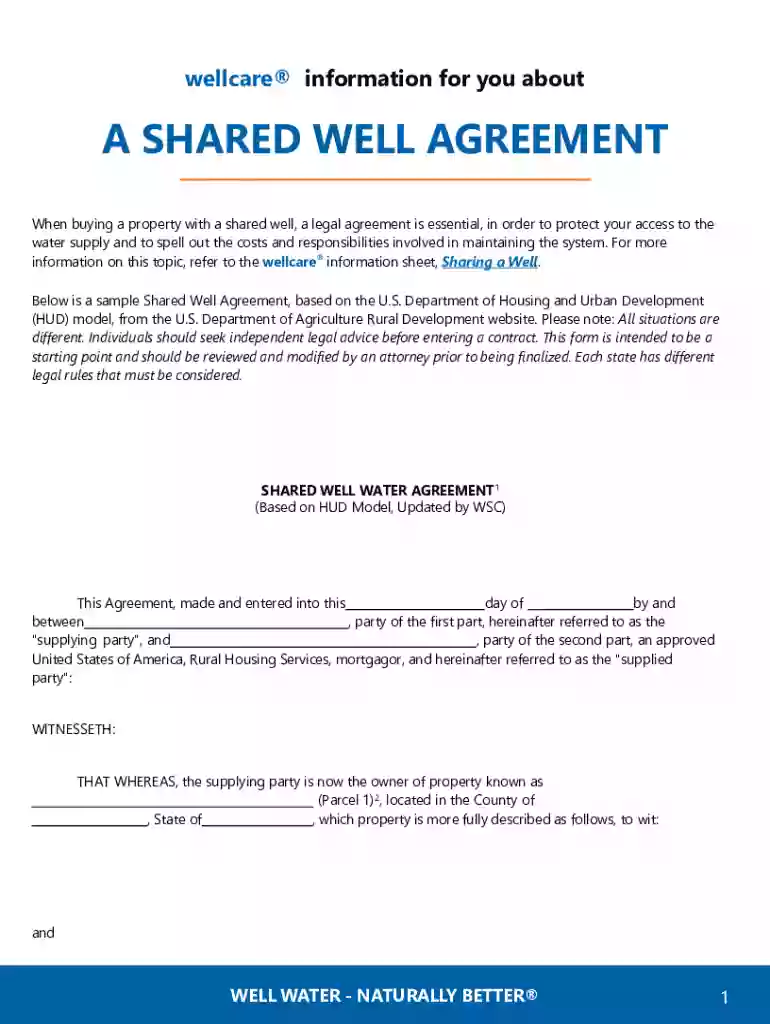
Type text, add images, blackout confidential details, add comments, highlights and more.

Draw your signature, type it, upload its image, or use your mobile device as a signature pad.

Send it via email, link, or fax. You can also download it, export it or print it out.
A shared well refers to a water source accessed and utilized by multiple homes in a residential community. This arrangement is commonly found in rural or semi-rural areas where individual wells may not be viable. The primary objective of a shared well is to provide reliable water access while distributing maintenance responsibilities among all users. Key aspects include fairness in cost-sharing and responsibility for regular upkeep and emergencies.
Engaging in a shared well agreement requires careful legal consideration. Essential components of a legally sound agreement include detailed clauses on water rights, usage limits, and maintenance responsibilities. These agreements must abide by state and local regulations, which may vary significantly across the United States. It's advisable for homebuyers to seek legal counsel to ensure their rights are protected and any potential disputes can be resolved efficiently.
Acquiring a shared well agreement involves a few straightforward steps:
A robust shared well agreement should include:
A community of five homes located near a natural water source may decide to collectively use the resource. Each homeowner contributes to the initial setup costs and agrees on a monthly fee for maintenance. They hold regular meetings to discuss water quality reports and address any maintenance concerns, ensuring the well remains a viable long-term solution for all parties involved.
Regulations for shared wells differ by state, impacting aspects such as water rights and maintenance practices. For instance, some states may require regular water quality testing and mandate specific protocols for contamination. Homebuyers must familiarize themselves with relevant state laws to ensure compliance and proper management of their shared water resource.
Essential documents when entering a shared well agreement include:
Maintaining a shared well involves coordinated efforts from all users:
Routine water quality testing is critical in maintaining a shared well. Tests should focus on identifying chemical and biological contaminants, assessing mineral content, and ensuring safe levels of metals and other potential hazards. Keeping records of these tests helps ensure the water supply remains safe and mitigates potential health risks to occupants sharing the resource.
We've got more versions of the Buying a home with shared well--is this a bad thing? (lake Buying a home with shared well--is this a form. Select the right Buying a home with shared well--is this a bad thing? (lake Buying a home with shared well--is this a version from the list and start editing it straight away!
At DocHub, your data security is our priority. We follow HIPAA, SOC2, GDPR, and other standards, so you can work on your documents with confidence.
If the top of the well extends at least one foot above ground and is properly sealed with a cap on top, it is safe. If you do have a well house, do not useRead more
NYSHCR Section 8 Voucher Home Ownership Program assistance is available and being used to help families obtain and retain a home of their own.
Sunday May 04, 2003 - Brandon. Lets get back to some adventure, shall we? Nearly two years ago, I stumbled across the name of a lake in Siberia, Russia.Read more


