




01. Edit your form online
Type text, add images, blackout confidential details, add comments, highlights and more.

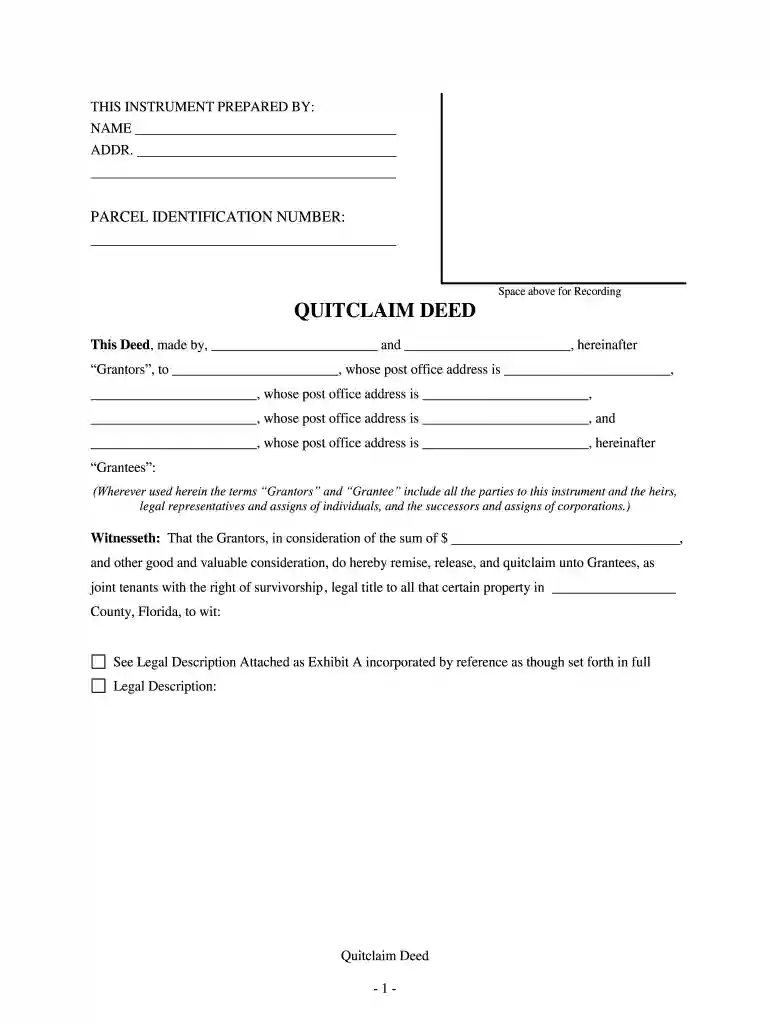
Type text, add images, blackout confidential details, add comments, highlights and more.

Draw your signature, type it, upload its image, or use your mobile device as a signature pad.

Send it via email, link, or fax. You can also download it, export it or print it out.
A Florida quitclaim deed is a legal document used to transfer ownership interest in real estate from one party to another without guaranteeing the title. Unlike warranty deeds, quitclaim deeds do not offer any assurances regarding the status of the property's title or any potential claims against it. This form is commonly used to transfer property between family members, resolve title issues, or remove a person's interest in a property.
To use a Florida quitclaim deed effectively, ensure that all parties involved understand the nature of the transaction. As this deed provides no title warranty, it is essential that both grantors and grantees are aware of any existing claims or liens on the property. Typically, this form is used in situations where the grantor is familiar with the grantee, such as transferring property to a family member or business entity.
The Florida quitclaim deed can be obtained from county clerk offices, title companies, or legal service providers. Additionally, online legal document platforms may offer customizable versions of this form. It is crucial to ensure that any template or form complies with Florida’s legal requirements.
Understanding associated terms is crucial for anyone using a Florida quitclaim deed. These terms help clarify the responsibilities and limitations involved in the transfer:
The Florida quitclaim deed is legally valid for transferring property interests under specific conditions. This deed type is optimal for situations where the grantor and grantee have a trusting relationship or need to resolve title issues without affecting third-party warranties.
While preparing this deed, certain elements must be included to ensure its validity:
Florida has particular rules regarding recording and accepting quitclaim deeds, emphasizing the need to adhere to state-specific statutes. Missteps can result in invalidated transfers.
By adhering to these guidelines, users can confidently manage property transfers using the Florida quitclaim deed, ensuring compliance and clarity throughout the process.
At DocHub, your data security is our priority. We follow HIPAA, SOC2, GDPR, and other standards, so you can work on your documents with confidence.


