




01. Edit your football stat sheet template online
Type text, add images, blackout confidential details, add comments, highlights and more.

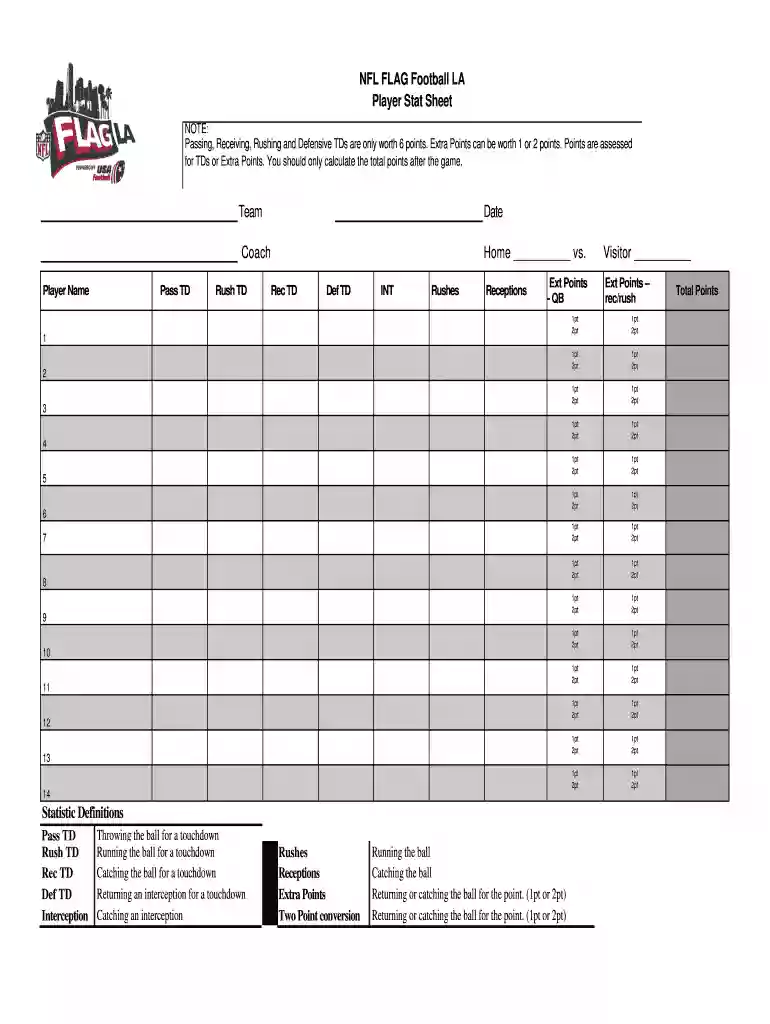
Type text, add images, blackout confidential details, add comments, highlights and more.

Draw your signature, type it, upload its image, or use your mobile device as a signature pad.

Send flag football stat sheet via email, link, or fax. You can also download it, export it or print it out.
A flag football stat sheet is a dedicated document used for recording player statistics during flag football games. It serves as an essential tool for coaches, players, and analysts to track performance metrics such as touchdowns, interceptions, and overall team dynamics. The document typically includes sections for player names, team details, game dates, and specific statistics like passing, rushing, and receiving yards.
This stat sheet is invaluable for assessing player performance over time, helping teams to make strategic decisions based on individual and collective statistics. For example, a coach analyzing a player's rushing yards during multiple games can identify trends that may impact their game strategy moving forward. Additional benefits include:
The flag football stat sheet is user-friendly and can enhance gameplay analysis when used effectively. Here are clear steps and considerations for utilizing this stat sheet during games:
Preparation Before the Game:
During the Game:
Post-Game Review:
This structured approach not only captures essential statistics but also promotes engagement and accountability among players.
Completing a flag football stat sheet involves systematic recording of various performance metrics. Here is a simplified guide to ensuring comprehensive data collection:
Set Up the Stat Sheet:
Recording Game Events:
Calculate Totals:
Analysis and Documentation:
This method not only organizes player information effectively but also aids in identifying both strengths and areas for improvement.
Practical examples demonstrate how the flag football stat sheet can be effectively utilized during games:
Game Day: During a playoff game, a stat sheet might indicate that Player A scored two rushing touchdowns and Player B received three passes, essential insight for post-game strategy discussions.
Coaching Decisions: When a coach finds that the team's average yards per game have decreased over three matches, they can utilize the stats sheet to pinpoint which players or plays are underperforming.
Player Development Tracking: A running back's rushing yards can be recorded over the season. If the stat sheet shows a steady increase, it indicates effective training and gameplay strategies have positively impacted performance.
Employing these examples illustrates the practical, day-to-day applicability of flag football stats in enhancing performance outcomes.
When creating or utilizing a flag football stat sheet, include the following key elements to ensure its effectiveness:
Player Identification: Record player names along with their jersey numbers and positions to maintain clarity during the game.
Game-Specific Information: Include the date, opposing team, and venue, providing context for the statistics recorded.
Statistical Categories:
Game Flow Tracking: Develop sections for tracking key moments, such as penalties, turnovers, or significant plays that impact the game's outcome.
These elements ensure the stat sheet is comprehensive, serving as a true representation of game dynamics while enabling performance analysis.
We've got more versions of the football stat sheet template form. Select the right football stat sheet template version from the list and start editing it straight away!
| Versions | Form popularity | Fillable & printable |
|---|---|---|
| 2015 | 4.8 Satisfied (26 Votes) |
Log in to your DocHub account and add your flag football stats sheet to our editor using one of its upload options - from your device, cloud storage, protected URL, or your DocHub folders if you have already managed your document before. Open our editor, click the Sign button in the upper toolbar, and decide on your signing method. You can use an image of your handwritten signature, draw it, type in your name, or use a QR code instead.
If you are using Chrome, there are two simple ways to modify your flag football stat sheet template online. First, visit the DocHub website, add your file, and modify it using our toolbar. You can also install our Chrome extension and modify any document by dragging and dropping it in your browser tab.
At DocHub, your data security is our priority. We follow HIPAA, SOC2, GDPR, and other standards, so you can work on your documents with confidence.
2025 Football Cumulative Statistics Team Stats (11-1, 8-0) Individual Offensive Rushing Passing Receiving Defensive Special Teams.Read more
In this article, we delve into the multifaceted nature of soccer stat sheets, exploring their components, usage, and impact on the game. By unpacking theRead more


