




01. Edit your form online
Type text, add images, blackout confidential details, add comments, highlights and more.

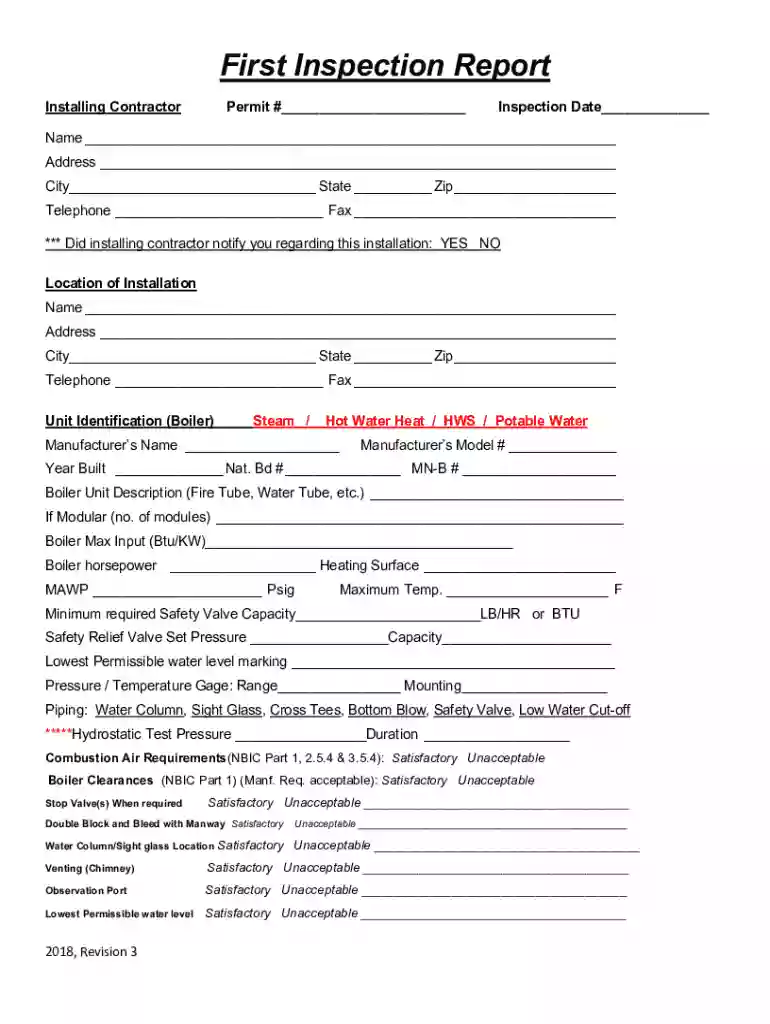
Type text, add images, blackout confidential details, add comments, highlights and more.

Draw your signature, type it, upload its image, or use your mobile device as a signature pad.

Send it via email, link, or fax. You can also download it, export it or print it out.
The "Boiler Checklist" is a critical document used in the inspection and maintenance of boilers. This checklist serves as a comprehensive guide to ensure that all aspects of a boiler system are examined thoroughly and meet regulatory standards. It typically includes various sections covering safety checks, technical specifications, and compliance with local codes and standards. The document aims to provide a systematic approach to inspecting a boiler's functionality, identifying potential issues, and ensuring safe operation. By using this checklist, inspectors and maintenance personnel can systematically document their assessments, ensuring no critical component is overlooked.
Using the boiler checklist effectively requires understanding its structure and purpose. The checklist guides the user step-by-step through each necessary inspection point, ensuring that all components are assessed. Key areas covered usually include safety valves, control devices, and heating systems. Each item on the list should be marked as 'checked,' 'monitored,' or 'requires attention,' with detailed notes or remarks added for any irregularities. Conducting the inspection involves systematically working through the checklist's categories, taking note of the boiler's condition, and recording any findings that require maintenance or further evaluation.
Completing a boiler checklist involves a methodical approach to evaluating the state of the boiler system. Here's a step-by-step guide:
Utilizing a boiler checklist is essential for maintaining the safety, efficiency, and compliance of boiler systems. Here are key reasons why using a checklist is beneficial:
A variety of professionals rely on boiler checklists to ensure boiler safety and efficiency. These typically include:


A boiler checklist often contains several critical elements that form the basis for a thorough inspection. These elements typically include:
While boiler checklists share common features, specific regulations can vary widely from state to state due to different local laws and building codes:
Practical uses of the boiler checklist can be observed in a range of settings:
In each of these instances, the checklist facilitates a comprehensive inspection that flags potential issues before they escalate, ensuring safety and compliance with all pertinent regulations.
We've got more versions of the Boiler checklist form. Select the right Boiler checklist version from the list and start editing it straight away!
| Versions | Form popularity | Fillable & printable |
|---|---|---|
| 2018 | 4.8 Satisfied (93 Votes) |
At DocHub, your data security is our priority. We follow HIPAA, SOC2, GDPR, and other standards, so you can work on your documents with confidence.
Drain and flush the boiler, open all handholes and mainholes, clean and remove soot and scale from the firesides. Examine the boiler for damage and corrosion.Read more
Guardrails. 1. Are drain openings/pits in the floor or walking surfaces guarded with a standard barrier to prevent tripping/slipping?Read more
by N Ireland This publication specifically addresses issues concerning the selection of boilers, hot water storage vessels, controls and indeed complete systems. It.Read more


