Definition & Meaning
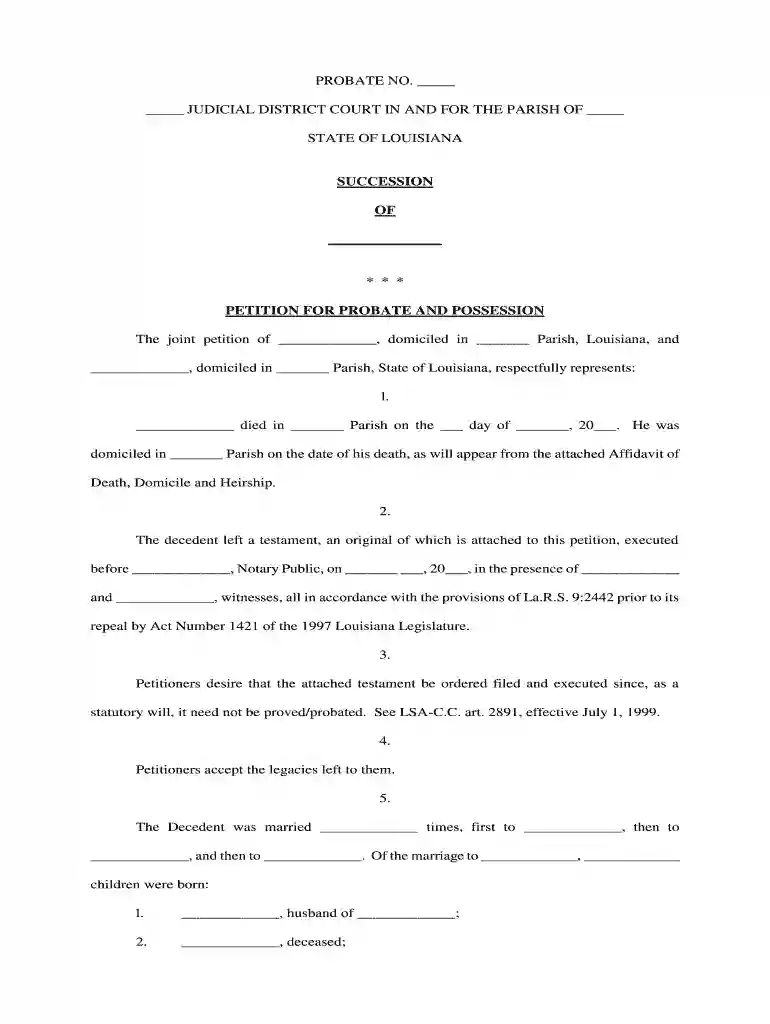
Louisiana probate is a legal process in which the will of a deceased person is validated and executed according to state laws. Its primary function is to ensure that a decedent's assets are distributed to the rightful heirs after debts and obligations are settled. This process includes proving the will's legality, inventorying the deceased’s assets, paying debts and taxes, and distributing the remainder to heirs. The probate court oversees this process to prevent fraud and ensure that the decedent's wishes are fulfilled as per their testamentary documents and Louisiana's unique inheritance laws.
Steps to Complete the Louisiana Probate
Initiating Probate Proceedings
- Determine Eligibility: Verify that the decedent’s estate requires probate, which may not be necessary if the estate is small or if assets are held in joint tenancy.
- Locate the Will: The executor or personal representative must locate the original will and any codicils.
- File the Petition: Submit a petition for probate to the appropriate parish court, along with the original will and a death certificate.
Court Involvement
- Court Hearing: Attend a hearing where the court will validate the will and appoint the executor.
- Notifications: Notify all heirs and beneficiaries of the probate proceedings.
Administering the Estate
- Inventory Assets: Inventory and appraise the estate's assets.
- Settle Debts: Pay the decedent’s debts, claims, and taxes using the estate's funds.
- Distribute Assets: Distribute the remaining assets to the beneficiaries as outlined in the will.
Closing the Estate
- Final Accounting: Prepare and submit a final accounting to the court and close the estate once all obligations are met.
Key Elements of the Louisiana Probate
Essential Components
- Executor: The individual responsible for managing the estate through the probate process.
- Will Validation: Court assessment confirming the will is legally binding and authentic.
- Beneficiaries: Individuals or entities designated to receive assets.
- Inventory and Appraisal: Detailed listing and valuation of the decedent's estate.
- Debts and Claims: Outstanding liabilities that must be resolved during probate.
Specific Features
- Louisiana's forced heirship laws may require portions of an estate to be set aside for certain heirs, complicating traditional wills.
State-Specific Rules for the Louisiana Probate
Forced Heirship
- Louisiana law mandates that a portion of the estate be reserved for forced heirs, typically children under 24 or those with disabilities, which may override a will's provisions.
Small Estate Affidavit
- If the estate's value falls below a statutory threshold, heirs may use a simplified process with a small estate affidavit, bypassing formal probate.
Community Property Laws
- In Louisiana, community property laws may impact how assets are divided, especially if the decedent was married, as all property acquired during the marriage is jointly owned unless otherwise specified.
Important Terms Related to Louisiana Probate
- Succession: The legal process of transferring the rights and obligations of the decedent to their heirs.
- Executor: An appointed individual responsible for executing the will and managing estate affairs.
- Testate vs. Intestate: Testate succession occurs when a valid will exists; intestate takes place when there is no will.
- Codicil: A legal document that modifies aspects of a previously executed will.
Examples of Using the Louisiana Probate
Practical Scenarios
- Example 1: Uncontested Probate: A straightforward case where the decedent left a comprehensive will, and the heirs accept its validity and terms.
- Example 2: Contested Probate: A situation where beneficiaries dispute the will's terms, leading to potential delays and court interventions.
- Example 3: Small Estate Scenario: Utilizing a small estate affidavit for fast-track succession in estates with minimal assets.
Required Documents
- Original Will: Essential for initiating probate.
- Death Certificate: Verifies the death and legitimizes the probate process.
- Petition for Probate: Outlines the request to open probate proceedings.
- Asset Inventory: Comprehensive list of all estate assets.
- Creditor Claims: Proof and documentation of debts and obligations.
Legal Use of the Louisiana Probate
Court Oversight
- Transparency: Courts oversee the process to protect heirs and creditors and prevent potential fraud.
- Legitimacy: The court-confirmed distribution process ensures the legal recognition of asset transfers and the executor's actions.
- Dispute Resolution: Courts address challenges to the will and settle disputes among parties involved.
Filing Deadlines & Important Dates
- Filing Timing: Probate should be initiated shortly after death, typically within a year but varies based on specific circumstances.
- Contest Period: Heirs have a limited time post-filing to contest the will, usually set by state law for up to six months.
- Tax Deadlines: Estate and inheritance taxes follow specific deadlines based on state and federal requirements.