







Definition & Meaning
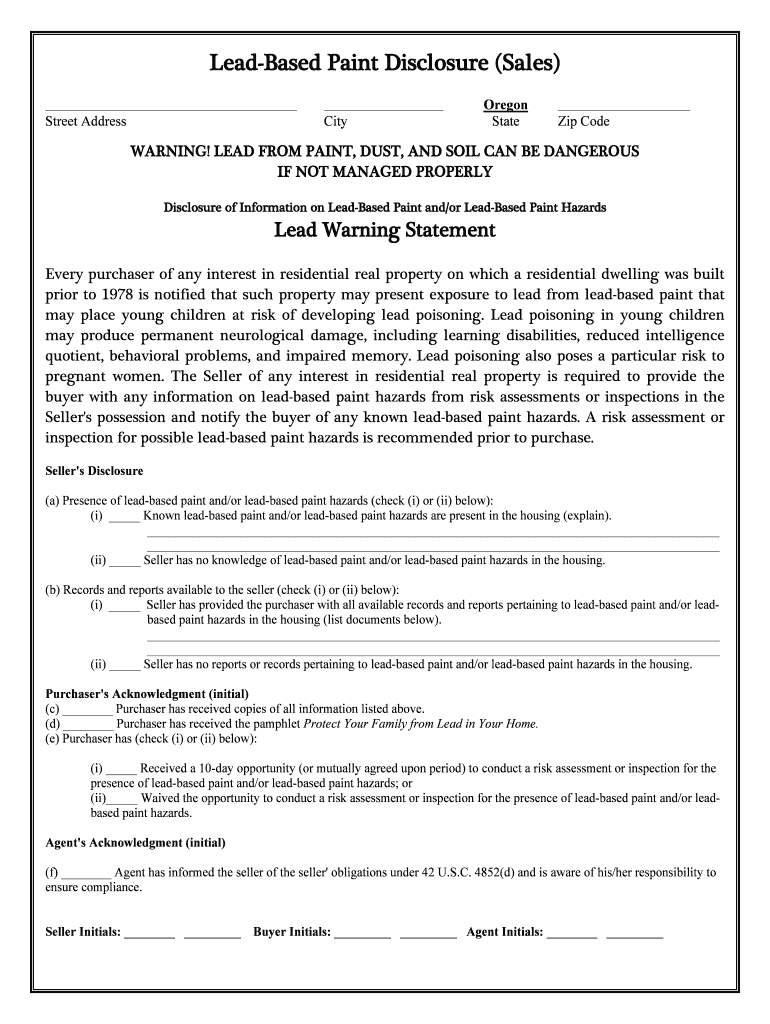
The "Oregon Lead Based Paint Disclosure for Sales Transaction" is a critical document intended for the sale of residential properties constructed before 1978. This disclosure form plays a vital role in informing potential buyers about known lead-based paint hazards in the property. It ensures sellers share any existing information on lead contamination, providing buyers with the opportunity to conduct a risk assessment if desired. This not only aids in preventing potential health hazards related to lead exposure but also ensures transparency in real estate transactions.
How to Use the Oregon Lead Based Paint Disclosure for Sales Transaction
The form should be utilized by sellers at the initiation of a sales transaction for applicable properties. Here’s a step-by-step guide:
- Obtain the Form: Secure a copy of the disclosure form from reputable sources, ensuring it's the latest version required for Oregon real estate transactions.
- Complete Seller's Section: Enter details about any known lead-based paint or hazards, including inspection results or reports.
- Information Sharing: Provide potential buyers with the Environmental Protection Agency (EPA) pamphlet, "Protect Your Family from Lead in Your Home."
- Document Acknowledgement: Ensure both parties, including agents, sign the form to confirm the disclosure process is complete.
- Retention of Records: Keep a copy of the completed disclosure for a minimum of three years, as required by federal law.
Key Elements of the Oregon Lead Based Paint Disclosure for Sales Transaction
- Seller's Disclosure: Details any known lead-based paint risks or existing reports.
- Purchaser's Acknowledgment: Confirms the buyer has been informed and has received necessary EPA documentation.
- Agent Responsibilities: Ensures real estate agents facilitate the disclosure process properly.
- Legal Compliance: Aligns with federal regulations, notably the Residential Lead-Based Paint Hazard Reduction Act.
Legal Use of the Oregon Lead Based Paint Disclosure for Sales Transaction
Sellers and real estate agents must comply with this disclosure under federal law when engaging in sales transactions for relevant properties. Failure to comply can lead to significant legal repercussions, including fines or nullification of the sale. It is essential to follow both state and federal guidelines to ensure lawful completion.
Penalties for Non-Compliance
Non-compliance with the lead-based paint disclosure requirements can result in:
- Fines: Both state and federal penalties can be imposed.
- Legal Action: Buyers may pursue legal action for failing to disclose material information.
- Contract Nullification: The sales contract can be voided for insufficient disclosure.
Who Typically Uses the Oregon Lead Based Paint Disclosure for Sales Transaction
This form is mandatory for:
- Residential Property Sellers: Particularly those selling homes built before 1978.
- Real Estate Agents: Those facilitating transactions for older homes.
- Potential Buyers: Individuals seeking to be informed about possible lead hazards before purchase.


Important Terms Related to Oregon Lead Based Paint Disclosure for Sales Transaction
- Lead-Based Paint Hazard: Any condition that causes exposure to lead from lead-contaminated dust, soil, or deteriorated paint.
- EPA Pamphlet: "Protect Your Family from Lead in Your Home," a required informational pamphlet.
- Risk Assessment: Evaluation carried out to determine lead presence and associated risks.
State-Specific Rules for the Oregon Lead Based Paint Disclosure for Sales Transaction
In Oregon, while aligning with federal guidelines, there could be additional state-specific recommendations or requirements. It is vital to consult with local real estate professionals or legal advisors to ensure full compliance, which might include varying procedural differences or additional documentation.
Examples of Using the Oregon Lead Based Paint Disclosure for Sales Transaction
Consider a seller, Jane, selling her house built in 1965. She's required to provide a completed lead-based paint disclosure form to potential buyer John, including any inspection reports, and ensure he receives an EPA brochure. This process safeguards both parties and fulfills legal obligations, fostering a transparent transaction.




