



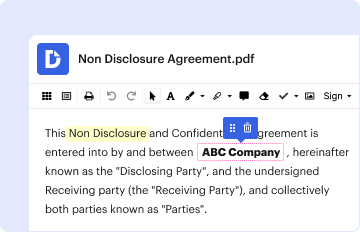
01. Edit your form 4np online
Type text, add images, blackout confidential details, add comments, highlights and more.

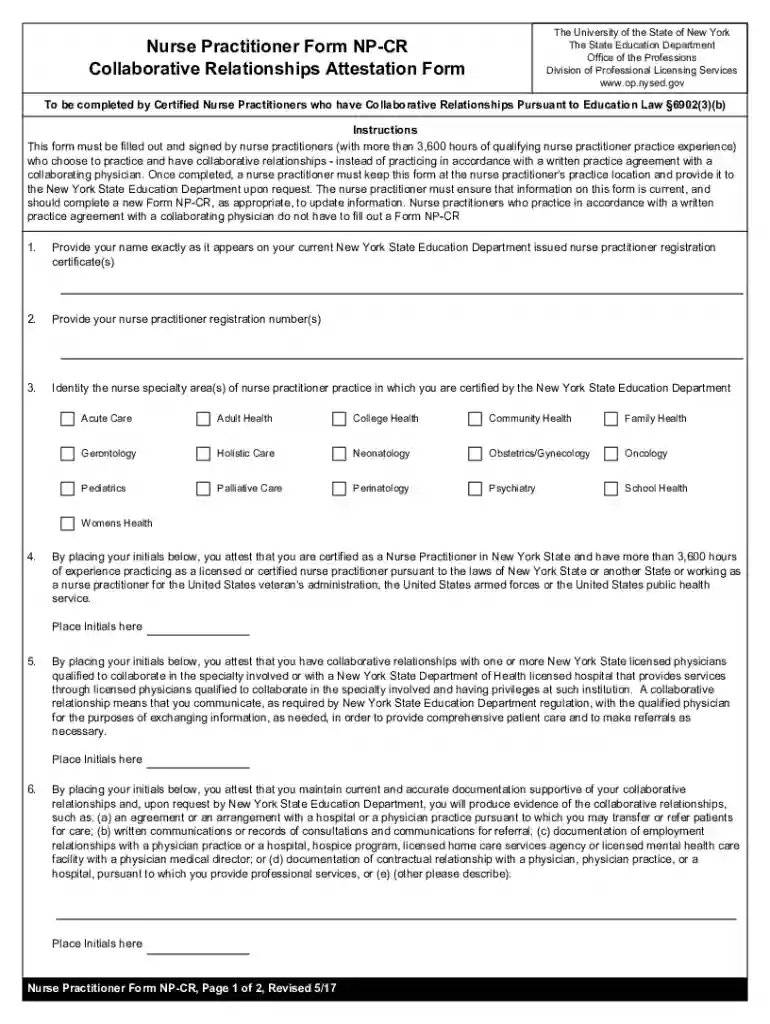
Type text, add images, blackout confidential details, add comments, highlights and more.
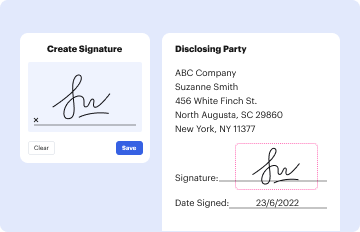
Draw your signature, type it, upload its image, or use your mobile device as a signature pad.
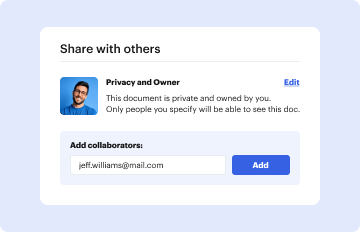
Send it via email, link, or fax. You can also download it, export it or print it out.
The Nurse Practitioner Form NP-CR, short for Nurse Practitioner-Collaborative Relationships, is a document required by the New York State Education Department. This form is particularly designed for Certified Nurse Practitioners (CNPs) who have amassed over 3,600 hours of practice experience. It serves as a formal record to confirm the nurse practitioner's collaborative relationship with licensed physicians or hospitals. The collaboration ensures that nurse practitioners maintain a high standard of care through continuous communication and guidance from experienced healthcare professionals.
Ensuring completeness and accuracy of the Nurse Practitioner Form NP-CR is crucial for compliance with New York State requirements. Major elements include:
Completing the form systematically ensures compliance and accuracy:
Primarily, the Nurse Practitioner Form NP-CR is utilized by Certified Nurse Practitioners practicing in New York who meet the 3,600-hour experience threshold. These practitioners need to document their collaborative arrangements as part of meeting statutory professional practice standards. The form also involves licensed physicians or hospital representatives as collaborators, who play a pivotal role in the supervision and development of clinical competencies in nurse practitioners.


The legal framework around the Nurse Practitioner Form NP-CR emphasizes its role in ensuring statutory compliance. Collaboration is not merely a regulatory requirement but serves to enhance patient care quality by integrating insights from experienced practitioners. Compliance ensures legal protection for nurse practitioners, demonstrating adherence to state regulations and clinical guidelines.
While numerous states require nurse practitioners to maintain collaborative relationships, the particular requirements encapsulated in the NP-CR form reflect New York’s approach to nurse practitioner regulation. Unique to New York is the requirement to retain the soft and hard copies of the form onsite at the nurse's place of practice. Non-compliance may lead to professional scrutiny or penalties, as maintaining updated documentation for periodic reviews is mandatory.
Understanding key terms is essential for the successful completion and implementation of the Nurse Practitioner Form NP-CR:
Submission and retention are critical components for compliance:
Non-compliance could incur significant penalties, including fines and professional reprimands. The New York State Education Department may conduct audits, and any discrepancies or missing documentation could lead to disciplinary actions that adversely impact a nurse practitioner’s ability to practice. Regular updates and reviews of the form are necessary to avoid such outcomes.
We've got more versions of the form 4np form. Select the right form 4np version from the list and start editing it straight away!
At DocHub, your data security is our priority. We follow HIPAA, SOC2, GDPR, and other standards, so you can work on your documents with confidence.
Nov 19, 2024 The experiences of the registered nurse caring for the person dying of cancer in a nursing home. Collegian 2000;7:30-34. Available at: httpRead more
Identify by name and license number physicians with whom you are currently engaged in collaborative relationships. If you have a collaborative relationship withRead more
by B Bowen 2023 State law requires a career- long regulated collaborative agreement with another health provider in order for the NP to provide patient care, or it limits theRead more


