







Definition and Meaning
The homestead exemption in Texas is a legal provision designed to offer financial relief to property owners by reducing the taxable value of their primary residence. This reduction enables homeowners to lower their property tax obligations by a set amount dictated by state law, making homeownership more affordable. The homestead exemption applies to a variety of situations, including general residences, individuals with disabilities, senior citizens, and certain categories of veterans.
Eligibility Criteria
Eligibility for the Texas homestead exemption requires meeting specific criteria. The property must serve as the homeowner's primary residence as of January 1 of the tax year. It cannot be a secondary home or investment property. For age-related exemptions, applicants must be 65 years or older, and disability exemptions require proof of disability. Eligibility also extends to military veterans who visit certain thresholds of service-related disabilities or surviving spouses of deceased veterans under specific conditions.
- Primary residence status as of January 1
- Ownership of the property
- Age and disability qualifications


Steps to Complete the Homestead Exemption in Texas
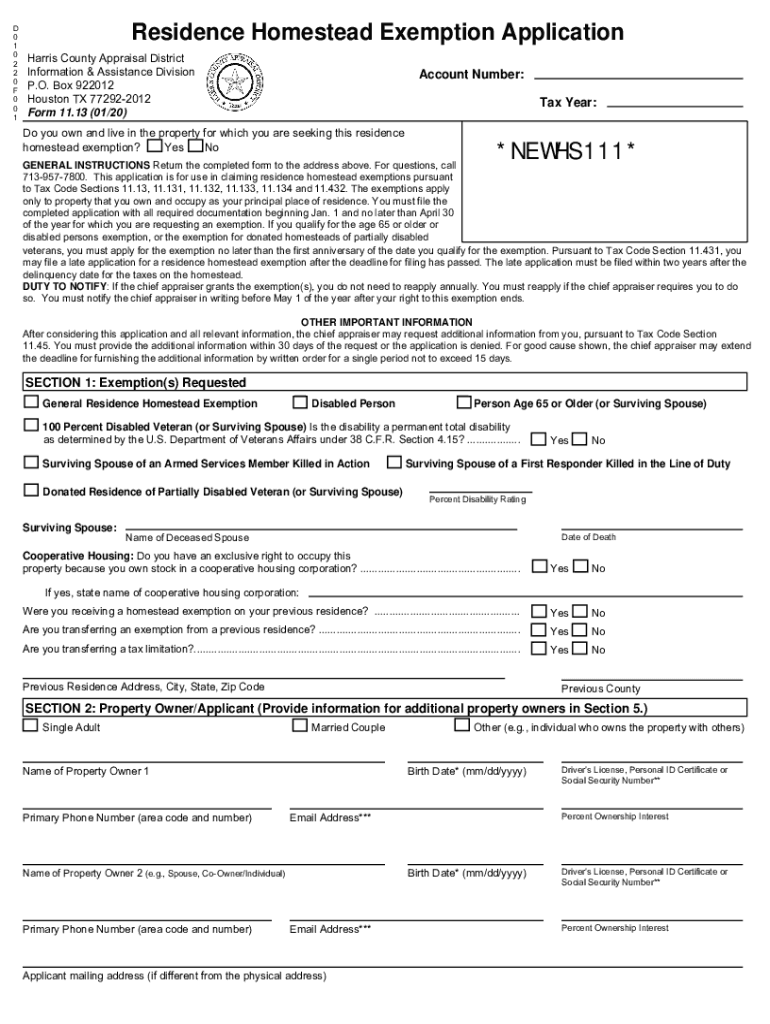
Completing the Texas homestead exemption application entails a systematic process:
- Prove Homeownership and Occupancy: Ensure the property in question is your principal residence by January 1.
- Obtain the Application Form: Access the appropriate Residence Homestead Exemption Application from your county appraisal district’s website.
- Fill Out the Application: Complete all required fields, listing owner information, property description, and any applicable exemptions for which you qualify.
- Submit Required Documentation: Attach documents like a Texas driver's license or state ID with the same address as the property.
- Submit the Form: Send the completed application and documents either by mail, online, or in-person to your county appraisal district before the statutory deadline.
Required Documents
To properly apply for the homestead exemption in Texas, certain documents must accompany an application:
- Proof of Identification: Such as a Texas driver's license or state ID matching the homestead's address.
- Proof of Ownership: Deed or title documentation showcasing ownership.
- Additional Proofs for Specific Exemptions: Military IDs or disability proof for corresponding exemptions.
State-specific Rules for the Homestead Exemption
Texas has unique provisions in its homestead exemption laws, including a mandatory percentage reduction for school district taxes and optional exemptions for other tax authorities, provided by local entities:
- School District Exemption: A fixed $40,000 in school taxes
- County, City, or Special District Exemptions: Optional and variable, determined by local governing authorities.
Filing Deadlines and Important Dates
Awareness of filing times is critical to ensure eligibility for exemptions:
- Standard Deadline: Applications should be submitted by April 30 for full-year exemption.
- Late Filing: The state allows extension to up to two years after the delinquency date of taxes based on good cause.
Penalties for Non-Compliance
Not complying with homestead exemption regulations can result in:
- Loss of Exemption Privileges: Removal of tax reduction benefits, ensuing financial liabilities.
- Back Taxes Payment: Requirement to remit due taxes from the exemption period plus penalties.
Application Process and Approval Time
The homestead exemption process can vary, but it typically follows:
- Application Review: County officials review applications for completeness and eligibility.
- Approval Duration: Approval typically takes up to 90 days.
- Notification: Taxpayers receive written notification of approval or denial.
Examples of Using the Homestead Exemption
- Elderly Couple: An elderly couple applying based on their age can secure significant savings on school taxes and local property taxes, depending on additional exemptions.
- Disabled Veteran: A qualified disabled veteran can exempt themselves from certain property taxes, alleviating financial strain and allowing focus on daily living and medical costs.
The homestead exemption Texas offers is a valuable provision for reducing property tax burdens, and adhering to the application process correctly ensures homeowners can optimize their savings.




