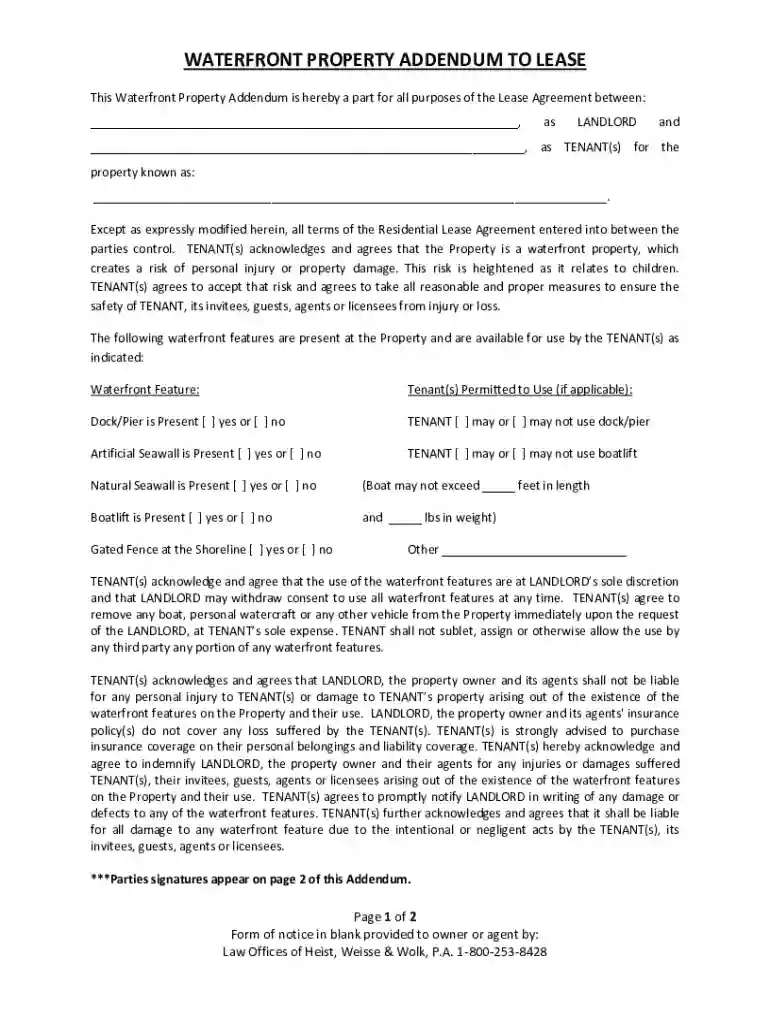
Get WATERFRONT PROPERTY ADDENDUM TO LEASE 2026

Get Form
Get WATERFRONT PROPERTY ADDENDUM TO LEASE Preview on Page 1

Here's how it works

01. Edit your form online
Type text, add images, blackout confidential details, add comments, highlights and more.

02. Sign it in a few clicks
Draw your signature, type it, upload its image, or use your mobile device as a signature pad.

03. Share your form with others
Send it via email, link, or fax. You can also download it, export it or print it out.

Definition and Meaning

The Waterfront Property Addendum is an important document that outlines the specific terms and conditions for accessing and using waterfront features in a lease agreement. This addendum aims to clarify responsibilities and expectations between landlords and tenants, ensuring a mutual understanding of the risks and privileges associated with waterfront properties. It highlights potential hazards, mandates safety measures, and delineates the range of amenities accessible to tenants.

How to Use the Waterfront Property Addendum

To effectively incorporate the Waterfront Property Addendum into a lease agreement, tenants and landlords should follow these steps:

  1. Review the Lease Terms: Both parties should carefully review the main lease agreement to understand the foundational terms before adding any amendments.

  2. Mutual Agreement: Landlords and tenants must mutually agree on the specific waterfront features to be used. This includes access rights, maintenance responsibilities, and usage restrictions.

  3. Safety Measures: Implement and document safety protocols to manage risks, particularly for young children or non-swimmers.

  4. Signatures: Ensure that both tenant and landlord sign the addendum to acknowledge acceptance of the terms.

  5. Retention: Retain a copy of the signed addendum with the original lease for future reference.

How to Obtain the Waterfront Property Addendum

To obtain the Waterfront Property Addendum:

  • Landlord’s Resource: Landlords often leverage property management resources or legal advisors to draft this document.
  • Template Providers: Online services, such as DocHub, offer customizable templates suitable for varying state regulations.
  • Legal Consultation: Consult a real estate attorney to draft or review the addendum for legal compliance.

Key Elements of the Waterfront Property Addendum

Several crucial elements must be addressed in the addendum:

  • Access and Usage: Clearly define which waterfront features are available and any associated usage limitations.
  • Liability: Include disclaimers outlining responsibilities for personal injury or property damage, emphasizing the need for tenants to bear any consequences arising from negligence.
  • Insurance: Advise tenants to obtain comprehensive insurance to protect against potential liabilities involving the use of waterfront spaces.
  • Damage Reporting: Outline procedures for reporting damages to waterfront features to facilitate timely repairs.

Steps to Complete the Waterfront Property Addendum

Completing the Waterfront Property Addendum effectively requires the following steps:

  1. Identify Features: Specify which waterfront elements (such as docks, boat ramps, or swimming areas) the tenant can use.
  2. Set Usage Guidelines: Include rules governing how these features should be used, possibly setting times of access or permissible activities.
  3. Detail Risk Management: Describe necessary safety measures and any equipment provided for safety purposes.
  4. Establish Reporting Protocols: Create a clear protocol for the tenant to report any damage or safety issues observed on the property.
  5. Obtain Agreement: Secure signatures from both tenant and landlord to finalize the addendum.

Why You Should Get the Waterfront Property Addendum

Incorporating a Waterfront Property Addendum is crucial for the following reasons:

  • Risk Mitigation: It protects both landlords and tenants by outlining clear safety obligations.
  • Legal Clarity: Provides a clear legal framework defining liabilities and rights, reducing potential disputes.
  • Enhanced Safety: Encourages proactive safety measures to prevent accidents and injuries.
  • Tenant Satisfaction: Assures tenants of their rights and privileges, potentially improving tenant satisfaction.

Who Typically Uses the Waterfront Property Addendum

  • Landlords: Those offering properties with waterfront access add this addendum to ensure tenant responsibilities are clear.
  • Tenants: Renters willing to lease such properties must consult this document to understand their obligations and rights.
  • Property Managers: Professionals managing waterfront properties employ this form as part of the leasing documentation routine.
decoration image ratings of Dochub

Legal Use of the Waterfront Property Addendum

The legal applicability of the Waterfront Property Addendum extends to:

  • Lease Agreements: Legally binding within lease terms, provided both parties have agreed and signed.
  • Risk Disclosures: It serves as a documented disclaimer of potential water-related risks, protecting landlords from certain liabilities.

State-Specific Rules for the Waterfront Property Addendum

State regulations may influence how the Waterfront Property Addendum is formulated and enforced:

  • Local Laws: Certain states may impose specific safety or environmental regulations concerning waterfront property use.
  • Regulatory Compliance: Adjustments to the addendum should be made to comply with regional legal standards.
  • Variances: Be aware of state-specific variances such as fencing requirements, mandatory environmental protections, or specific insurance stipulations.

Important Terms Related to the Waterfront Property Addendum

Under this addendum, several important terms need clarification:

  • Waterfront Features: Docks, piers, seawalls, and other elements that provide direct access to water.
  • Liability Disclaimer: Legal statements absolving the landlord of certain responsibilities in case of accidents.
  • Safety Precautions: Mandated actions like installing life-saving equipment or restricting areas deemed hazardous.
  • Usage Rights: Rights granted to tenants concerning the usage of water-related amenities, specifying any limitations.

Examples of Using the Waterfront Property Addendum

Real-world applications of the Waterfront Property Addendum include:

  • Vacation Rentals: Short-term leases by waterfronts often include this to limit liability and outline guest responsibilities.
  • Family Residences: Homes with boat access or beach areas might necessitate this document to ensure safety disclaimers are acknowledged and adhered to by all residents.
  • Boating Communities: Housing associations near lakes or rivers impose collective use agreements through such addenda to handle shared risks and responsibilities.

See more Get WATERFRONT PROPERTY ADDENDUM TO LEASE versions

We've got more versions of the Get WATERFRONT PROPERTY ADDENDUM TO LEASE form. Select the right Get WATERFRONT PROPERTY ADDENDUM TO LEASE version from the list and start editing it straight away!
Versions Form popularity Fillable & printable
2021 4.2 Satisfied (47 Votes)
2017 4.3 Satisfied (38 Votes)
be ready to get more

Complete this form in 5 minutes or less

Get form

Got questions?

We have answers to the most popular questions from our customers. If you can't find an answer to your question, please contact us.
Contact us
How to write an addendum to a contract Mirror the language of the original contract. Choose an addendum title. Specify the parties. Clarify the part of the original contract the addendum refers to. Ensure compliance with the original contract and all other relevant regulations. Add any additional elements.
The Addendum Tenancy Agreement is a crucial legal instrument in Malaysian property law, used when parties need to modify an existing tenancy agreement without creating an entirely new contract.
Lease addendums are used to provide additional information that the original lease does not cover. In other words, a lease addendum allows you to add an additional document to or adjust the terms of your existing rental agreement.
The 2 biggest signs are not keeping up with basic maintenance. And asking for illegal terms in the lease agreement.
How to Add an Addendum (3 steps) Speak with the Tenant. Tenant Reviews the Addendum. Sign and Attach.

Security and compliance

At DocHub, your data security is our priority. We follow HIPAA, SOC2, GDPR, and other standards, so you can work on your documents with confidence.

Learn more
ccpa2
pci-dss
gdpr-compliance
hipaa
soc-compliance
be ready to get more

Complete this form in 5 minutes or less

Get form

People also ask

An addendum to a lease is a separate legal agreement added by the landlord or tenant to the original lease agreement between the landlord and a tenant. Lease addenda are used to provide additional information that the original lease does not cover.
Templates for lease agreements are widely available online; however, it is important to know how to write a lease agreement and what information must be included. Even if you decide to draft your own lease agreement, it is good practice to have it reviewed by an experienced attorney before executing.
Compliance with Laws: The terms introduced by the addendum must comply with all relevant federal, state, and local laws and regulations, just like the original contract. Effective Date: The addendum should clearly state when the changes take effect. This might be upon signing, or on a specific future date.

Related links