Definition & Meaning
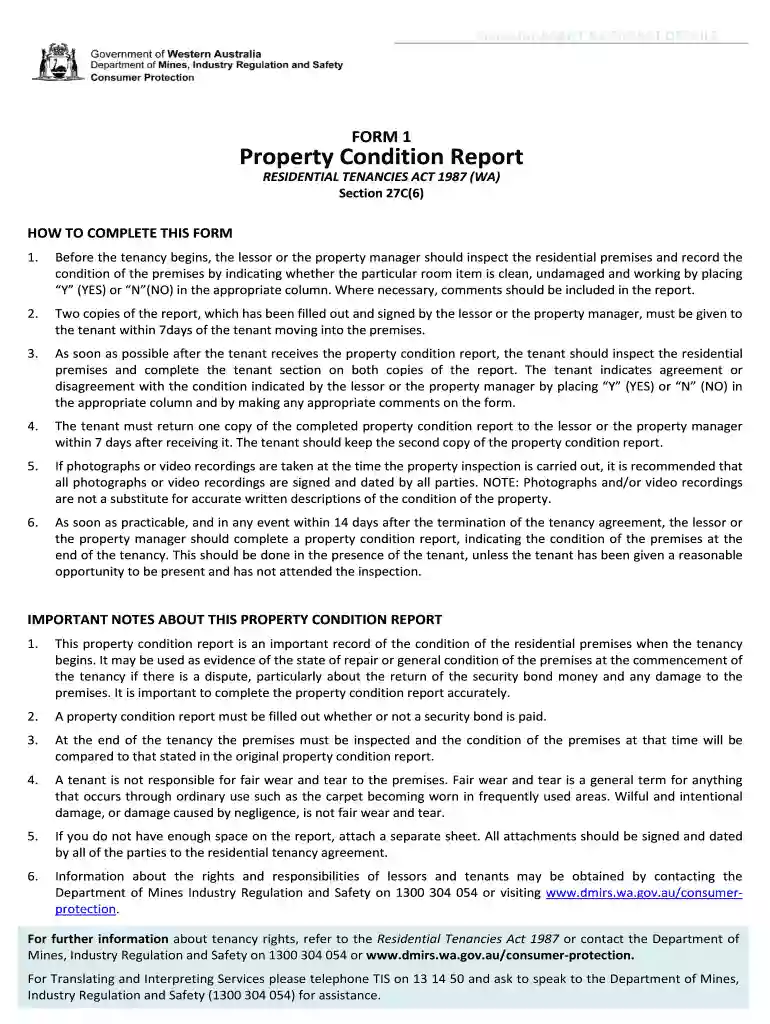
A WA Property Condition Report is a formal documentation required under the Residential Tenancies Act 1987 (WA) to record the state of a residential property at the start and end of a lease in Western Australia. The report serves as a baseline for evaluating the property's condition, providing a reference point in case disputes arise regarding the security bond or damages during or after the tenancy. This document ensures that both landlords and tenants have a clear understanding of the initial and final condition of the property, thereby promoting transparency and fairness in rental agreements.
Key Components of the Report
- Inspection Details: Information on the date and time of inspection and the parties involved.
- Property Condition: Detailed description of each area of the property, including walls, floors, fixtures, and fittings.
- Photographic Evidence: Photos to visually support the written condition claims, ensuring accurate and clear documentation.
Importance
The WA Property Condition Report not only helps in resolving disputes over property damage but also encourages tenants to maintain the property during their lease.
Steps to Complete the WA Property Condition Report
Completing the WA Property Condition Report involves a clear and methodical approach to ensure accuracy and compliance with legal requirements. Here's a comprehensive guide to accomplishing this task:
- Schedule and Conduct an Inspection: Arrange a convenient time with the tenant to inspect the property. Both parties should ideally be present to discuss findings.
- Document Each Room: Carefully inspect and describe the condition of all rooms including the living area, kitchen, bedrooms, and bathrooms. Note any existing damage or wear and tear.
- Include External Areas: Don’t forget external areas such as gardens, driveways, and any outbuildings or sheds. Document their condition similarly.
- Take Photographs: Capture clear and dated photographs of each room and any notable issues to provide visual evidence along with written descriptions.
- Review and Sign: Both the landlord and tenant should review the completed report. Any discrepancies should be addressed and resolved before both parties sign the document.
Special Considerations
- Furnishings: If the property is furnished, include a detailed inventory list with conditions of each item.
- Utilities: Record the condition and functioning of utilities and appliances.
Key Elements of the WA Property Condition Report
Understanding the critical components covered in the WA Property Condition Report is essential for both landlords and tenants:
Structural Components
- Walls and Ceilings: Assess for cracks, holes, and paint quality.
- Floors and Carpets: Examine for stains, damage, and overall cleanliness.
- Doors and Windows: Check for functionality and wear, including locks.
Fixtures and Fittings
- Plumbing: Includes taps, showers, toilets—for functionality and leaks.
- Electrical: Light fixtures, outlets, and appliances for operational status.
- Heating and Cooling Systems: Proper operation and maintenance condition.
How to Use the WA Property Condition Report
To maximize the use of the WA Property Condition Report, it should be strategically utilized at various stages of a tenancy:
- Pre-Tenancy: Complete and sign the report before the tenant moves in to create a mutual record of the property's condition.
- During Tenancy: Regular inspections using the report help address maintenance issues early, ensuring sustained property condition.
- Post-Tenancy: Conduct a final inspection referencing the initial report to assess any changes in condition for potential repairs or chargeable damages.
Tenant's Role
- Review Thoroughly: Examine the report and raise concerns before signing.
- Maintain Property: Remain mindful of the report when using the property to avoid disputes.
Legal Use of the WA Property Condition Report
The legal applicability of the WA Property Condition Report provides substantial backing in property management and tenancy disputes:
As a Legal Document
- Dispute Resolution: Serves as an impartial reference in legal disputes over damages or cleaning costs.
- Bond Claims: Essential for discussions or claims about security bond returns.
- Evidence in Court: Acts as evidence in tenancy-related court cases or disputes, supporting the claims of either party.
Compliance with Legislation
- Adhering to the requirements of the Residential Tenancies Act 1987 (WA) is mandatory, ensuring the property condition report is completed with accuracy and fairness.
Important Terms Related to the WA Property Condition Report
Familiarity with key terminologies associated with the WA Property Condition Report ensures both legal compliance and an understanding of its scope:
- Lessors: The property owners or managers who lease out the property.
- Tenants: Individuals who occupy and rent the property.
- Security Bond: A deposit held as security for potential damages by the tenant.
- Wear and Tear: The normal deterioration of property over time, not chargeable to the tenant.
Who Typically Uses the WA Property Condition Report
The WA Property Condition Report is instrumental for various stakeholders in the residential leasing sector:

- Landlords and Property Managers: To ensure properties are returned in proper condition and manage deposit returns efficiently.
- Tenants: To safeguard their rights and security bond from unfair deductions.
- Legal Professionals: Utilize the report in mediations and legal proceedings concerning tenancy issues.
Impacts on Different Stakeholders
- Financial Security: Provides financial protection against unexpected repair costs.
- Conflict Prevention: Reduces misunderstandings and disagreements about property conditions.
Each of these sections provides an in-depth look at various aspects of the WA Property Condition Report, ensuring comprehensive understanding and effective application for all users involved in rental agreements.