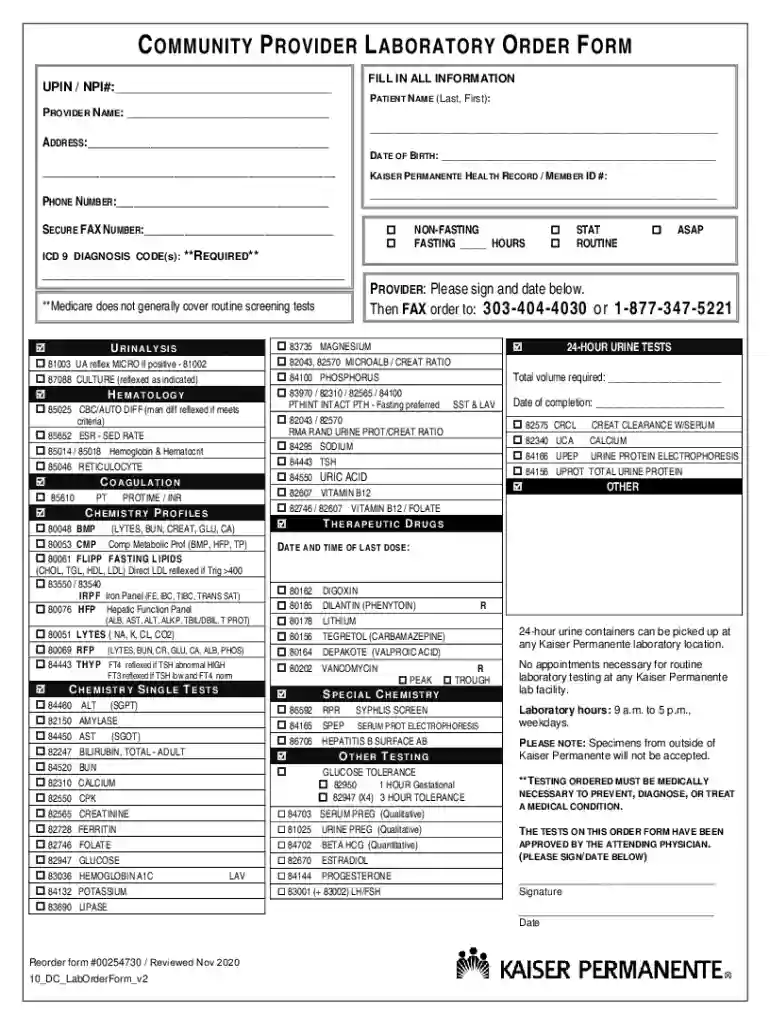
The Who, What, When, Why & How of NPI - CMS 2026

Get Form
The Who, What, When, Why & How of NPI - CMS Preview on Page 1

Here's how it works

01. Edit your form online
Type text, add images, blackout confidential details, add comments, highlights and more.

02. Sign it in a few clicks
Draw your signature, type it, upload its image, or use your mobile device as a signature pad.

03. Share your form with others
Send it via email, link, or fax. You can also download it, export it or print it out.

Definition and Purpose of NPI - CMS

The National Provider Identifier (NPI) within the Centers for Medicare & Medicaid Services (CMS) serves as a universal identification number for healthcare providers in the United States. Mandatory for all HIPAA-covered entities, including healthcare providers, health plans, and healthcare clearinghouses, the NPI ensures streamlined transactions and improved data exchange efficiency. Importantly, it replaces other identifiers, such as legacy provider numbers in standard transactions, emphasizing consistency and efficiency in healthcare communications.

Steps to Obtain the NPI in CMS

  1. Prepare Required Information: Gather personal and professional information, including legal name, business address, contact numbers, and taxonomy code.
  2. Access the NPPES Website: Visit the National Plan and Provider Enumeration System (NPPES) website.
  3. Complete the Online Application: Fill out all mandatory fields, review the entered data for accuracy, and submit the application electronically.
  4. Receive Confirmation: Once processed, you will receive your unique NPI via email, confirming your registration within the CMS system.

How to Use the NPI-CMS

The NPI is utilized in a variety of healthcare and administrative functions:

  • Claims Submission: Include the NPI on claim forms to ensure proper billing.
  • Healthcare Transactions: Use the NPI for all HIPAA-compliant transactions, including referrals and authorizations.
  • Provider Credentialing: Collaborate with health organizations by supplying your NPI for credentialing purposes.
  • Patient Records: Facilitate the exchange of electronic patient information by including the NPI.

Why You Need an NPI – CMS

Healthcare providers require an NPI to participate in federally-regulated activities and processes, such as reimbursement under Medicare and Medicaid, while also maintaining HIPAA compliance. The NPI simplifies administrative procedures and contributes to improved interoperability across the healthcare system by standardizing identifiers.


Key Elements of the NPI Form in CMS

  • Personal Identification Information: Legal and professional details such as name, address, and contact.
  • Organizational Details: For entities, details about business structure and practices.
  • Taxonomy Details: Specific codes related to practice specialties.
  • Practice Location: Details about main practice location(s) to facilitate accurate communications.

Who Typically Uses the NPI-CMS

  • Healthcare Providers: Doctors, dentists, chiropractors, and specialists use the NPI for billing and process facilitation.
  • Billing Departments: Administrative staff within healthcare facilities rely on the NPI for accurate claims submission and patient billing.
  • Health Plans: Insurers utilize the provider’s NPI to process claims and verify provider legitimacy.
  • Government Entities: Utilize NPIs to monitor and ensure compliance with healthcare regulations.
decoration image ratings of Dochub

Legal Use of the NPI-CMS

Healthcare entities must utilize the NPI according to HIPAA regulations, ensuring that all administrative transactions are compliant with federal guidelines. Misuse or fraudulent use of NPIs can lead to legal repercussions, including fines and penalties.

Examples of Using the NPI in CMS

  • Interstate Provider Exchange: A provider billing for services in multiple states needs the NPI for consistent claim processing.
  • Electronic Health Records (EHR): Facilitating the transfer of patient information with a standardized identifier.
  • Medical Referrals: Using the NPI ensures that referrals are accurately tracked and processed across different systems and entities.

Required Documents for NPI Form Submission

To complete the NPI application process, providers must have:

  • Personal identification such as a social security number for individuals.
  • Business entity documents if applicable.
  • Associated taxonomy codes relating to specific area(s) of practice.

Filing Deadlines and Important Dates

There are no specific deadlines for obtaining an NPI; however, healthcare providers must secure one before engaging in any standardized healthcare transactions. Update any changes to your NPI information promptly to maintain accuracy and compliance.

Penalties for Non-Compliance with NPI Standards

Failure to secure an NPI or improper use can result in significant penalties, including monetary fines, rejection of claims, and increased scrutiny from healthcare auditing bodies, impacting a provider’s financial operations and reputation within the industry.

See more The Who, What, When, Why & How of NPI - CMS versions

We've got more versions of the The Who, What, When, Why & How of NPI - CMS form. Select the right The Who, What, When, Why & How of NPI - CMS version from the list and start editing it straight away!
Versions Form popularity Fillable & printable
2020 4.7 Satisfied (52 Votes)
be ready to get more

Complete this form in 5 minutes or less

Get form

Got questions?

We have answers to the most popular questions from our customers. If you can't find an answer to your question, please contact us.
Contact us

Electronic document approval requires a software solution that complies with data security and eSignature standards. DocHub is a perfect tool for that, since it fulfills all the above mentioned requirements. Whatever method you like to sign your The Who, What, When, Why & How of NPI - CMS in DocHub, your eSignature will be legally binding and court-admissible.

It is a no-brainer on a computer or via a mobile phone to complete a The Who, What, When, Why & How of NPI - CMS with DocHub. All you need to do is open any installed web browser on your smartphone and go to the DocHub website. Once authenticated, add your document and open it in editing mode. Use our toolbar to make your edits and save adjustments. Optionally, keep your file in your files or send it to a recipient immediately.

The NPI is a unique identification number for covered health care providers. Covered health care providers and all health plans and health care clearinghouses must use the NPIs in the administrative and financial transactions adopted under HIPAA.
Covered health care providers and all health plans and health care clearinghouses must use the NPIs in the administrative and financial transactions adopted under HIPAA. The NPI is a 10-position, intelligence-free numeric identifier (10-digit number).
The NPI is a 10-digit number that will be used to identify you to your health care partners, including all payers, in all HIPAA standard transactions. The NPI will replace the identifiers you currently use in HIPAA standard transactions that you conduct with Medicare and with other health plans.

Security and compliance

At DocHub, your data security is our priority. We follow HIPAA, SOC2, GDPR, and other standards, so you can work on your documents with confidence.

Learn more
ccpa2
pci-dss
gdpr-compliance
hipaa
soc-compliance

People also ask

NPIs are unique identifiers used by providers to bill Medicare and Medicaid for services they provide. They are currently the only identifiers allowed by the Centers for Medicaid and Medicare Services (CMS).
All Individuals and Organizations who meet the definition of health care provider as described at 45 CFR 160.103 are eligible to obtain a National Provider Identifier, or NPI. If you are a HIPAA covered provider or if you are a health care provider/supplier who bills Medicare for your services, you need an NPI.
NPIs may also be used to identify health care providers on prescriptions, in internal files to link proprietary provider identification numbers and other information, in coordination of benefits between health plans, in patient medical record systems, in program integrity files, and in other ways.
While not all nurses need an NPI number, all advanced practice registered nurses that bill health insurers through electronic methods do. This typically includes Certified Nurse Practitioners (CNP), Certified Registered Nurse anesthetists (CRNA), and Certified Nurse-Midwives (CNM).
Type 1: For individual health care providers, such as physicians, nurse practitioners and sole proprietors. Individuals are only eligible for one NPI. Type 2: For health care organizations, such as hospitals, nursing homes, and physician groups. Organizations can have multiple NPIs.

Related links