



01. Edit your rental verification form online
Type text, add images, blackout confidential details, add comments, highlights and more.

Type text, add images, blackout confidential details, add comments, highlights and more.

Draw your signature, type it, upload its image, or use your mobile device as a signature pad.

Send rental verification form texas via email, link, or fax. You can also download it, export it or print it out.
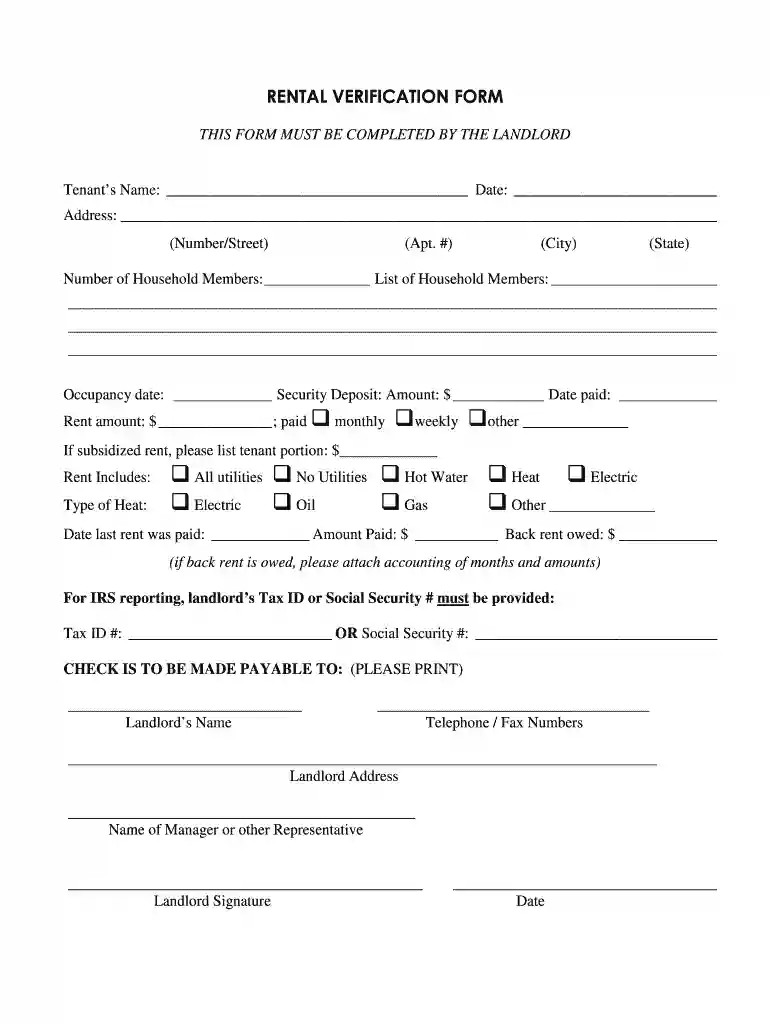
The rental verification form is a crucial document utilized primarily in rental agreements, allowing landlords to verify the rental history and financial standing of prospective tenants. This form is often a requirement for rental applications and is used in various scenarios where rental history needs to be established or confirmed.
The rental verification form typically includes fields for essential tenant details, such as the tenant's name, address, payment history, and contact information for the landlord or property manager. This data assists in determining the tenant's reliability and responsibility concerning rent payments.
Several important components characterize the rental verification form, providing comprehensive insight into a tenant's history and responsibilities.
Each of these elements plays an essential role in establishing a tenant's credibility and reliability in a rental context.
Completing a rental verification form is a straightforward process that requires careful attention to detail to ensure accuracy and completeness.
Gather Necessary Information: Both landlords and tenants should collect all requisite details before filling out the form. This includes personal identification, payment history, and specific rental details.
Fill in Tenant Information: Start by providing the complete name and current address of the tenant. Include any relevant household member details.
Document Rental History:
Include Owner or Landlord Details: The owner or landlord must provide their name, contact information, and, if applicable, their Tax Identification Number. It’s crucial for IRS regulations.
Review and Sign: Ensure all provided information is accurate. The landlord or property manager must sign the document to confirm its legitimacy.
Submission: Depending on the circumstances, submit the form to the requesting party, which could be a prospective landlord or property management company.
By following these steps, individuals can successfully complete the rental verification form, ensuring that it serves its intended purpose effectively.
A variety of individuals and entities utilize the rental verification form in their respective processes, highlighting its significance in the rental industry.
Landlords and Property Managers: They primarily use this form to assess prospective tenants. This verification aids in confirming claims made during rental applications about previous rental history.
Rental Agencies: These organizations often require a rental verification form to ascertain the background of applicants and ensure they meet financial and legal requirements.
Financial Institutions: Banks and credit unions may request this form when assessing individuals applying for loans requiring proof of stability and sources of income tied to rental properties.
Tenants: Current tenants may need to fill out this form when applying for a new rental or when they seek an official statement regarding their rental history for personal reasons.
Understanding who uses this form helps highlight its critical role in facilitating the smooth operation of rental agreements and applications.


The requirements and regulations surrounding the rental verification form can vary significantly from state to state, often reflecting local laws and ordinances.
Texas: In Texas, the rental verification form may need to conform to specific landlord-tenant laws, ensuring it captures all necessary information required to comply with the state's rental regulations.
California: In California, additional disclosures are often required that address tenant rights, which may impact how the rental verification form is structured and what information must be included.
New York: Laws in New York emphasize tenant protections, so the form may need to provide extra detail concerning tenant rights and the conditions under which information can be shared.
Being informed about state-specific rules is vital for both landlords and tenants to ensure compliance and to protect individual rights during the renting process.
Understanding key terminology related to rental verification can enhance comprehension and facilitate effective communication in the rental process.
Landlord: The owner of the rental property or their designated representative responsible for managing tenant relationships and collecting rent.
Tenant: An individual or group that rents a property from a landlord, typically outlined within a formal lease agreement.
Occupancy Dates: The specific dates that mark the beginning and end of the tenant's rental period.
Security Deposit: A monetary deposit collected by landlords to cover potential damages or unpaid rent, typically refundable if no issues arise.
Payment History: A record of the tenant's rent payments, detailing on-time payments, late payments, and any outstanding debts.
Recognizing these terms can help all parties involved better understand their responsibilities and rights regarding rental agreements and the verification process.
We've got more versions of the rental verification form form. Select the right rental verification form version from the list and start editing it straight away!
At DocHub, your data security is our priority. We follow HIPAA, SOC2, GDPR, and other standards, so you can work on your documents with confidence.



Tenants may request a Rental Verification Letter by contacting Campus Accommodations through a message from their message board under the Account tab.Read more
Verification of Rent Paid. Department Use Only. (MM/DD/YY). Tenants Name. Form. 5674. Landlord Information. Landlord must complete this form each year.Read more
Oct 5, 2018 To provide protections for certain sports medicine professionals, to reauthorize Fed- eral aviation programs, to improve aircraft safetyRead more


