







Definition and Purpose of Ohio Bureau of Motor Vehicles
The Ohio Bureau of Motor Vehicles (BMV) is a division within the Ohio Department of Public Safety that manages vehicle registration, driver licensing, and related services. It plays a critical role in enforcing traffic laws and regulations across Ohio. The BMV ensures that vehicles comply with state safety and environmental standards by facilitating the registration and titling processes. Additionally, the BMV handles driver's license issuance, amendments, and renewals, ensuring drivers meet the state's legal and safety criteria.
Key Responsibilities
- Registration Services: The BMV facilitates the registration of new and existing vehicles, ensuring all necessary data is recorded in the state database.
- Licensing Services: They issue, renew, or replace driver's licenses and identification cards, maintaining records of Ohio's licensed drivers.
- Safety and Compliance: The BMV enforces laws regarding vehicle safety and emissions standards, ensuring that all vehicles on Ohio roads adhere to these regulations.
Steps to Use the Ohio Bureau of Motor Vehicles Services
Utilizing services from the Ohio BMV requires understanding the processes involved, whether it’s obtaining a license or registering a vehicle.
- Visit a Local BMV Office: Identify the nearest or most convenient BMV office for in-person services unless online processing is available.
- Prepare Required Documents: Ensure you have all necessary documentation, such as identification, proof of residency, vehicle title, or previous license, depending on the service required.
- Complete Application Forms: Fill out the appropriate forms, which can be downloaded online or collected at the office.
- Submit Your Application: Present your documents to a BMV clerk. They will verify your information and process your requests.
- Pay Applicable Fees: Ensure you are aware of any fees associated with your service and make payments through the accepted methods, which may include cash, check, or card.
- Receive Confirmation: Upon successful completion of the process, you will receive official confirmation, such as a printed license or registration card.
Eligibility Criteria for Ohio BMV Services
Eligibility for services provided by the Ohio BMV depends on the type of service required and specific individual circumstances.
- Driver’s License Eligibility: Applicants must meet age requirements, pass vision and knowledge tests, and provide proof of identity and residency in Ohio.
- Vehicle Registration Requirements: Owners must possess a vehicle title, proof of insurance, and relevant identification.
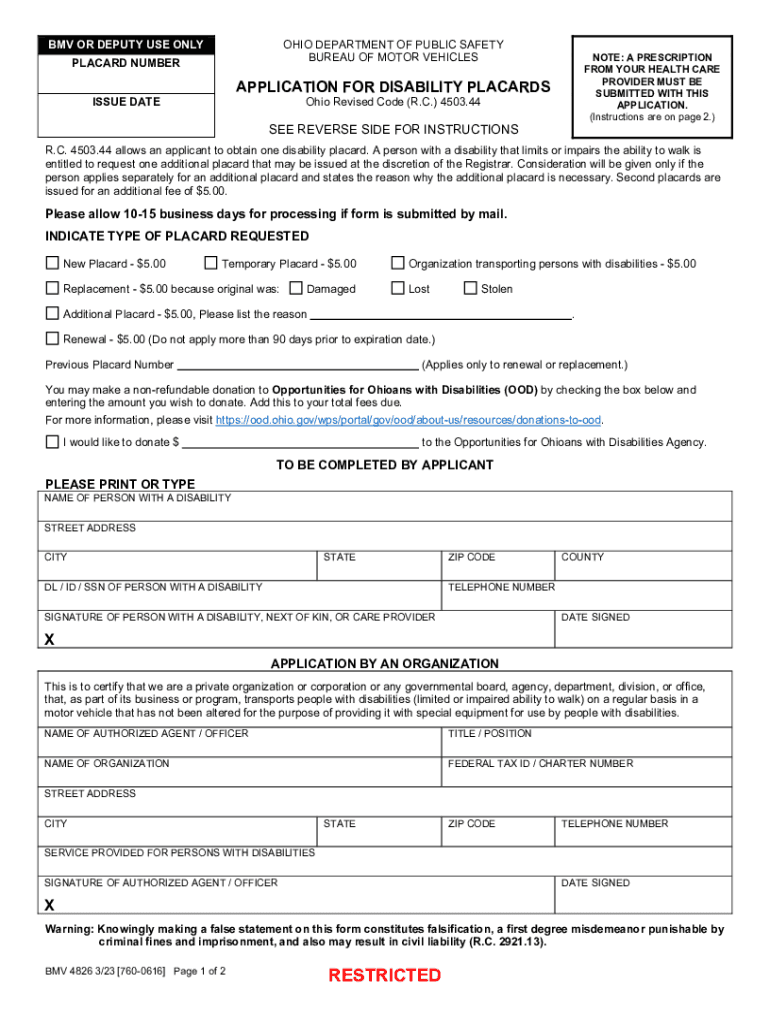
- Disability Placards: Requires a completed application form with medical certification validating the need for a disabled parking placard.


Legal Use and Compliance
Compliance with Ohio BMV regulations is necessary to legally drive or register a vehicle in the state.
- License Carrying Requirement: Drivers must carry a valid driver’s license while operating a vehicle.
- Vehicle Registration Display: License plates provided upon registration must be affixed to both the front and back of vehicles, according to state laws.
- Adherence to Environmental Standards: Vehicles must conform to Ohio’s emission and safety standards, with non-compliance resulting in fines or registration holds.
Key Elements of Ohio BMV Applications
Understanding the components of an Ohio BMV application ensures smoother processing and reduces potential for errors.
- Application Forms: Essential forms must be completely filled out, with information accurately reflecting legal documents.
- Proof of Identity and Residency: Acceptable forms of identification must accompany applications to confirm identity and Ohio residency.
- Payment of Fees: Accurate payment must accompany applications, with specific fees tied to each service.
- Medical Documentation: For services like disability placards, certified medical documentation confirming need must be included.
Penalties for Non-Compliance
Failure to follow Ohio BMV rules may result in various penalties.
- Unregistered Vehicles: Driving an unregistered vehicle can lead to fines, impounding, or suspension of driving privileges.
- Driver License Violations: Drivers without a valid license may incur fines and face increased insurance costs, or suspension of their driving privileges.
- Misuse of Disability Placards: Misusing or falsifying a disability placard could result in hefty fines or revocation of privileges.
Required Documents for Ohio BMV Services
Framing your visit to the BMV by compiling the necessary documents in advance ensures a seamless experience.
- For Licenses: Government-issued photo ID, proof of Social Security number, and two proofs of Ohio residency.
- For Registrations: Vehicle title, emission test verification, and proof of insurance.
- For Disability Placards: Doctor’s certification and a completed disability placard application form.
Application Process for Disability Placards
The Ohio BMV provides a clear process for obtaining disability placards, which permits parking in designated areas.
Steps to Apply
- Collect Medical Documentation: Obtain a medical certification from a licensed physician verifying the need for a disability placard.
- Complete Application Form: Fill out the relevant sections of the disability placard application, available for download on the BMV website or at local offices.
- Submit to BMV: Bring the completed form and accompanying documents to a local BMV office or mail them to the specified address.
- Pay Applicable Fees: Provide payment for the service if required, through the accepted payment methods.
- Receive Placard: Once approved, you will receive your disability placard, which must be displayed visibly in your vehicle when parked in designated areas.
By understanding these sections of the Ohio BMV, customers can confidently navigate the processes to meet their driving and registration needs within the state.




