




01. Edit your 8453 eo online
Type text, add images, blackout confidential details, add comments, highlights and more.

Type text, add images, blackout confidential details, add comments, highlights and more.

Draw your signature, type it, upload its image, or use your mobile device as a signature pad.

Send 8453 via email, link, or fax. You can also download it, export it or print it out.
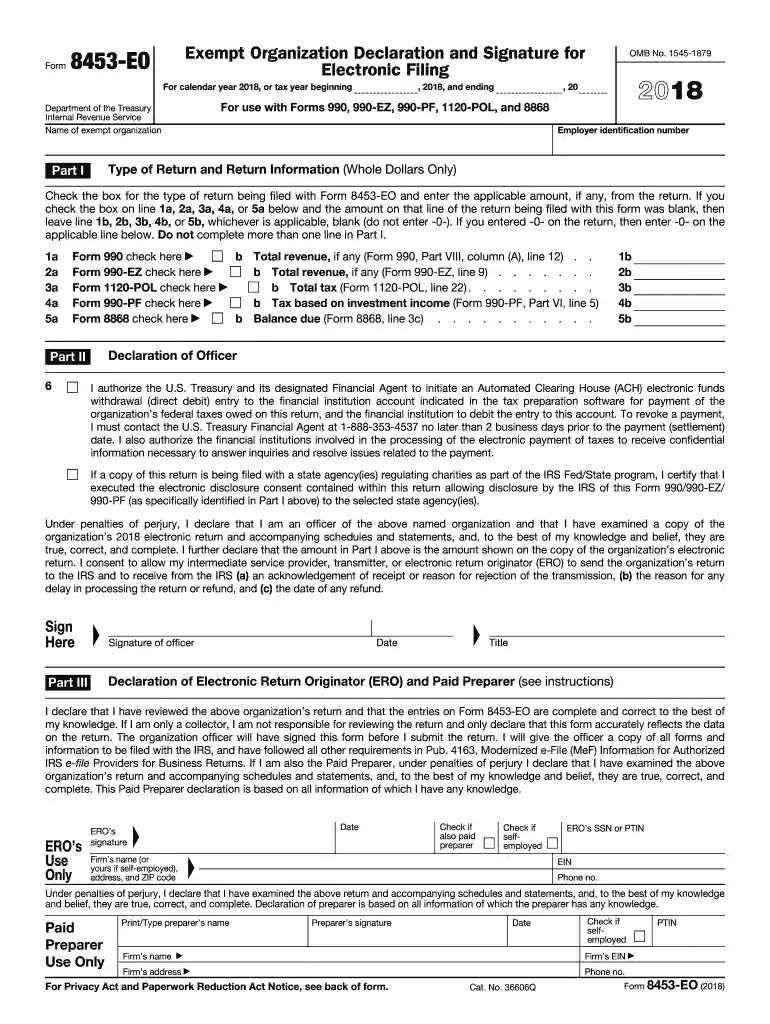
Form 8453-EO serves as an official transmittal for electronically filed tax forms by exempt organizations. This form acts as a declaration by the organization’s officer and is used to authenticate electronic tax returns. It is essential for confirming the submission of electronically filed returns, such as Form 990 and its variants, ensuring that the IRS receives all necessary signatures and authorizations.
Accessing Form 8453-EO can be done through various methods, ensuring organizations can easily complete the necessary prerequisites for electronic filing.
Completing Form 8453-EO requires attention to detail and specific information input.
Form 8453-EO is primarily used by tax-exempt organizations needing to file specific returns electronically. Examples include:
Understanding the terminology associated with Form 8453-EO is crucial for accurate completion.
Form 8453-EO adheres to strict IRS guidelines to ensure legal compliance during the electronic filing process.
Understanding the deadlines related to Form 8453-EO is vital for compliance.
Organizations have several options for submitting Form 8453-EO, though electronic submission is preferred for efficiency.
There are specific sections within Form 8453-EO that must be accurately filled to certify a tax-exempt filing.
Utilizing the digital version of Form 8453-EO provides distinct advantages in the current technological climate.
The IRS provides comprehensive guidelines to help organizations accurately and efficiently use Form 8453-EO.
Failure to file Form 8453-EO correctly or submit it within the required timelines can result in significant penalties.
In summary, Form 8453-EO plays a pivotal role in the electronic filing process for exempt organizations, ensuring that tax return submissions are authenticated, signed, and compliant with IRS regulations. The process involves a careful understanding of filing steps, submission methods, and deadlines, which ensures organizations remain in good standing with the IRS.
We've got more versions of the 8453 eo form. Select the right 8453 eo version from the list and start editing it straight away!
| Versions | Form popularity | Fillable & printable |
|---|---|---|
| 2020 | 4.8 Satisfied (72 Votes) | |
| 2019 | 4.4 Satisfied (138 Votes) | |
| 2018 | 4.3 Satisfied (140 Votes) | |
| 2017 | 4 Satisfied (45 Votes) | |
| 2016 | 4.3 Satisfied (185 Votes) | |
| 2015 | 4 Satisfied (27 Votes) | |
| 2014 | 4 Satisfied (43 Votes) | |
| 2013 | 4.3 Satisfied (61 Votes) | |
| 2012 | 4.3 Satisfied (36 Votes) | |
| 2011 | 4 Satisfied (59 Votes) |
Electronic signatures are an excellent alternative to traditional signing, as they save time, effort, and costs people spend on printing, scanning, and paper delivery. You can electronically sign your 8453 form utilizing a reliable and powerful online document processing tool like DocHub. It complies with major eSignature policies (ESIGN and UETA), so all documents approved there are legally binding and have the same validity as manually signed ones.
When you edit your 8453 te with DocHub, you will not need to look for other software or solutions to eSign it. An electronic signature is part of DocHub’s comprehensive editing toolset, which allows you to apply changes in your form without switching between websites. Simply complete your form, double-check the correctness of the information and put your electronic signature at the end to make it submission-ready within minutes.
At DocHub, your data security is our priority. We follow HIPAA, SOC2, GDPR, and other standards, so you can work on your documents with confidence.
The Form 8453-EO must be filed with the electronically filed Form 8868. How To File. File Form 8453-EO with the electronically filed return. Use a scanner to.Read more
May 15, 2014 I will keep form FTB 8453-EO on file for years from the due date of the return or four years from the date the exempt organization return isRead more


