




01. Edit your 1099 c cancellation of debt online
Type text, add images, blackout confidential details, add comments, highlights and more.

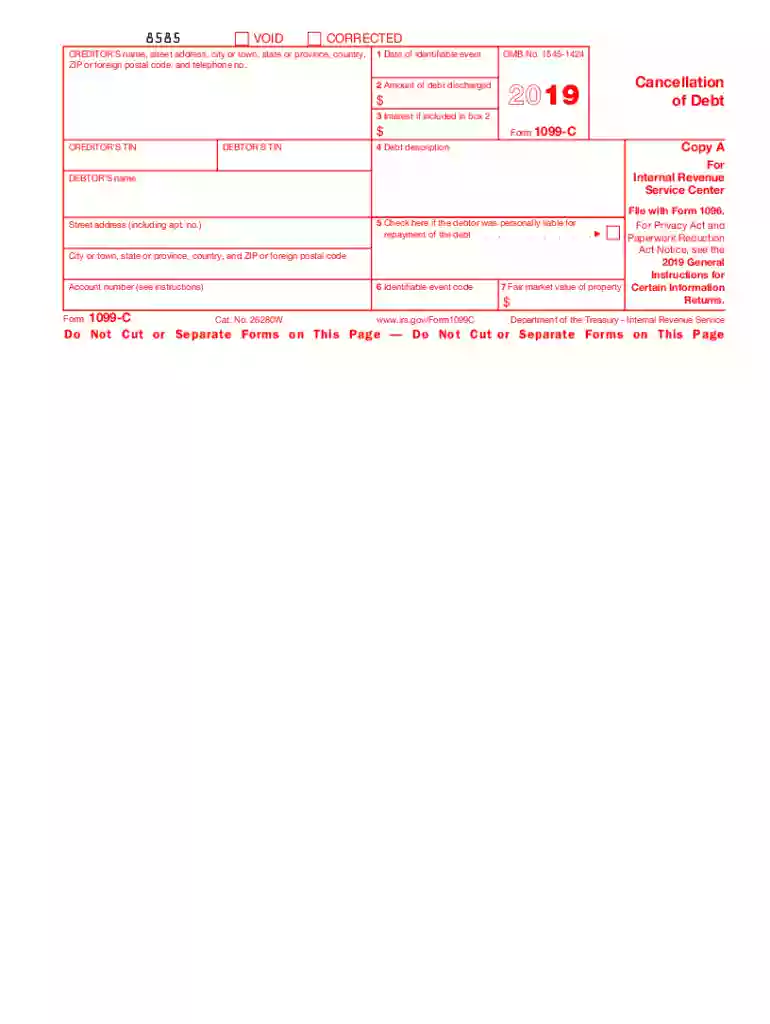
Type text, add images, blackout confidential details, add comments, highlights and more.

Draw your signature, type it, upload its image, or use your mobile device as a signature pad.

Send 1099 c form via email, link, or fax. You can also download it, export it or print it out.
Form 1099-C is intended for reporting the cancellation of debt to the Internal Revenue Service (IRS). When a debt is forgiven or discharged for less than the amount owed, the IRS considers the amount forgiven as taxable income. The 2019 Form 1099-C is used by creditors to inform both the debtors and the IRS about these canceled debts. It plays a crucial role in ensuring that any discharged debt is appropriately reported and taxed. Debtors should be aware that the information on this form might affect their income tax liability. Creditors are mandated to issue this form if the canceled debt is $600 or more.
To acquire the 2019 Form 1099-C, you can visit the IRS website where downloadable PDF versions are available. It is important to note that the scannable Copy A should not be printed from the website for filing with the IRS. Alternatively, physical copies can be obtained from local IRS offices. Businesses using accounting software may also find the form pre-integrated within the system for ease of access. Given the digital integration with platforms like DocHub, users may also manage and send these forms directly through connected systems.
Creditor's Information: Enter the creditor’s full legal name, address, phone number, and employer identification number.
Debtor Information: Include the debtor’s complete name, address, and, if available, their taxpayer identification number. Accurate entry is crucial for IRS matching.
Debt Description: Provide a brief description of the canceled debt, such as the type of loan or account number relevant to the cancellation.
Principal Amount Canceled: Record the principal amount of the debt that was canceled, explicitly excluding interest or fees.
Cancellation Date: Note the actual date when the debt was forgiven. This date is pivotal for both tax reporting and compliance with filing deadlines.
Completion of these steps will ensure the form is accurate and compliant with IRS requirements. Double-checking all entries for errors will aid in avoiding penalties.
The 2019 Form 1099-C is a pivotal document for both creditors and debtors. For creditors, it fulfills a legal obligation to report forgiven debts to the IRS, helping maintain transparency in their financial transactions. For debtors, this form affects their taxable income and consequently their tax filings. Understanding this form is essential, as it may result in unexpected tax liabilities if the debtor is unaware of the income reporting requirement. The IRS uses this information to ensure all taxable incidents are reflected accurately in taxpayer returns.
Understanding these terms aids in both completing and interpreting the Form 1099-C, ensuring compliance and awareness of potential exemptions or exclusions.
Form 1099-C must be filed in accordance with IRS guidelines. Legally, creditors are required to file this form if the debt canceled is $600 or more. Debt cancellation may not be required to be reported in certain circumstances, such as debts discharged in bankruptcy or those involving insolvent debtors. Familiarity with IRS regulations and guidelines, accessible through their official publications, is essential to comply correctly with statutory requirements related to this form.
The filing deadline for Form 1099-C is January 31st for providing copies to the debtors and February 28th for paper submission to the IRS. These dates are critical to avoid penalties, which can be assessed for late or inaccurate filings. Electronic filers enjoy an extended deadline until March 31st. Staying informed of these timelines ensures timely compliance and avoids unnecessary fines.
Failure to file Form 1099-C accurately or punctually can result in penalties from the IRS. These penalties can range from $50 to $270 per form, depending on the delay's duration and severity. In some instances, intentional disregard for filing requirements can lead to a $550 penalty per form, which underscores the importance of meticulous adherence to filing rules and timelines.
The digital version of Form 1099-C offers several advantages over its paper counterpart, including ease of correction, speed of delivery, and efficiency in processing. Platforms like DocHub enhance these benefits by providing tools to edit, sign, and send forms securely. While the paper version remains an option, the trend towards digital submissions aligns with modern preferences for workflow optimization and environmental consideration.
In summary, the 2019 Form 1099-C, Cancellation of Debt, is a multifaceted document requiring careful attention to detail, a thorough understanding of IRS rules, and punctual submission to ensure compliance.
At DocHub, your data security is our priority. We follow HIPAA, SOC2, GDPR, and other standards, so you can work on your documents with confidence.
Jun 14, 2023 The Form 1099-C denotes debts that have been forgiven by creditors. It is also known as a cancellation of debt.Read more
Feb 17, 2017 The plan will continue for a period up to 2019, subject to early termination. Plans Covering Employees Outside the U.S.. Pension coverage forRead more
File Form 1099-C for each debtor for whom you canceled $600 or more of a debt owed to you if: You are an applicable financial entity.Read more


