
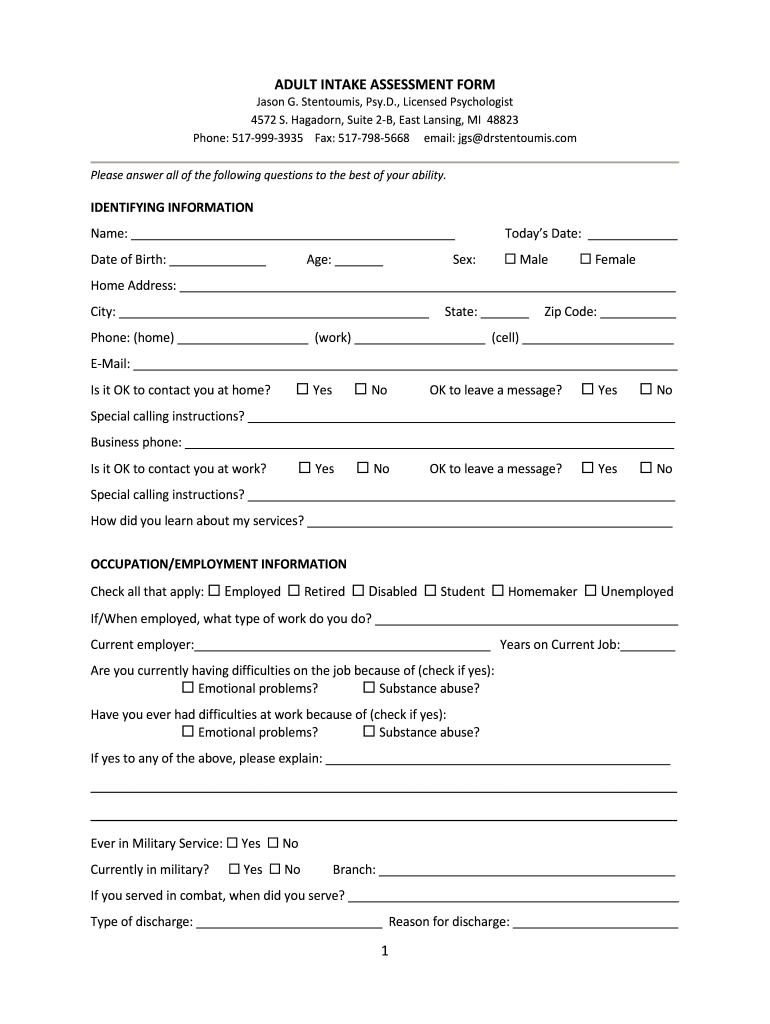







Definition & Meaning of Intake Assessments
Intake assessments are systematic processes used by professionals, such as therapists and healthcare providers, to gather essential information from clients. The purpose is to understand the client's background, issues, and needs in order to provide effective treatment or services. A comprehensive intake assessment often involves a structured form with sections dedicated to personal information, medical and psychological history, and specific details regarding the concerns that led the client to seek help.
Purpose of Intake Assessments
- Gather Critical Data: These assessments collect pertinent information about a client's demographic details, mental health history, and presenting problems.
- Establish Rapport: By engaging clients in a structured assessment, practitioners can build trust and encourage open communication.
- Guide Treatment Planning: The information obtained guides therapists in forming an initial treatment plan tailored to the client's unique circumstances.
Components of an Intake Assessment
- Personal Information: This includes client demographics like name, age, and contact details.
- Medical History: Understanding previous medical and psychological conditions is crucial for evaluating current issues.
- Family Background: Gathering details about family dynamics can provide insights into the client’s behavior and mental health.
Sample Intake Assessment Form Examples
Intake assessment forms come in various formats, depending on the type of services provided. Here are several examples highlighting different aspects typically included in such forms.
Mental Health Intake Assessment Example
This form might include:
- Identifying Information: Name, age, contact information, and emergency contacts.
- Reason for Seeking Therapy: A concise explanation from the client about their main concerns.
- Mental Health History: Questions regarding past treatments, medications, and any history of mental illness in the family.
Substance Use Intake Assessment Example
This form is specific to substance use evaluations and may consist of:
- Substance Use History: Specific questions about types, frequency, and duration of use.
- Consequences of Use: Exploration of how substance use has affected the client’s life, including social, occupational, and legal issues.
- Previous Treatment Records: Information about any prior rehabilitation attempts, including outcomes.
How to Conduct an Effective Intake Assessment
An effective intake assessment requires a structured approach to ensure comprehensive information collection while maintaining client comfort.
Step-by-Step Process
- Prepare the Form: Customize the intake assessment form to fit the client’s needs and the services offered.
- Create a Welcoming Environment: Ensure that the assessment is conducted in a comfortable and private space where the client feels safe sharing personal information.
- Explain the Process: Clearly communicate the purpose of the assessment and how the information will be used in their treatment.
- Document Thoroughly: Enter responses clearly and comprehensively to facilitate analysis and treatment planning.
Essential Elements to Include
- Strategies for Thematic Questions: Use open-ended questions to elicit more detailed responses from clients.
- Clarification and Reassurance: Provide clarification for any questions that may be confusing and reassure clients that their information will remain confidential.
Importance of Cultural Competence in Intake Assessments
Cultural considerations are crucial when conducting intake assessments to ensure that clients feel understood and respected.
Key Factors to Consider
- Cultural Sensitivity: Be aware of cultural variations in expressions of mental health symptoms and social norms.
- Language Barriers: Provide language assistance when necessary to ensure clear communication.
- Individualized Assessments: Tailor assessments to consider cultural context, which may influence the client’s presentation and concerns.
Legal Use of Intake Assessments
Intake assessments must adhere to certain legal guidelines to protect client confidentiality and ensure ethical practice.
Confidentiality Requirements
- HIPAA Compliance: Mental health practitioners must comply with the Health Insurance Portability and Accountability Act (HIPAA), which protects client privacy.
- Informed Consent: Clients should sign consent forms acknowledging their understanding of how their information will be used.
Digital vs. Paper Intake Assessment Forms
With advances in technology, practitioners now have options between traditional paper forms and digital formats.
Advantages of Digital Forms
- Accessibility: Digital forms can be filled out remotely, streamlining the intake process before appointments.
- Ease of Storage: Digital records are easier to organize and retrieve, aiding in efficient client management.
- E-Signatures: Many digital forms offer secure signing options, enhancing convenience for both clients and practitioners.
Considerations for Paper Forms
- Client Preference: Some clients may feel more comfortable filling out paper forms during their visit.
- Limitations of Technology: There may be technology access issues for certain populations, making paper options necessary.
Practical Examples of Intake Assessments in Therapy
Therapists utilize various intake assessments tailored to specific therapeutic goals.
Example Scenarios
- Crisis Situations: In emergency contexts, rapid assessments with focused questions help identify immediate risks and needs.
- Long-term Therapy: Comprehensive assessments at initial sessions gather a wide range of information to form a long-term therapeutic strategy.
These scenarios highlight the importance of flexible and context-sensitive intake processes to accommodate diverse client needs.


