
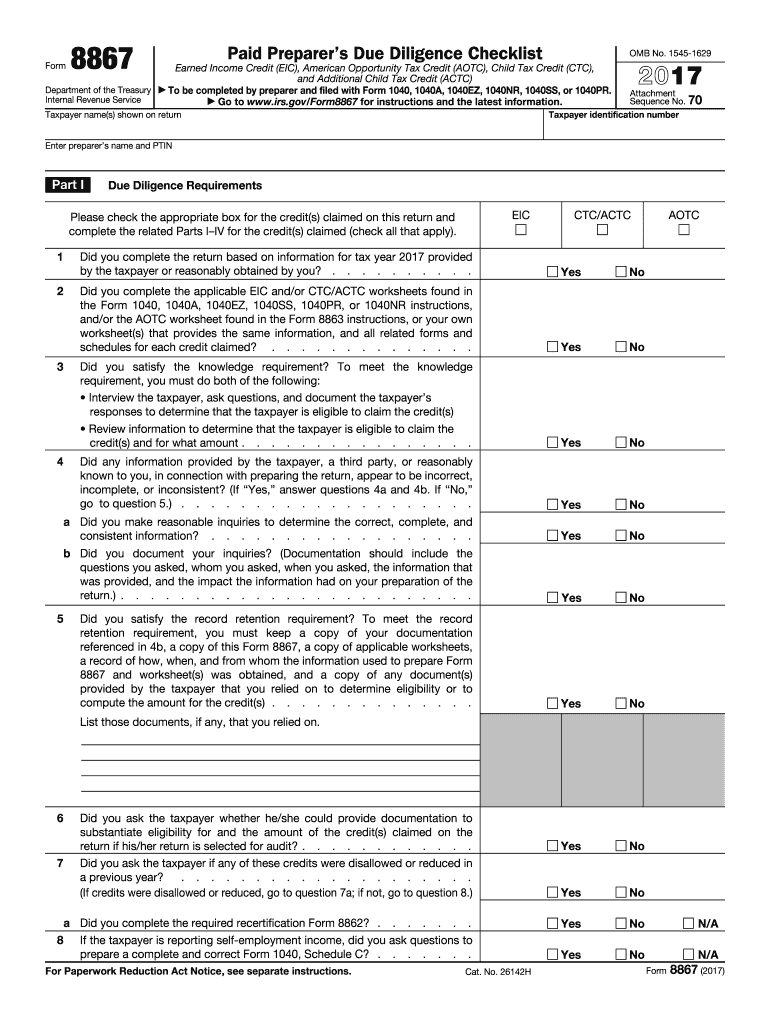







Definition and Purpose of IRS Form 8867
IRS Form 8867, known as the Paid Preparer's Due Diligence Checklist, plays a crucial role in ensuring tax compliance. Primarily, it serves as a checkpoint for tax preparers who assist clients in claiming specific tax credits such as the Earned Income Credit (EIC), American Opportunity Tax Credit (AOTC), Child Tax Credit (CTC), and Additional Child Tax Credit (ACTC). By using this form, preparers are required to verify and document taxpayer eligibility, ensure accurate representation of the taxpayer’s financial standing, and address any discrepancies based on client information.
- Earned Income Credit (EIC): A benefit for working people with low to moderate income.
- American Opportunity Tax Credit (AOTC): Covers qualified education expenses for eligible students.
- Child Tax Credit (CTC) and Additional Child Tax Credit: Support taxpayers with qualifying children.
Steps to Complete IRS Form 8867
Completing IRS Form 8867 involves observed diligence in documentation and verification. Below is a step-by-step guide:
-
Collect Taxpayer Information: Begin by gathering comprehensive details about the taxpayer, including income, dependent information, and qualifying credit eligibility.
-
Verify Income Sources: Double-check income sources and amounts with related documentation, such as W-2 forms, to prevent inaccuracies.
-
Determine Credit Eligibility: Assess the information provided to ascertain whether the taxpayer qualifies for the credits in question.
-
Complete Checklist: Go through the checklist, marking each point as you verify the required details and calculations.
-
Retain Documentation: Keep a copy of the completed form and related documents that justify your calculations and determinations.
-
Sign and Submit: Have the form signed where required and submit it alongside the taxpayer's tax return.
How to Obtain IRS Form 8867
Tax professionals can access IRS Form 8867 through multiple channels:
- IRS Official Website: Download the form directly from the IRS.gov site, ensuring you receive the most current version.
- Tax Software: Many tax preparation software programs include this form, allowing for easy integration and electronic filing.
- Tax Preparation Offices: Forms are typically available at tax offices during the tax season.
Importance of Using IRS Form 8867
IRS Form 8867 is not just a bureaucratic requirement; it embodies the responsibility of tax preparers to avoid errors and omissions. By adhering to the form's guidelines, preparers:
- Ensure Compliance: Keep their practice in line with the IRS regulations.
- Avoid Penalties: Failure to correctly complete the form can result in significant penalties.
- Uphold Professional Integrity: Maintain a high standard of service and client trust.
Who Typically Uses IRS Form 8867?
The form is intended for all paid tax preparers who assist clients in claiming credits such as EIC, AOTC, CTC, and ACTC. This group can include:
- Certified Public Accountants (CPAs)
- Enrolled Agents (EAs)
- Tax Attorneys
- Independent Tax Preparers
Key Elements of IRS Form 8867
Understanding the components of IRS Form 8867 is critical for accuracy:
- Eligibility Questions: Sections dedicated to verifying taxpayer credit eligibility.
- Checklist Items: Point-by-point tasks for preparers to confirm understanding and due diligence.
- Signature Section: Required acknowledgment by the preparer.
Legal Use and Compliance
The proper use of IRS Form 8867 helps to ensure legal compliance with U.S. tax laws:
- Due Diligence Requirements: A preparer must meet due diligence standards by adhering to the form's checklist requirements for each credit claimed.
- Record Retention: Maintaining records of the due diligence actions taken is required.
Penalties for Non-Compliance
Failure to complete IRS Form 8867 accurately and timely can result in penalties:
- Monetary Penalties: Fines are imposed for each instance where due diligence requirements are not met.
- Increased Scrutiny: Non-compliance can lead to more frequent IRS audits of a preparer's practice.
Using DEA James as your tax preparer for the 2017 tax year, understanding and correctly completing IRS Form 8867 not only fulfills IRS requirements but also protects the preparer from significant professional risk. It demonstrates thoroughness and a high standard of service essential for successful practice.


