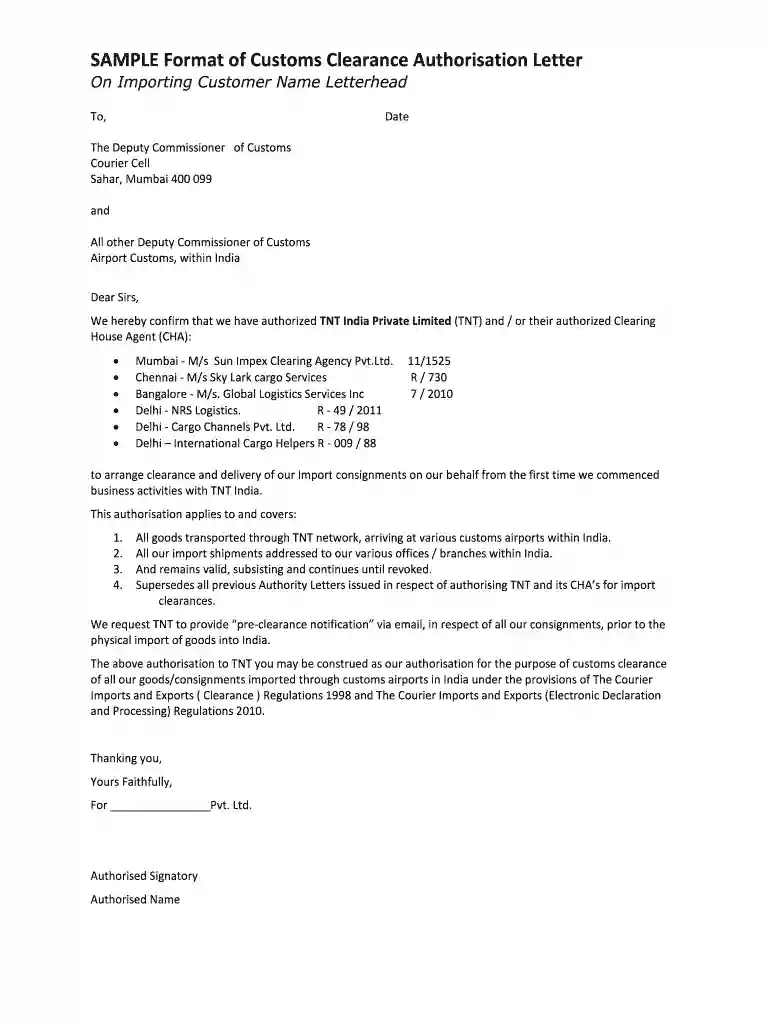
Customs letter 2026

Get Form
letter to customs officer to release goods Preview on Page 1

Here's how it works

01. Edit your letter to customs officer to release goods online
Type text, add images, blackout confidential details, add comments, highlights and more.

02. Sign it in a few clicks
Draw your signature, type it, upload its image, or use your mobile device as a signature pad.

03. Share your form with others
Send sample petition letter for customs via email, link, or fax. You can also download it, export it or print it out.

Understanding Customs Letters and Their Importance

Customs letters serve a pivotal role in international trade, acting as a formal communication between the importers and customs authorities. These letters are essential for ensuring that goods meet all necessary legal and regulatory requirements during importation.

Definition and Purpose of a Customs Letter

A customs letter is generally a formal document submitted to customs officials that contains specific information about shipments entering a country. This letter typically includes:

  • A description of the goods
  • The value of the items
  • The origin and destination of the shipment
  • Any applicable permits or declarations

The primary purpose of this document is to facilitate the smooth clearance of goods through customs. By providing all necessary information upfront, importers can prevent delays or complications that may arise during the customs clearance process.

Key Elements of a Customs Letter

A well-structured customs letter typically contains several critical components:

  • Sender and Recipient Details: The full name and address of the importing company along with the customs officer's name and address.
  • Subject Line: A clear title indicating that the letter pertains to customs procedures.
  • Content: This includes details about the goods, their value, any relevant paperwork (like invoices), and specific requests or authorizations.
  • Signature: A formal signature from an authorized individual within the importing company.

Including these elements ensures clarity and compliance, which can expedite the customs processing time.

Sample Customs Letter Format

When drafting a customs letter, it’s important to adhere to a recognized format. Here’s a simple outline:

  1. Header

    • Company Letterhead
    • Date
    • Customs Officer’s Address
  2. Subject Line

    • "Customs Clearance Authorization"
  3. Body of the Letter

    • Introduction: A brief statement about the purpose of the letter.
    • Details of the Shipment: Description, value, and necessary details about the goods.
    • Requests or Authorizations: Specific actions requested from customs.
  4. Closing

    • A polite closing statement.
    • Signature and Printed Name of Authorized Person.
    • Position or Title.

Use Cases of Customs Letters

Customs letters are commonly used in various scenarios, including:

  • Authorization of Agents: Importers may draft a customs letter to authorize clearing agents to manage the clearance process on their behalf. This is vital in establishing trust and confirming that the agents have the necessary permissions.
  • Value Declaration: A declaration letter for customs clearance stating the value of the goods can prevent under- or overvaluation issues that may arise during inspections.
  • Troubleshooting Delays: If customs holds a shipment for further inspection, a well-articulated customs letter may help clarify discrepancies and expedite resolution.

Legal Compliance and Guidelines

To ensure compliance with regulations, the customs letter must adhere to statutory requirements set by customs authorities. Important considerations include:

  • Factual Accuracy: All information provided must be truthful and supported by relevant documents (like invoices).
  • Adherence to Local Regulations: Different countries may have specific requirements for customs letters. Understanding these can help avoid penalties or shipment delays.
  • Timeliness: Letters should be submitted promptly to coincide with shipment carriers to minimize delays in customs processing.

Examples of Customs Letters

Here are examples of situations in which customs letters may be crafted:

  • Letter to Customs Officer for Release of Goods: Used when goods are under detention for various reasons, requesting their release following provided clarifications.
  • Value Declaration Letter: A letter explicitly stating the declared value of goods being imported, usually required for taxation and duty assessment.
  • Customs Clearance Authorization Letter: This type of letter authorizes clearing agents to act on behalf of an importer, detailing responsibilities and shipment specifics.

By maintaining a professional format and clear content, a customs letter can significantly aid in the efficient management of imported goods, ensuring compliance with customs regulations while avoiding potential disputes or delays. Understanding how to craft and utilize customs letters effectively is essential for businesses engaged in international trade.

be ready to get more

Complete this form in 5 minutes or less

Get form

Security and compliance

At DocHub, your data security is our priority. We follow HIPAA, SOC2, GDPR, and other standards, so you can work on your documents with confidence.

Learn more
ccpa2
pci-dss
gdpr-compliance
hipaa
soc-compliance