







Definition and Importance of the Seller Net Sheet in North Carolina
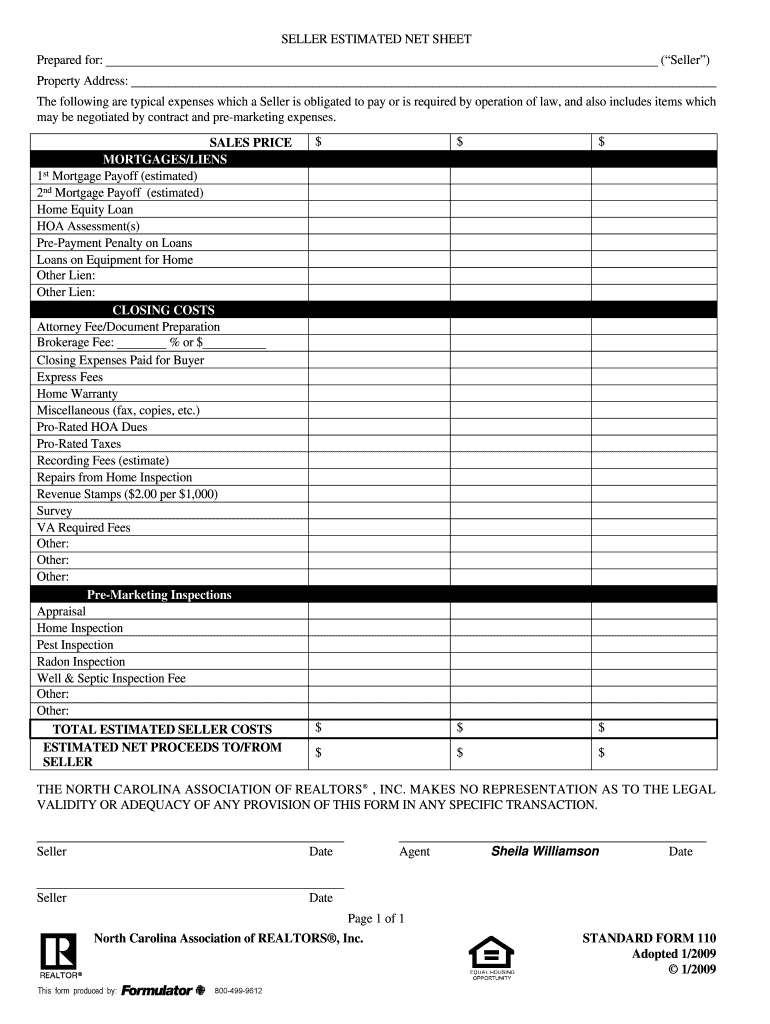
A seller net sheet is a crucial document for anyone selling a property in North Carolina. It provides an estimate of the seller's financial outcomes from the sale of their home, outlining various anticipated expenses that will be deducted from the sale price to determine the net amount the seller can expect to receive. This sheet typically includes costs such as loan payoff amounts, real estate commissions, property taxes, and closing costs. By understanding these projections in advance, sellers can make informed decisions regarding the sale and handle financial expectations effectively.
Typical Expenses Included in the Seller Net Sheet
- Mortgage Payoff: This is the remaining balance on the seller’s mortgage that must be settled at closing.
- Real Estate Commission: Typically a percentage of the sale price, this fee is split between the buyer's and seller’s agents.
- Closing Costs: These costs can include various fees such as title insurance, attorney fees, and recording fees, which can vary widely based on location and the specifics of the transaction.
- Prorated Property Taxes: Depending on the timing of the sale, sellers may need to pay their portion of property taxes up to the closing date.
Understanding these costs helps sellers strategize better on the listing price and financially prepare for the sale.
How to Use the Seller Net Sheet in North Carolina
Using the seller net sheet involves inputting specific financial data related to the property sale. Here are the steps for effectively utilizing this tool:
-
Gather Financial Information: Before starting the sheet, gather all pertinent financial documents, including your current mortgage statement, tax statement, and information about any liens or other debts related to the property.
-
Estimate Selling Price: Determine the expected sales price of the home based on market research, comparable sales, and consultations with real estate agents.
-
List all Expenses: Enter all potential deductions as discovered in the previous section, ensuring to include mortgage payoffs and closing costs.
-
Calculate Net Proceeds: Subtract the total estimated expenses from the projected selling price to ascertain the expected net proceeds from the sale.
-
Review and Adjust: As new information becomes available or market conditions change, revisit the seller net sheet to ensure the figures remain accurate and relevant.
This systematic approach allows homeowners to visualize their potential outcomes and plan their next financial steps.
Steps to Complete the Seller Net Sheet NC
Completing the seller net sheet can be straightforward with structured organization. Here’s a step-by-step breakdown:
-
Identify Property Features: Describe the property in question, detailing its location, size, and any distinctive features that may affect the sale price.
-
Estimate Fair Market Value: Consult with real estate professionals or conduct a comparative market analysis to ascertain a fair and competitive market value for the property.
-
Document the Sale Price: Clearly state your anticipated selling price based on market research.
-
Itemize Costs: Create a detailed outline of all costs associated with selling the home, including:
- Commission fees
- Inspection fees
- Closing costs
-
Perform Calculations: Summarize the total costs and subtract them from the sale price. Ensure all calculations are double-checked for accuracy to minimize errors.
-
Seek Professional Consultation: Whenever possible, involve a real estate agent or financial advisor to review the seller net sheet for additional insights and verification of all estimates.
Who Typically Uses the Seller Net Sheet NC?
The seller net sheet is primarily used by individuals or entities involved in the sale of residential real estate in North Carolina. This includes:
- Homeowners: Individuals selling their primary residence who need to understand their potential net gain from the sale.
- Real Estate Agents: Professionals who utilize the net sheet to provide sellers with a detailed breakdown of expected proceeds.
- Financial Advisors: Advisors assisting clients in planning for tax implications and financial obligations related to the real estate transaction.
Understanding who uses this document enhances its relevance to those involved in real estate transactions and can help in providing necessary support throughout the selling process.


Key Elements of the Seller Net Sheet NC
Understanding the key elements of the seller net sheet is vital for effective usage. The sheet typically includes:
- Selling Price: The projected price at which the seller expects to sell the property.
- Total Estimated Costs: A comprehensive list of all expected costs related to the transaction.
- Net Proceeds: The amount left over after all costs have been deducted from the selling price.
- Detailed Expense Breakdown: Individual sections that elaborate on costs such as commissions and taxes.
These elements are essential for calculating and understanding the financial landscape of selling a property in North Carolina.
Important Terms Related to Seller Net Sheet NC
Several key terms are integral to comprehending the seller net sheet effectively:
- Closing Costs: The fees incurred during the sale process which typically include various fees and taxes.
- Net Proceeds: The total amount a seller will receive after all selling-related expenses are deducted from the sale price.
- Real Estate Commission: The fee paid to real estate agents, typically expressed as a percentage of the sale price.
- Mortgage Payoff: The total remaining mortgage balance that must be cleared upon closing the sale.
Familiarity with these terms helps ensure clarity and understanding when filling out the seller net sheet.




