




01. Edit your hardship letter online
Type text, add images, blackout confidential details, add comments, highlights and more.

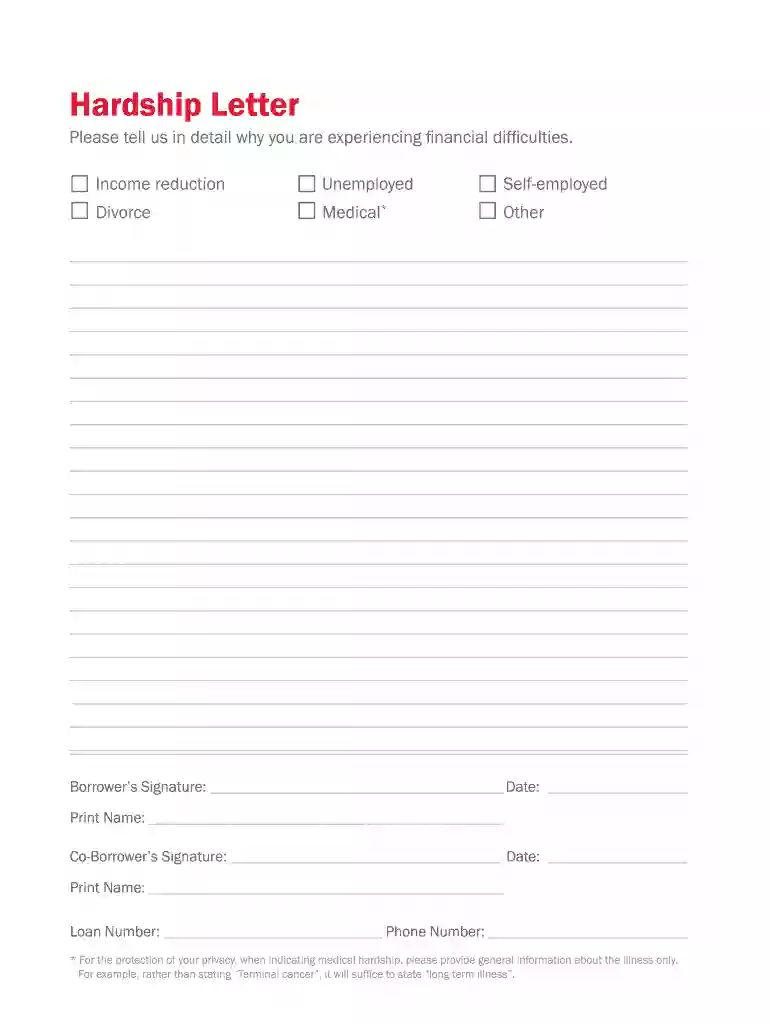
Type text, add images, blackout confidential details, add comments, highlights and more.

Draw your signature, type it, upload its image, or use your mobile device as a signature pad.

Send hardship letter for mortgage due to covid 19 template via email, link, or fax. You can also download it, export it or print it out.
The "which sample hardship letters" form is a vital tool used by individuals to communicate financial difficulties to creditors or financial institutions. This form traditionally provides detailed insights into a borrower's financial status, outlining reasons such as income reduction, unemployment, or medical conditions that have led to their current hardship. By specifying these challenges, borrowers aim to negotiate more favorable terms or obtain temporary relief from obligations, such as loan payments. The form serves as an official record that supports the borrower’s request for assistance, making it a critical document in financial management and negotiation.
To effectively use a hardship letter, it is essential to be both honest and concise while presenting your case. Start by detailing the specific circumstances leading to financial strain. This can include events like losing a job, unexpected medical bills, or a decrease in business revenue for self-employed individuals. After explaining the situation, borrowers should clearly outline their requested assistance. This might involve asking for a payment plan, interest rate reduction, or a temporary deferment of payments. It is crucial to provide any supporting documents, such as pay stubs or medical statements, to substantiate your claims. Make sure to end with a note of appreciation for the creditor’s consideration and willingness to work towards a solution.
Identify Personal Information: Begin by filling in basic details, including your name, loan number, and contact information.
Outline the Hardship Reason: Clearly state the reason for your financial difficulties.
Request Assistance: Specify the type of assistance you are requesting, whether it be deferment, modified payment plans, or another form of relief.
Provide Supporting Evidence: Attach any relevant documents, such as past medical bills, layoff notices, or bank statements, to validate your claims.
Review and Sign: Carefully check for accuracy and completeness before signing the letter. Ensure all spelled names and figures are accurate.
Submit: Send the completed form to your lender or relevant financial institution. Consider using registered mail or requesting confirmation of receipt.
When crafting a hardship letter, certain elements are crucial for effectiveness. These include:
Different scenarios illustrate the versatile use of hardship letters. For instance:
Medical Expenses: An individual may use the letter to negotiate reductions in credit card payments due to ongoing medical treatments.
Job Loss: A recently unemployed individual might request a temporary pause on mortgage payments until they secure new employment.
Natural Disasters: Someone affected by a hurricane or earthquake could detail the impact on their home and seek leniency or assistance in rebuilding efforts.
Understanding the legal implications of these letters is crucial. Many creditors are required to consider hardship letters under federal or state regulations, particularly in relation to mortgage adjustments under the CARES Act in the United States. To ensure compliance, be truthful and complete in your disclosures. Misrepresentation can lead to denial of relief or legal repercussions. It’s essential to know your rights and possible entitlements when negotiating through a hardship letter. For complex situations, legal advice might be beneficial.
When submitting a hardship letter, certain documents enhance the likelihood of successful negotiations:
Ensuring these documents accompany your submission can make your request more compelling.
The method of submission can affect processing times and documentation tracking. Digital submissions, when offered, allow for quick transmission and confirmation of receipt. Platforms like DocHub provide secure uploading and sending capabilities, ensuring sensitive information remains protected. Conversely, traditional paper submissions might be preferred by institutions that require physical copies. Always confirm the preferred method with your creditor to avoid unnecessary delays.
By comprehensively understanding and following these guidelines for the "which sample hardship letters," borrowers can effectively communicate their financial needs and work towards a feasible resolution with creditors.
At DocHub, your data security is our priority. We follow HIPAA, SOC2, GDPR, and other standards, so you can work on your documents with confidence.


May 16, 1988 Employees may submit a written and signed letter to the department citing their employers violation of the law. Upon receipt of a complaint,Read more
Below is a sample letter to give you an idea of the type of information needed to request permission to work because of economic necessity.Read more
Sample Hardship Letter. To Whom It May Concern: I am writing this letter to explain my unfortunate set of circumstances that have caused us to become.Read more


