







Understanding the FAA Sleep Apnea Compliance Form
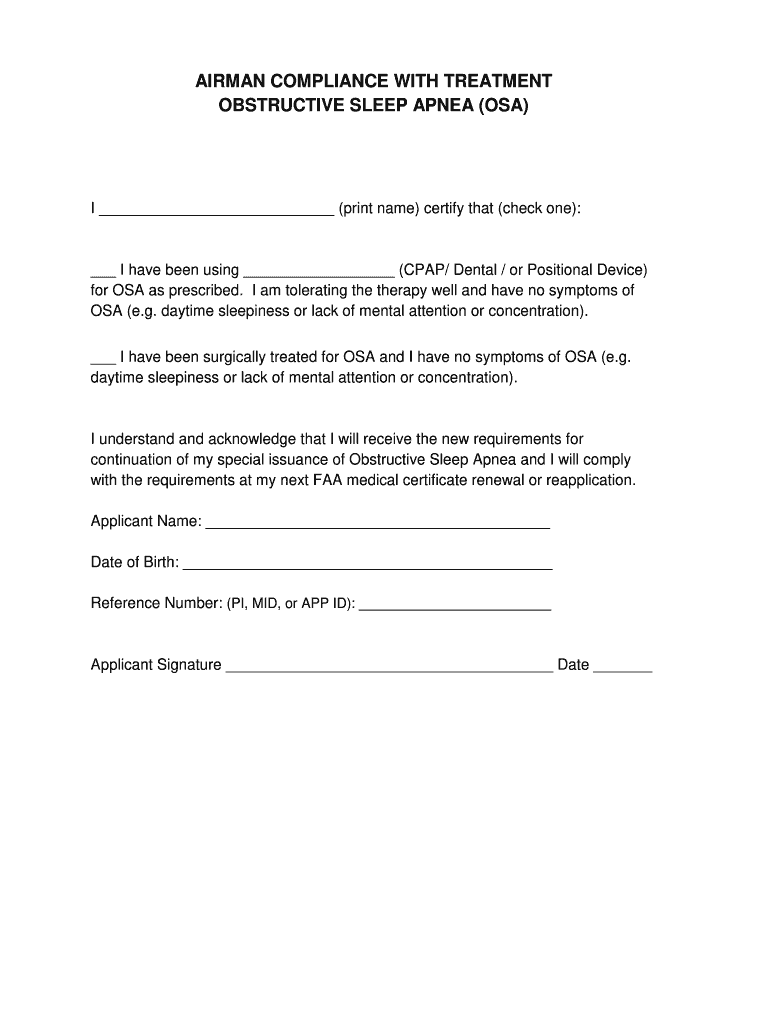
The FAA sleep apnea compliance form serves as an important compliance certification for airmen who undergo treatment for Obstructive Sleep Apnea (OSA). This document not only confirms the airman’s adherence to prescribed therapies or surgical interventions for OSA but also necessitates an acknowledgment of symptom status and agreement to comply with FAA medical certification renewal requirements.
Purpose and Importance of the FAA Sleep Apnea Compliance Form
- Regulatory Compliance: This form is essential for ensuring that airmen meet the FAA's medical certification standards when managing OSA. Compliance is crucial for flight safety and overall aviation health.
- Medical Certification Renewal: The FAA requires airmen to provide updated information on their OSA treatment and symptom status as part of the medical certification renewal process.
- Public Safety: The form helps reinforce the need for airmen to manage sleep apnea effectively, thereby minimizing potential safety risks associated with untreated or poorly managed conditions.
Key Components of the FAA Compliance Form
The FAA sleep apnea compliance form encompasses several important sections that airmen must complete:
-
Personal Information: This section includes details like the airman’s name, medical certificate number, and contact information.
-
Treatment Verification: Airmen must declare their current treatment protocols, specifying whether they are using Continuous Positive Airway Pressure (CPAP) therapy, oral appliances, or have undergone surgical procedures.
-
Symptom Acknowledgment: This area necessitates the airman to discuss any ongoing symptoms related to OSA, ensuring transparency about their health status.
-
Compliance Agreement: Airmen must agree to adhere to FAA requirements for OSA management, affirming their commitment to regular follow-ups and maintenance of treatment plans.
Steps for Completing the FAA Sleep Apnea Compliance Form
-
Gather Documentation: Collect all necessary medical documentation related to OSA treatment, including prescriptions for CPAP machines or notes from medical professionals.
-
Fill Out Personal Information: Carefully enter all requested personal details, ensuring accuracy for effective communication with the FAA.
-
Detail Treatment Protocols: Clearly state your current treatment methods and frequencies. If using CPAP, specify settings used and any compliance tracking data.
-
Review Symptom Status: Reflect honestly on whether any symptoms persist and provide details if applicable, as this affects compliance evaluation.
-
Sign and Date the Document: Sign the form to confirm the accuracy of the information provided and the commitment to ongoing compliance.
Compliance Monitoring and Requirements
-
FAA Regulations: Airmen are subject to ongoing monitoring and compliance checks as part of their medical certification. Regular assessments and submission of updated compliance forms may be necessary.
-
Ongoing Treatment: Airmen must regularly review their treatment plans with healthcare providers to ensure efficacy and make adjustments if symptoms change. Documenting this ongoing relationship can be beneficial in case of future evaluations.
-
Additional Documentation: Some airmen may need to provide additional letters or reports confirming their treatment compliance status, particularly if previous reviews indicated any concerns.
Common Challenges in Compliance with FAA OSA Requirements
-
Misunderstanding of Requirements: Airmen may sometimes be unaware of the specific requirements or nuances associated with the FAA sleep apnea compliance form, leading to unintentional oversight on their part.
-
Changes in Treatment: Airmen may undergo changes in their treatment protocols but fail to update their compliance forms accordingly. Regular check-ins with healthcare providers can help mitigate this issue.
-
Record Keeping: Maintaining comprehensive records of treatment, including documentation of compliance with CPAP use or other therapy methods, can be cumbersome but is vital for successful compliance.
Legal and Medical Implications of Non-Compliance
-
FAA Disqualification: Failing to submit the form or not adhering to treatment protocols may result in disqualification from obtaining or renewing a medical certificate, impacting an airman's ability to operate aircraft legally.
-
Safety Risks: Untreated OSA can lead to increased fatigue, such as falling asleep during operations or decision-making errors, which could have severe consequences for flight safety.
-
Potential Penalties: Non-compliance could also lead to regulatory penalties and other legal implications, potentially affecting an airman’s future within the aviation profession.
Having a thorough understanding of the FAA sleep apnea compliance form, its requirements, and implications ensures that airmen remain compliant and maintain their ability to perform their duties safely and effectively.




