







Definition and Purpose of the Tenant Information Form
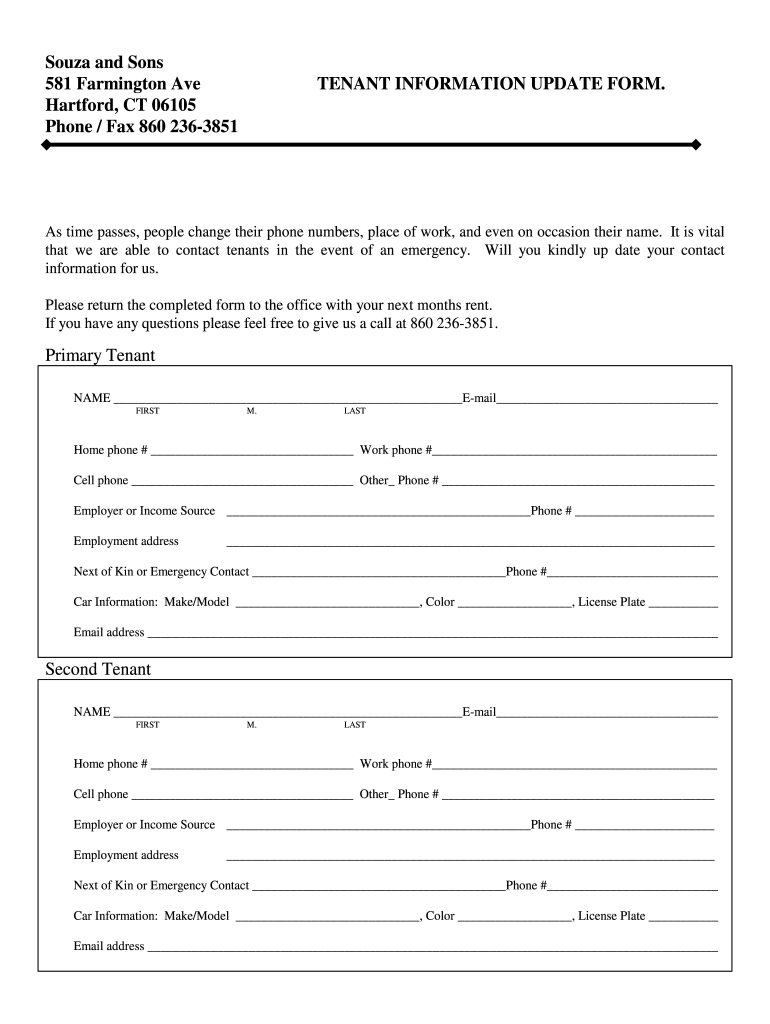
The tenant information form is a critical document used by landlords and property management companies to collect updated personal and emergency contact details from tenants. Typically, this form ensures that the landlord has the most current and accurate information for each tenant, which can be crucial in emergencies or for general communication purposes. It often includes sections for the primary and secondary tenant to provide personal information, employment details, and emergency contacts, among other data.
Features of the Tenant Information Form
- Personal Details Section: Includes fields for the tenant's full name, date of birth, and social security number.
- Contact Information: Areas for the tenant's phone number, email address, and current residential address.
- Employment Information: Fields to capture the tenant's employer details, including the company name, position, and contact number.
- Emergency Contacts: A section for listing one or more emergency contacts, with names, relationships, and contact numbers.
- Vehicle Information: Spaces to record vehicle details like the make, model, and license plate number.
How to Use the Tenant Information Form
Using the tenant information form involves several straightforward steps to ensure all necessary information is accurately captured.
- Filling Out Personal Information: Begin by completing the personal details section with your full name, contact information, and residential address.
- Providing Employment Details: Input your current employment information, ensuring all data is up-to-date and accurate.
- Listing Emergency Contacts: Choose reliable emergency contacts and provide their full details.
- Vehicle Information: If applicable, include details about any vehicles associated with your residence.
- Review and Submit: After filling out all the necessary sections, review your input for accuracy before submission.
Steps to Complete the Tenant Information Form
Completing a tenant information form involves a systematic approach to provide accurate and complete details.
Step-by-Step Procedure
- Read Instructions Carefully: Before you begin, review any instructions provided as they may include specific requirements or format preferences.
- Gather Necessary Documents: Have your identification, employment details, and emergency contacts' information ready.
- Fill Out Each Section: Proceed with completing each required section on the form, ensuring no fields are left blank unless they don't apply.
- Double-Check for Errors: Carefully review each entry for possible mistakes or omissions.
- Sign the Form: If a signature is required, make sure to sign in the designated area before returning the form to the landlord or property manager.
Key Elements of the Tenant Information Form
The effectiveness of a tenant information form largely depends on its comprehensive elements which ensure the landlord receives all necessary data.
Essential Components
- Tenant Identification: Full names and other identifying details that uniquely identify the tenant.
- Information Accuracy: Ensuring the accuracy and timeliness of the information.
- Security Measures: Highlighting the need for secure handling of sensitive data like social security numbers and contact details.
- Compliance with Regulations: Adhering to any applicable state-specific data protection laws when collecting and storing information.
Why Use a Tenant Information Form
Tenant information forms serve numerous crucial purposes for both landlords and tenants.
Benefits for Landlords
- Improved Communication: Allows landlords to contact tenants efficiently for routine matters or emergencies.
- Legal and Safety Compliance: Helps maintain compliance with legal obligations regarding tenant records.
- Enhanced Property Management: Facilitates the property management process by having up-to-date tenant records.
Benefits for Tenants
- Safety Assurance: Provides reassurance that the landlord can respond promptly in emergency situations.
- Accuracy of Records: Ensures the tenant's details are current, minimizing misunderstandings and miscommunications.
Who Typically Uses the Tenant Information Form
Various parties may use or require a tenant information form within the property rental ecosystem.


Common Users
- Landlords: Typically use these forms to update and maintain reliable tenant data.
- Property Managers: Utilize these forms to manage tenant information efficiently across different properties.
- Rental Agencies: Ensure that tenant records are comprehensive and accessible for legal and communication purposes.

Legal Use of the Tenant Information Form
Legal considerations are paramount when a tenant information form is used to ensure compliance with privacy and data protection laws.
Legal Framework and Compliance
- Data Protection Laws: Compliance with laws like the California Consumer Privacy Act (CCPA) ensures tenants' personal information is protected.
- Authorized Usage: Ensures that collected data is used appropriately and not for unauthorized purposes.
- Consent and Transparency: Provides tenants with transparency about what information will be collected and how it will be used or stored.
State-Specific Rules for the Tenant Information Form
The application and regulations of tenant information forms can vary significantly from one state to another in the U.S.
State Variations
- Different Data Requirements: Some states may require additional information or documentation based on local rental laws.
- Varying Compliance Standards: Legal standards around data protection and tenant rights might differ, necessitating adjustments to the form.
Example States
- California: Places a strong emphasis on data privacy, thereby affecting how tenant information forms are managed.
- Texas: Potentially different regulatory focuses that impact what legally constitutes required information on a form.




