







Definition & Meaning
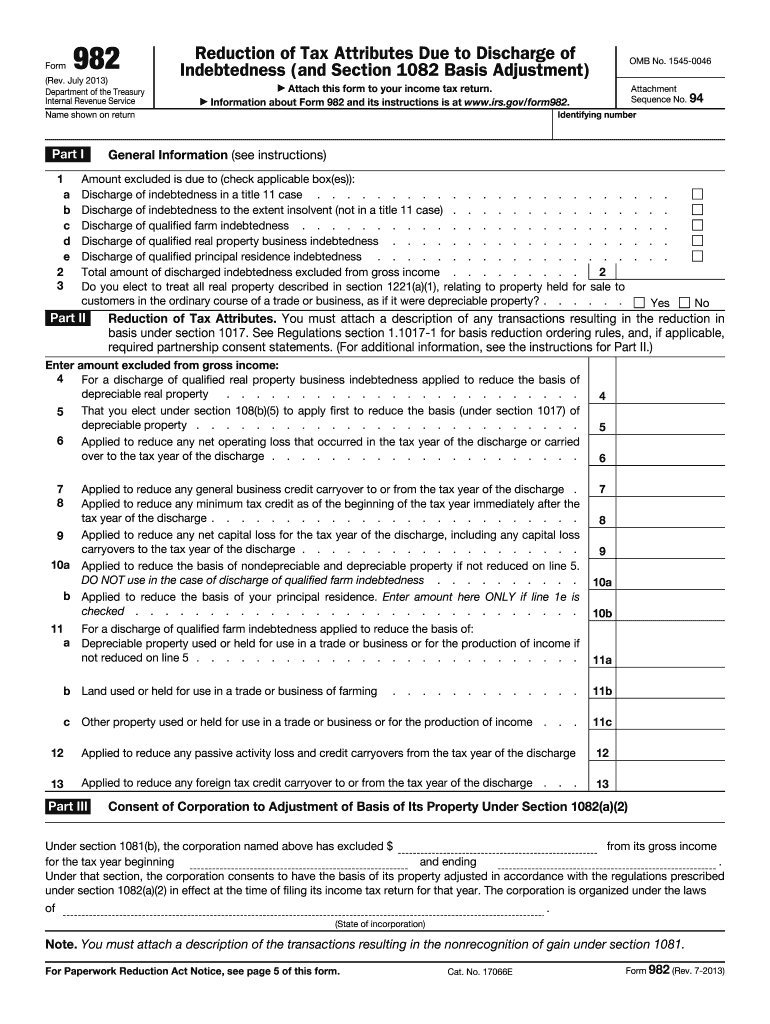
Form 982 is a tax form used in the United States to report the exclusion of discharged indebtedness from gross income under Section 108 of the Internal Revenue Code. This form is essential when individuals or businesses have had a portion of their debt forgiven or canceled and need to determine how this impacts their taxable income. Specific conditions, such as insolvency or bankruptcy, allow taxpayers to exclude this forgiven debt from their gross income. Form 982 instructs taxpayers on how to adjust tax attributes and property basis after a discharge of indebtedness. Detailed instructions guide taxpayers through the nuances of this complex financial situation.
How to Use the 2011 Form 982
Using the 2011 Form 982 requires a clear understanding of the type of debt excluded from income. Taxpayers must:
- Determine if the forgiven debt qualifies for exclusion under insolvency, bankruptcy, or specific tax provisions like the insolvency exclusion or qualified principal residence indebtedness.
- Complete the relevant sections that address the exclusion type, ensuring to include details like the amount of forgiven debt and the basis reduction on properties.
- Attach Form 982 to the individual's or business's tax return, following the precise IRS guidelines to prevent inaccuracies that could result in auditing issues.
Steps to Complete the 2011 982 Form
Completing the 2011 Form 982 successfully involves several detailed steps:
-
Identify the Discharge Type: Indicate whether the discharge is due to insolvency, bankruptcy, or other qualifying exclusions.
-
Calculate Insolvency Amount: If claiming an insolvency exclusion, calculate the total insolvency amount by comparing total debts against total assets.
-
Fill Out Applicable Sections: Enter information on the form that corresponds to your situation, such as reductions in tax attributes.
-
Review IRS Instructions: Follow the IRS instructions closely to ensure all data is correctly placed to avoid errors.
-
Attach Supporting Documentation: Include any required supporting documents that verify insolvency or bankruptcy.
Important Terms Related to Form 982
Understanding the terminology associated with Form 982 is vital. Key terms include:
- Discharge of Indebtedness: The forgiveness or cancellation of a portion or all of a debt, which may typically be considered taxable income unless excluded.
- Insolvency: A financial state where liabilities exceed the value of assets, qualifying certain exclusions.
- Bankruptcy: A legal process providing relief from debts under the bankruptcy exclusion provisions.
- Principal Residence Indebtedness: Related to a principal residence debt forgiveness that may qualify for exclusion under certain legislative acts.
IRS Guidelines
The IRS provides specific guidelines on how to complete and file the 2011 Form 982. These guidelines cover:
- Eligibility for Exclusions: Define who can exclude discharged debt.
- Step-by-Step Instructions: Offer a detailed walk-through of each line item on the form.
- Documentation: Specify how to document and demonstrate eligibility for exclusion.
- Compliance: Emphasize the need for accuracy and timeliness to prevent penalties.
Required Documents
Completing Form 982 successfully involves having the necessary documents, including:
- Debt Agreement: Documentation of the debt that was discharged.
- Proof of Insolvency or Bankruptcy: Such as asset and liability statements or bankruptcy court documentation.
- Financial Records: Current financial statements to demonstrate insolvency where applicable.
Penalties for Non-Compliance
Failing to correctly complete or file the 2011 Form 982 can result in several penalties:
- Inaccuracy Penalties: Errors in reporting can trigger accuracy-related penalties.
- Late Filing Penalties: Missing deadlines can lead to fines.
- Audit Risks: Incorrect or incomplete filing may increase the likelihood of IRS audits.
Software Compatibility
Taxpayers can use several software solutions to assist in completing Form 982, including:
- TurboTax and QuickBooks: Both offer features specifically designed to handle tax forms, including Form 982.
- IRS-Facilitated Software: Provides compatibility with e-filing systems while guiding users through step-by-step processes.
Taxpayer Scenarios
Various taxpayer scenarios necessitate the use of Form 982:
- Self-Employed Individuals: May use this form if personal debts were discharged and need exclusion.
- Retirees: With debts forgiven can benefit from applying these exclusions to optimize tax obligations.
- Students with Forgiven Loans: Might be eligible for certain exclusions under specific conditions like insolvency.






