




01. Edit your clinical log book template online
Type text, add images, blackout confidential details, add comments, highlights and more.

Type text, add images, blackout confidential details, add comments, highlights and more.

Draw your signature, type it, upload its image, or use your mobile device as a signature pad.

Send medical log book examples via email, link, or fax. You can also download it, export it or print it out.
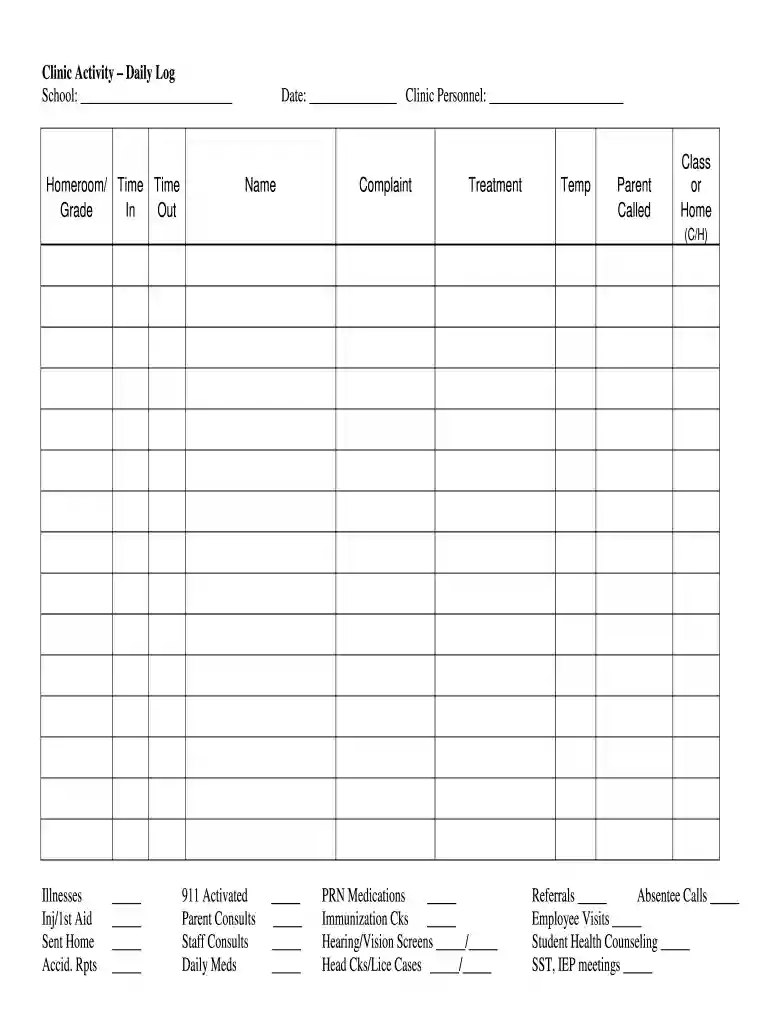
The logbook sample in a school clinic serves as an essential document that meticulously records various aspects of healthcare services provided to students throughout the day. This sample logbook is a vital tool for healthcare professionals within educational institutions, ensuring efficient tracking and management of student health-related activities.
A comprehensive school clinic logbook typically includes several critical components designed to facilitate effective documentation and monitoring of student health. These components often comprise:
Daily Patient Visits: Each entry should note the date, time, and name of the student receiving care. This helps maintain an accurate record of clinics' operations and gauge how frequently students require health services.
Symptoms and Complaints: Documenting a student's complaints or symptoms is crucial. This section may also include observations made by the school nurse regarding the student's condition, which can be helpful for future reference.
Treatments Administered: The logbook should detail any treatment or intervention provided, be it first aid, medication, or referrals to external healthcare services. Accurate records ensure continuity of care and are essential for legal compliance.
Regular health checks are a standard practice in school clinics. The logbook sample should include:
Temperature Recordings: Keeping track of each student's temperature can highlight any potential health issues, particularly with the spread of communicable diseases. Each entry should note the date, temperature, and any further actions taken.
Health Assessments: This section facilitates comprehensive monitoring of students’ physical conditions over time, aiding healthcare professionals in spotting trends that may require intervention.
Maintaining open communication with parents is integral to managing students' health issues efficiently. Therefore, the logbook should also document:
Conversations with Parents: Each interaction with a student’s parent or guardian about the child’s health should be recorded to ensure that everyone involved is well-informed about the situation.
Follow-Up Actions: Notes on what actions will be taken following parent communication, including referrals or recommendations for home care, contribute to a cohesive approach to student health management.
A critical feature of the school clinic logbook is the section dedicated to medications and referrals. It should systematically include:
Medications Administered: Each entry should specify the type of medication, dosage, and time of administration. This level of detail safeguards against potential medication errors and allows for better medical oversight.
Referral Information: Should a student require specialized care, this section should document details of the referral, including the healthcare provider's name, contact information, and the reason for the referral. This ensures a streamlined process for the student's ongoing healthcare needs.
Injuries occur frequently in school environments, necessitating clear documentation. The logbook should feature:
Descriptions of Injuries: Each injury report must detail the nature of the injury, treatment applied, and any student interactions related to the incident. This not only aids in immediate care but also provides a historical record for future reference.
Incident Reports: If applicable, document any incidents leading to injuries or health complaints, extending the school’s understanding of health and safety within the campus.
Finally, regular meetings regarding student health play an essential role in proactive health management. The logbook must capture:
Meeting Notes: Summaries of discussions held regarding student health policies or specific cases are important. This section enhances coordination among healthcare professionals and supports policy development.
Action Plans: Outcomes from these meetings, specifically any new policies or health initiatives, should be recorded to ensure transparency and accountability within the school clinic's operations.
In summary, a well-structured logbook sample in a school clinic is an indispensable tool for ensuring optimal health services for students. By meticulously documenting daily activities, symptoms, treatments, and other essential data, healthcare professionals can provide timely and effective interventions while maintaining comprehensive records for reference and accountability.
Electronic document signing requires a software solution that works in compliance with data security and eSignature standards. DocHub is a great tool for that, since it fulfills all the previously mentioned requirements. Whatever method you like to sign your medical log book pdf in DocHub, your electronic signature will be legally binding and court-admissible.
If you need to edit your medical log book template on the internet swiftly, it does not matter what internet browser you employ. DocHub’s simple editing tools are accessible using any internet browser. Simply open the appropriate tab in the editor, add your document, and fill it out without stress.
At DocHub, your data security is our priority. We follow HIPAA, SOC2, GDPR, and other standards, so you can work on your documents with confidence.
PATIENT ENCOUNTER LOGBOOK. OB/GYN. Note: Include all patients you cared for or in =pt discharged from hospital or clinic; Recov.=postop recovery; DxRead more
by K Schttpelz-Brauns 2016 Cited by 101 Abstract. Background: Logbooks are widely used to set learning outcomes and to structure and standardize teaching in clinical settings.Read more
Our format: Quick explainers and playful recurring segments like Guess the Labsound and SynBio Soundtrack of the Week kept learning engaging and fun. WithRead more


