




01. Edit your hc sc 3312 online
Type text, add images, blackout confidential details, add comments, highlights and more.

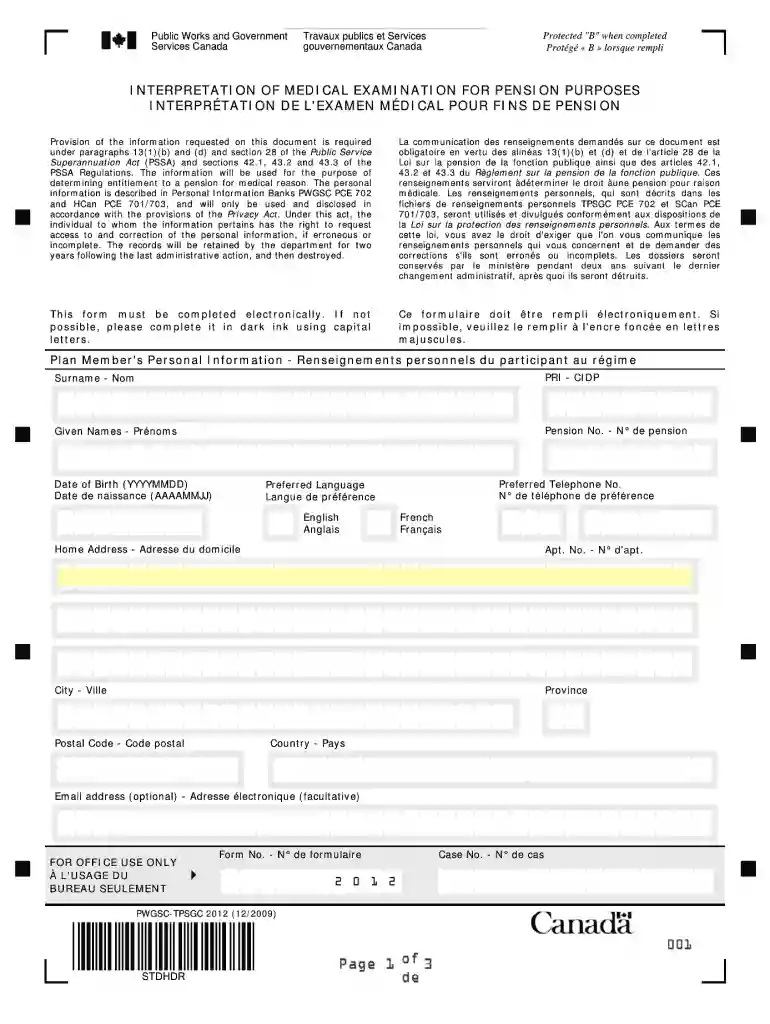
Type text, add images, blackout confidential details, add comments, highlights and more.

Draw your signature, type it, upload its image, or use your mobile device as a signature pad.

Send occupational health assessment report hc sc 3312 via email, link, or fax. You can also download it, export it or print it out.
The HC SC 3312 form, formally known as the Occupational Health Assessment Report, is an essential document required by Health Canada for various occupational health assessments. This form acts as a standardized tool for assessing worker health, particularly in environments with specific risks, ensuring compliance with occupational health regulations. The report covers areas such as exposure to hazardous substances, health surveillance requirements, and the overall health status of employees in a workplace setting.
Key elements of the HC SC 3312 include:
Understanding the HC SC 3312 is crucial for employers aiming to maintain a safe and compliant workplace, as it provides a clear framework to protect employee health and adhere to legal obligations.
Completing the HC SC 3312 requires careful consideration of the information being documented. The following steps outline the necessary actions to properly fill out the form:
Following these steps helps ensure that the HC SC 3312 is thorough and compliant with Health Canada’s guidelines.
The HC SC 3312 form is utilized by various professionals and organizations concerned with occupational health and safety. Key users include:
These stakeholders rely on the HC SC 3312 to ensure that necessary health assessments are conducted and documented, which ultimately serves to protect employees and meet legal requirements.


Understanding key terminology associated with the HC SC 3312 is essential for proper usage and compliance. Some of these terms include:
Familiarity with these terms helps those involved in occupational health assessments to communicate more effectively and adhere to relevant safety standards.
The HC SC 3312 is not merely a formality; it plays a critical role in the legal landscape regarding occupational health. Compliance with the requirements set forth in this document ensures that organizations meet their legal obligations under various health and safety statutes, including:
Failure to properly utilize the HC SC 3312 can lead to legal repercussions, including fines and increased liability in the event of health-related incidents.
The HC SC 3312 contains several critical components that ensure a comprehensive occupational health assessment. Key elements to focus on include:
These elements are essential for creating a robust report that accurately reflects the employee's health situation and the potential impacts of workplace conditions.
We've got more versions of the hc sc 3312 form. Select the right hc sc 3312 version from the list and start editing it straight away!
| Versions | Form popularity | Fillable & printable |
|---|---|---|
| 2009 | 4.9 Satisfied (507 Votes) |
Most eSignature solutions require users to have a paid subscription. With DocHub, there are two ways for you to create an electronic signature to your occupational health assessment report hc sc 3312 pdf free of charge:
The second option, however, has limitations on the number of signatures, sign requests, emails, and forms for editing available per month. You can check for full information here.
When you edit your health canada occupational health assessment report with DocHub, you only require a steady internet connection and virtually any browser installed on your device. No need to set up any third-party software or research tutorials. Simply open a tab with DocHub, drag and drop your file, and edit it immediately.
At DocHub, your data security is our priority. We follow HIPAA, SOC2, GDPR, and other standards, so you can work on your documents with confidence.
Student Responsibilities. Students are required to know and follow: . All academic policies set forth by the University, College, and.Read more
General . . . . . . . . . . . . . . . . . . . . . . . . . . . . . . .. 3-1. Tape Transport Accessibility . 3-1. Controls and Indicators .Read more
H 3312 General Bill, By R.L. Cobb, R.L. Altman, W.S. Anderson, J.M. Arthur, J.N. Ashe, H.L. Barksdale, J.D. Bradley, P.T. Bradley, J.B. Brandt, D.M. Bruce,


