




01. Edit your verbal coaching template online
Type text, add images, blackout confidential details, add comments, highlights and more.

Type text, add images, blackout confidential details, add comments, highlights and more.

Draw your signature, type it, upload its image, or use your mobile device as a signature pad.

Send employee coaching form template free via email, link, or fax. You can also download it, export it or print it out.
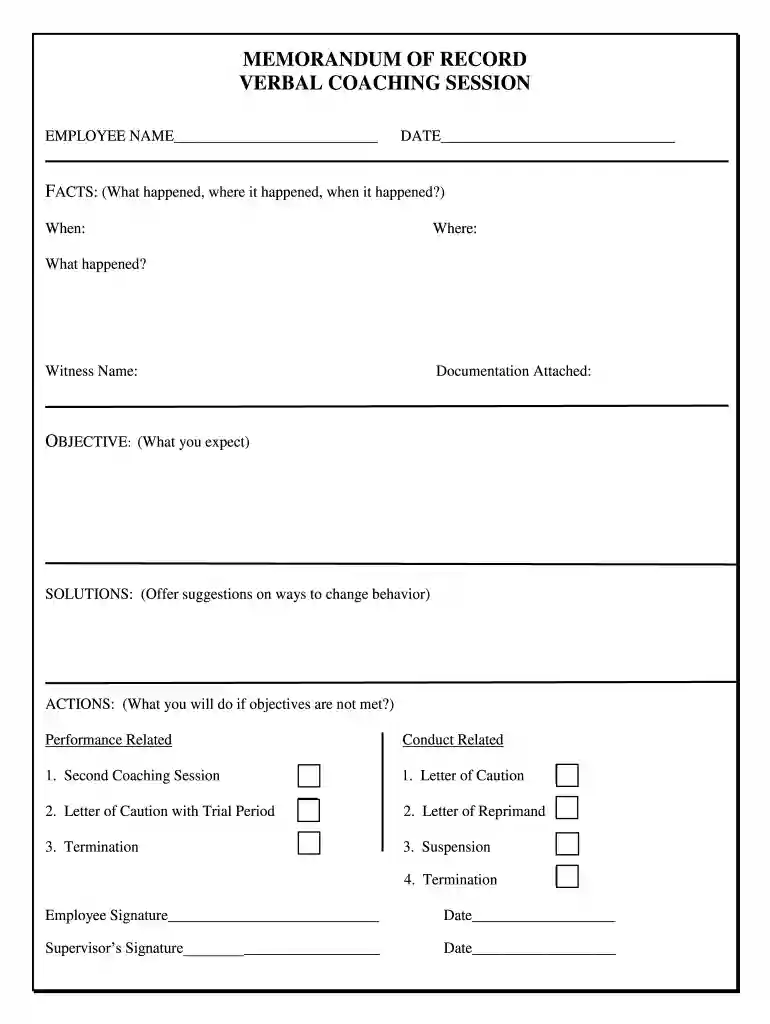
The verbal coaching template serves as a structured document used to record verbal coaching sessions between a supervisor and an employee. It includes critical elements designed to promote clarity in communication and accountability in the coaching process. This type of template is particularly beneficial as it standardizes the approach to employee coaching, ensuring that key points are addressed effectively.
A comprehensive verbal coaching template typically contains the following essential components:
Incident Description: This section should detail the specific event or behavior leading to the coaching session. It provides context for the conversation and serves as a reference point for future discussions.
Objectives for Improvement: Here, the supervisor outlines clear, measurable objectives that the employee should aim to achieve post-coaching. This clarity helps to align expectations and serves as a benchmark for progress.
Suggested Solutions: This part includes actionable steps the employee can take to improve their performance. It may also include resources or training opportunities that can support their development.
Potential Consequences: The template should address what actions may be taken if the employee fails to meet the improvement objectives. This could include further coaching sessions, performance improvement plans, or disciplinary actions.
Signatures: Both the supervisor and the employee should sign the document to acknowledge that the coaching session took place and that both parties agree on the content discussed. This signature requirement acts as a formal record of the interaction.
Utilizing a verbal coaching template involves several steps that help structure the coaching interaction:
Scheduling the Session: Choose a private and comfortable setting for the coaching conversation to ensure open communication and confidentiality.
Documentation During the Session: Use the template to document key points while the conversation is taking place. This live documentation can capture immediate feedback and specify any action items.
Post-Session Review: After the coaching session, review the filled-out template with the employee, ensuring they understand the documented feedback and expectations. This step reinforces understanding and commitment to the improvement plan.
Follow-Up Actions: Plan periodic check-ins to discuss the employee’s progress toward the objectives outlined in the template. Keeping the lines of communication open can promote ongoing development.
Employing a verbal coaching template offers multiple advantages for both supervisors and employees:
Enhanced Clarity: By clearly documenting incidents, objectives, and solutions, both parties have a mutual understanding of what needs to be improved.
Accountability: The signed document serves as a commitment from both the supervisor and the employee, fostering accountability for actions and expected changes.
Consistency: Using a standardized template for verbal coaching ensures that all employees receive similar treatment and structured feedback, enhancing fairness and transparency in the coaching process.
Legal Protection: A well-documented coaching session can help protect the employer in cases of disputes regarding performance issues or disciplinary actions. It provides a clear record that such conversations took place and what was discussed.
Different scenarios may confront supervisors during verbal coaching sessions. Here are examples illustrating how the template can be applied:
Performance Issue: If an employee consistently fails to meet deadlines, the template can detail the specific incidents, set a timeline for improvement, and suggest time management strategies.
Behavioral Concerns: In the case of inappropriate workplace behavior, a supervisor might document specific occurrences, establish expected behavior, and propose conflict resolution training as a suggested solution.
By incorporating these elements into a verbal coaching template, supervisors can facilitate meaningful conversations with their employees, ultimately driving improved performance and a more collaborative workplace environment.
At DocHub, your data security is our priority. We follow HIPAA, SOC2, GDPR, and other standards, so you can work on your documents with confidence.
DATE: 7/2/2018. START TIME 10:00 AM. END TIME: 11:00 AM. SUBJECTIVE: REVIEW JOINT PLAN: WHAT HAS HAPPENED SINCE OUR LAST VISIT? WHAT WORKED? WHAT DIDNT WORK?Read more
Coaching is an ongoing process of helping employees identify and overcome obstacles hindering them from excelling at their jobs.Read more
Supervisors may use any of the following corrective actions to manage and communicate performance improvement needs: verbal coaching; written warningRead more


