




01. Edit your trigger point injection consent form online
Type text, add images, blackout confidential details, add comments, highlights and more.

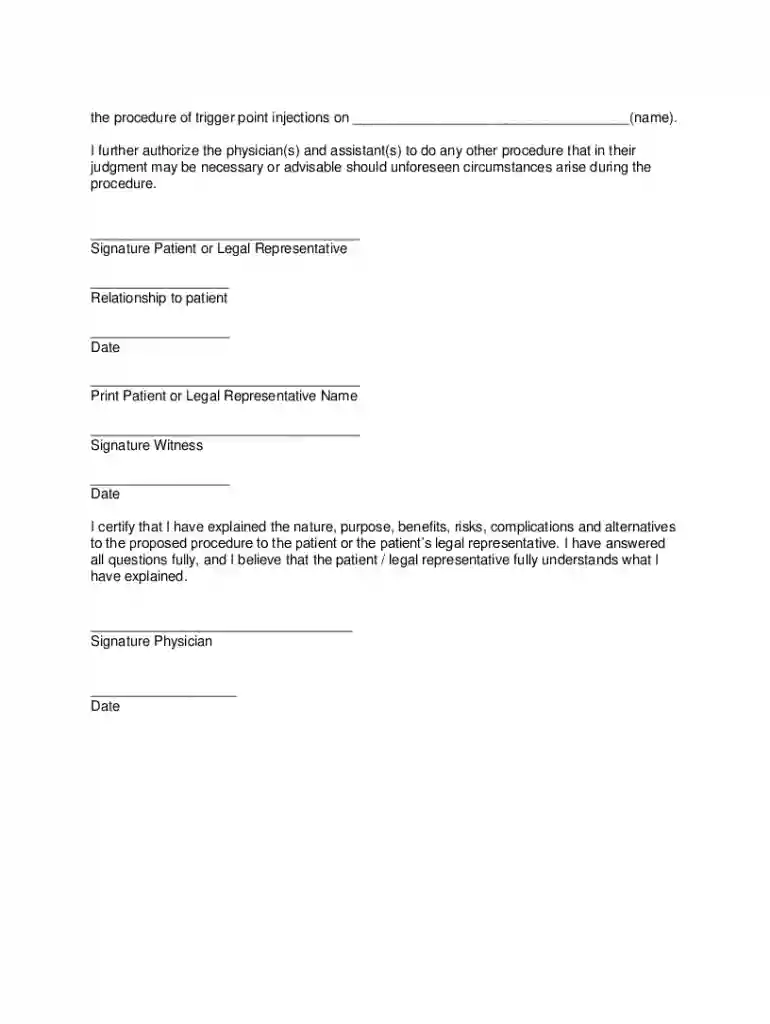
Type text, add images, blackout confidential details, add comments, highlights and more.

Draw your signature, type it, upload its image, or use your mobile device as a signature pad.

Send trigger point injection documentation example via email, link, or fax. You can also download it, export it or print it out.
The trigger point injection consent form is a crucial document that outlines the rights, responsibilities, and medical considerations involved in administering trigger point injections (TPI) to patients. This consent form not only ensures that patients are fully informed about the procedure but also provides a legal framework for practitioners.
Understanding the significance of this form lies in acknowledging its role in the informed consent process, which is fundamental in healthcare. Patients need to comprehend the purpose of the injection, potential risks, and alternative treatments available. The consent form serves to protect both the patient and the healthcare provider by documenting the patient's understanding and agreement to proceed with the treatment.
Key components typically included in the consent form are:
This form is not just a formality; it holds medical and legal weight, making it essential for compliance and ethical practice.
Using the trigger point injection consent form involves a structured process that aligns with the clinical and legal requirements of the procedure. Here’s how to effectively employ this form:
Patient Education: Before the patient fills out the consent form, ensure they receive comprehensive information about the trigger point injection. This should include the rationale for the procedure, benefits, and expected outcomes.
Review the Document Together: Walk the patient through each section of the consent form. Explain the purpose, procedure, risks, and alternatives in a clear, jargon-free manner. This helps in establishing trust and ensuring the patient’s understanding.
Patient Q&A: Encourage questions and clarify any doubts the patient may have. Addressing concerns at this stage is vital to preventing misunderstandings that could arise later.
Assess Patient Understanding: After reviewing, ask the patient to summarize their understanding of the procedure and risks. This step reinforces their awareness and highlights any areas that may need further clarification.
Signature and Documentation: Once the patient is fully informed, they can sign the consent form, indicating their agreement to proceed with the trigger point injection. Keep a copy of the signed document in their medical records for legal and ethical documentation.
This step-by-step approach ensures that the form is used effectively, promoting patient safety and adherence to legal standards.
Creating a comprehensive trigger point injection consent form involves including essential elements to ensure clarity and legal validity. Here are the key elements that should be addressed:
Identification of Parties: Clearly identify both the patient and the physician administering the procedure, ensuring that all parties involved are aware of their roles.
Procedure Overview: Provide a straightforward explanation of what a trigger point injection entails, including the locations of injection and types of medications used.
Informed Consent Statements: Include a section where the patient acknowledges their understanding of the procedure, risks, benefits, and possible alternatives, underscoring their informed consent.
Risk Acknowledgment: List potential risks and complications, such as infection, allergic reactions, or no improvement in symptoms, so patients are fully aware of possible outcomes.
Patient Questions Section: Incorporate space for patients to write down questions or express specific concerns about the procedure, fostering an environment of open communication.
Withdrawal Rights: Clearly state that patients have the right to withdraw their consent at any time before the procedure, emphasizing autonomy in their healthcare decisions.
Emergency Contact Information: Provide contact information for questions or concerns after the procedure, ensuring patients know where to turn for assistance.
Including these elements not only enhances the document's utility but also builds trust between the patient and healthcare provider, leading to a more positive treatment experience.
Completing the trigger point injection consent form involves a series of systematic steps that ensure accuracy and compliance. The following process can be employed:
Gather Necessary Information: Collect all relevant patient information, such as their medical history, current medications, and any allergies. This background is essential for tailoring the form to the specific patient's needs.
Fill Out Patient Details: Instruct the patient to provide their personal information, including name, date of birth, and contact information, ensuring that the form is personalized.
Explain the Procedure: Clearly outline the steps involved in the trigger point injection procedure, ensuring that the patient understands what to expect.
Review Risks and Benefits: Discuss the potential risks and benefits associated with the injection in detail, allowing the patient to make an informed decision.
Affirm Patient Understanding: After providing all necessary information, ask the patient to repeat key points back to you. This ensures understanding before moving forward.
Secure Signature: Once the patient fully understands the form, they should sign and date it. Explain the next steps based on their agreement to proceed with the treatment.
This structured completion process enhances transparency and ensures that all necessary elements are correctly addressed, making the consent form a reliable part of the patient's healthcare documentation.
Legal implications surrounding the trigger point injection consent form must be carefully navigated to ensure compliance with state and federal regulations. Here are the crucial legal considerations:
Informed Consent Requirement: Legally, healthcare providers must obtain informed consent before performing any medical procedure. The consent form must clearly demonstrate that the patient has been informed about their treatment options and the associated risks.
Document Retention: Keep signed consent forms on file as part of the patient’s medical records. This is essential for legal protection and could serve as evidence of informed consent if necessary.
State-Specific Regulations: Be aware that different states may have their own laws governing informed consent. Familiarize yourself with these rules to ensure that your practice remains in compliance.
Health Insurance Considerations: Some insurance policies may require a consent form to be in place before a procedure is authorized for coverage. Confirm these requirements to avoid billing issues.
Professional Liability: Failing to properly document consent can expose the healthcare provider to liability claims. Ensuring that the consent form is correctly executed can help mitigate these risks.
Addressing these legal considerations ensures that the trigger point injection consent form serves as a robust protective measure for both the patient and the practitioner, safeguarding against potential disputes.
Real-world examples of using the trigger point injection consent form illustrate its importance in various scenarios. Here are several cases:
Chronic Pain Management: A patient with chronic myofascial pain syndrome visits a pain management clinic. After discussing the TPI procedure, the physician presents the consent form, outlining the specifics of the treatment, successful past cases, and potential side effects. The patient signs the form, feeling informed and ready to proceed.
Athletic Injuries: An athlete experiences persistent muscle knots affecting performance. Before administering the injection, the sports medicine specialist reviews the consent form, detailing the benefits of fast recovery and improvement in mobility. After answering questions, the athlete signs the consent, facilitating trust on both sides.
Post-Surgical Pain Relief: A patient recovering from surgery suffers from trigger points. The surgeon advises that TPI might help alleviate the pain. The consent form is filled out beforehand, ensuring the patient comprehends the goals, risks, and alternative treatments available. This documentation is vital for the treatment plan.
These examples highlight different contexts in which the consent form plays a crucial role, ensuring patients are well-informed and transparent communication occurs between healthcare providers and patients.
At DocHub, your data security is our priority. We follow HIPAA, SOC2, GDPR, and other standards, so you can work on your documents with confidence.
Obtaining informed consent at the first visit for a series of 5 injections can be followed by verbal consent at the next four visits. The principal risksRead more
Oct 1, 2025 You will be asked to fill out some forms, including a consent form. You may also be examined by your provider before getting the injection.Read more
No bill will be processed for payment without a properly completed consent form. single or multiple trigger point(s), one or two muscle(s). 20553 singleRead more


