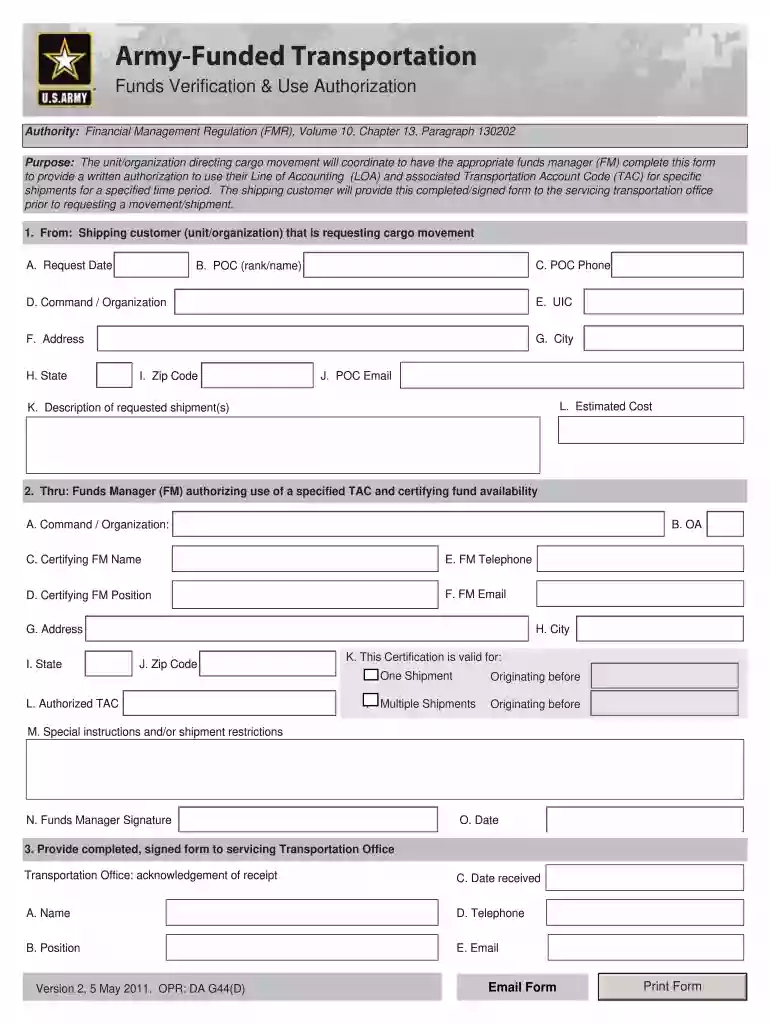
Definition and Importance of FVUA Version 31 (27 March 2019)
The Funds Verification and Use Authorization form, also known as FVUA version 31, is a critical document utilized by entities involved in the management and authorization of funds for transportation. This form plays an essential role in ensuring that funds allocated for military transportation are verified and used appropriately. It provides a structured approach to track expenses and authorizations surrounding the movement of goods, thereby enhancing accountability within the Army’s logistics framework.
Key Components of the FVUA Form
- Identification Information: The form requires comprehensive details about the shipment, including the requesting unit's name, contact information, and specific transportation account codes (TAC).
- Verification Process: It mandates a thorough examination of funds availability to ensure that the resources are present before granting authorization for transport.
- Authorization Signatures: Necessary signatures from responsible parties are crucial for compliance with regulations and to validate the document's legitimacy.
Understanding the significance and functionality of the FVUA form in the context of Army logistics is important for proper compliance and operational efficiency.
How to Complete the FVUA Version 31 (27 March 2019)
Filling out the FVUA form precisely is essential for compliance and effective fund management. The completion process involves multiple steps:
- Collect Relevant Information: Gather necessary details including the shipment type, TAC, and budget information from the appropriate departments within your organization.
- Fill Out Identification Sections: Complete the sections requesting details about the shipping unit, point of contact, and the intended recipient of the shipment. This includes inputting accurate data to avoid delays.
- Verification of Funds: This step requires you to confirm that the funds are available and can be allocated for the proposed transportation. Ensure that budget constraints are respected.
- Detailing Shipment Information: Clearly specify the nature of the goods being transported, including weight, cubic footage, and any special handling instructions.
- Signature Collection: Ensure that necessary signatures from authorized personnel are obtained. This typically includes sign-off from both the shipping customers and funds managers.
Carefully following these steps will help maintain regulatory compliance and ensure smooth processing of transportation needs.
Obtaining the FVUA Version 31 (27 March 2019)
To acquire the FVUA version 31, follow these outlined methods:
- Download from Official Sources: The FVUA form is often made available through official military or government websites. Search for the specific version to ensure accuracy.
- Contacting Logistics Department: Reach out to the logistics office within your organization or the relevant military office overseeing transportation to request the form.
- Utilizing Document Management Systems: Some organizations may have document management systems in place where standardized forms, including the FVUA, can be obtained easily.
By adhering to these methods, users can obtain the correct FVUA form version needed for their operations.
Essential Considerations Surrounding the FVUA Version 31 (27 March 2019)
When using the FVUA form, certain important terms and legal considerations must be acknowledged:
- Legally Binding: The FVUA serves as a formal document that holds legal weight. Inaccurate information can lead to compliance issues or financial discrepancies.
- Authorization Regulations: It is crucial to remain aware of army regulations that govern the use of the FVUA to avoid delivery errors or potential penalties for improper authorization.
- Documentation Requirements: When submitting the FVUA, accompanying documents such as contracts or estimates may be required to substantiate the request for funds.
Understanding these essential aspects can assist users in navigating the complexities associated with the FVUA and ensure adherence to military protocols.
Typical Users of FVUA Form Version 31 (27 March 2019)
The FVUA version 31 is primarily utilized by professionals involved in military logistics, including:
- Transportation Officers: Responsible for overseeing the movement of goods within military operations.
- Budget Managers: Those tasked with ensuring compliance with financial regulations and accuracy in funding allocations.
- Supply Chain Coordinators: Individuals managing the flow of resources and materials who need to accurately track expenses.
Recognizing the typical users of the FVUA can streamline communication and clarify responsibilities surrounding fund management and transportation.
Key Elements of the FVUA Version 31 (27 March 2019)
This form encompasses several key elements that facilitate the effective authorization of transportation funds:
- Clear Demarcation of Responsibilities: The FVUA sets forth the responsibilities of both the shipping customer and the funds manager, providing clarity on roles in cargo movement operations.
- Verification of Fund Allocation: It mandates checks to ensure that allocations align with the approved transportation budget.
- Detailed Instructions for Completion: The form often comes with guidelines for filling it out, which aids users in providing accurate information and minimizes errors.
These elements play an integral role in the form's function, ensuring efficient and lawful use of transportation funds within military operations.
Challenges and Considerations for the FVUA Version 31 (27 March 2019)
Using the FVUA version 31 can present challenges, such as compliance and accurate data handling:
- Complexity in Information Gathering: Users often encounter difficulties in collecting the necessary information required for accurate form completion. Clear communication channels can mitigate these obstacles.
- Timeliness of Submission: Delays in submitting the FVUA may lead to funding gaps in transportation operations, emphasizing the need for prompt and organized processing.
- Regulatory Changes: As regulations evolve, keeping abreast of changes affecting the FVUA is vital for continuing compliance. Regular training and updates can assist users in navigating these transitions.
By acknowledging these challenges, users can better prepare to address them, resulting in more effective utilization of the FVUA in military logistics operations.