




01. Edit your proof of service form png online
Type text, add images, blackout confidential details, add comments, highlights and more.

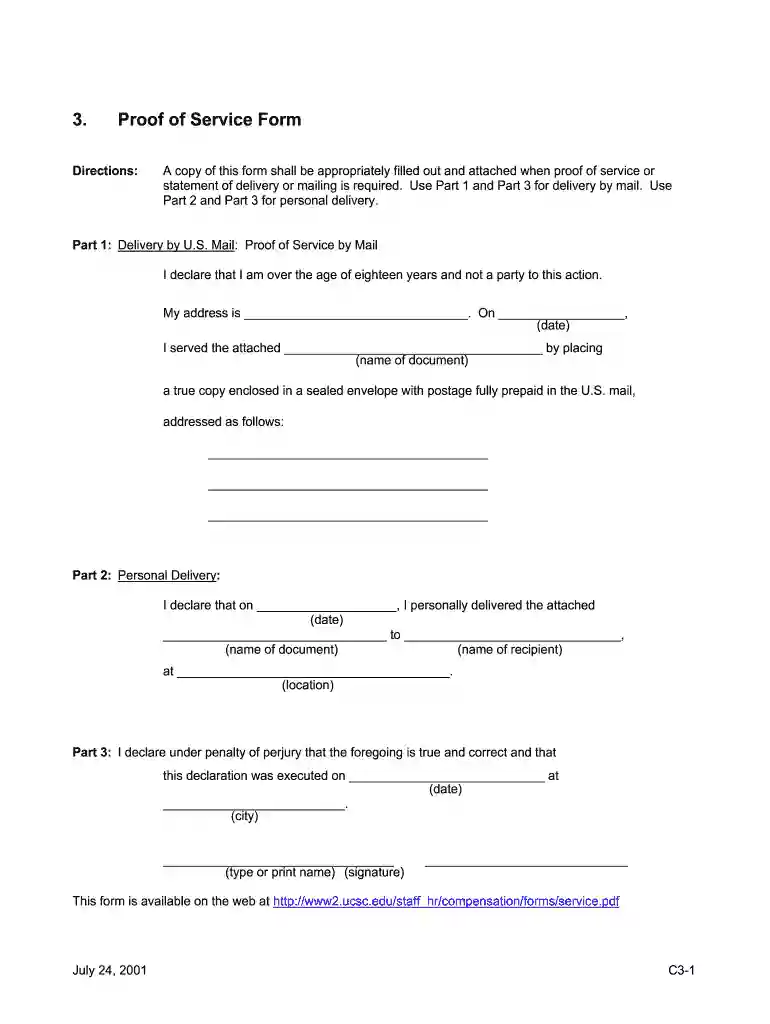
Type text, add images, blackout confidential details, add comments, highlights and more.

Draw your signature, type it, upload its image, or use your mobile device as a signature pad.

Send it via email, link, or fax. You can also download it, export it or print it out.
A proof of service form is a legal document used to confirm that a particular legal paper, such as a complaint or summons, has been delivered to the involved parties. This document serves as evidence in court that the required notifications have been properly served, which is crucial for ensuring that all parties are aware of ongoing legal proceedings.
The proof of service form typically includes:
Accurate completion of the form is essential, as discrepancies may lead to complications in the legal process, such as delays or dismissals.
Completing a proof of service form involves careful attention to detail and adherence to state-specific requirements. Here are crucial steps to ensure accuracy:
In some jurisdictions, the form may also need to be notarized.
There are various methods for serving legal documents, which are addressed within the proof of service form. Each method may have different requirements, and understanding these distinctions is vital:
Understanding the nuances of these methods ensures compliance with local laws and effective communication with the court.
The proof of service form contains specific sections that facilitate its use in legal contexts. Here are crucial components:
Each of these elements requires accurate and complete information to uphold the integrity of the legal proceedings.
The legal implications of the proof of service form are significant. Properly serving documents is often a prerequisite for court actions to proceed. The absence of a completed proof of service form can result in:
Understanding these implications underscores the importance of diligence in completing and submitting the proof of service form.
There are several common situations where a proof of service form is utilized:
Each scenario requires specific adherence to local court rules and procedures surrounding notification and service. Adjusting the approach based on the context ensures procedural compliance and the safeguarding of rights.
There are notable variations of the proof of service form dependent on the jurisdiction and context in which it is used:
These variations require users to remain updated with local laws and procedural changes to ensure compliance.
We've got more versions of the proof of service form png form. Select the right proof of service form png version from the list and start editing it straight away!
At DocHub, your data security is our priority. We follow HIPAA, SOC2, GDPR, and other standards, so you can work on your documents with confidence.
The Obligor must file the motion with the court clerk within one year from the date the first collection of support is made. PROOF OF SERVICE BY MAIL. MyRead more
PART 1: Delivery by U.S. Mail: Proof of Service by Mail. I, (state name), declare that I am over the age of eighteen years and not a party to the action. MyRead more
The names, addresses, and other applicable information about persons served is on the Attachment to Proof of Service. Civil (Persons Served) (form POS-040(P)).Read more


