




01. Edit your all medicine name list excel online
Type text, add images, blackout confidential details, add comments, highlights and more.

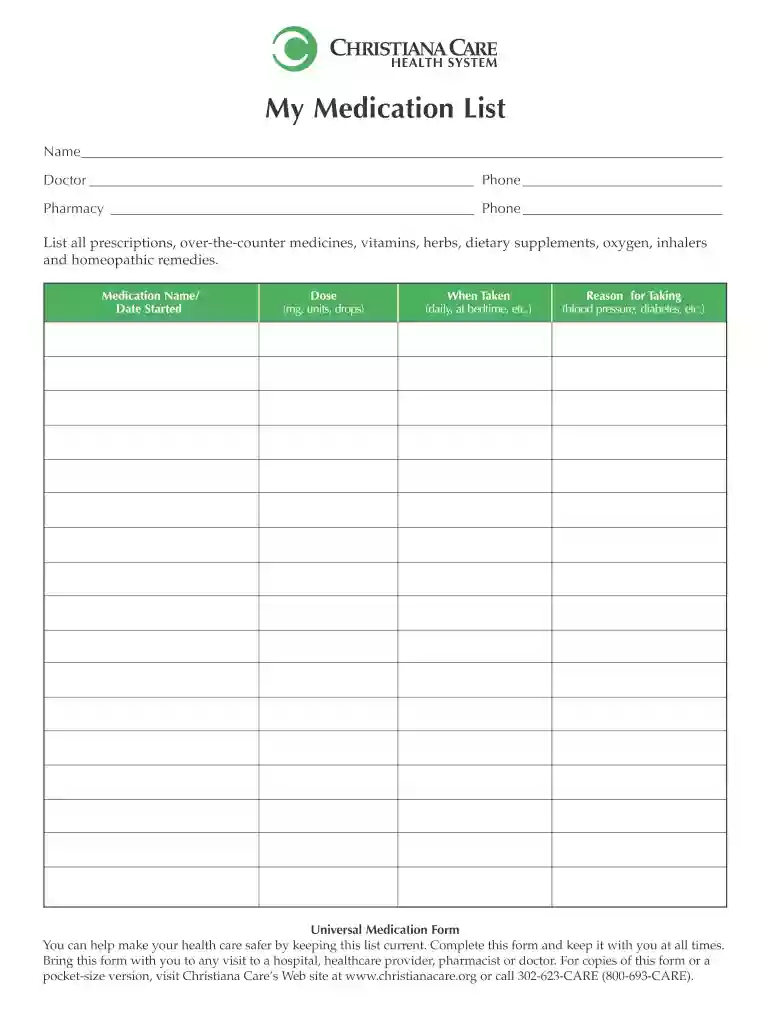
Type text, add images, blackout confidential details, add comments, highlights and more.

Draw your signature, type it, upload its image, or use your mobile device as a signature pad.

Send medicine list in excel format via email, link, or fax. You can also download it, export it or print it out.
Creating and maintaining a comprehensive medicine name list in Excel format is essential for healthcare providers, pharmacies, and patients alike. Such lists streamline medication management and facilitate better healthcare outcomes. This section will delve into various aspects of using and creating an effective medicine list in Excel.
A medicine name list in Excel serves as an organized repository that includes names, dosages, uses, and potential side effects of various medications. This structured format allows for easy sorting, filtering, and searching, which enhances its practicality for different users, including healthcare professionals, patients, and caregivers.
When creating a comprehensive medicine list, it is crucial to include several key elements that provide valuable information. These can assist users in making informed decisions regarding medications. Common elements include:
Developing an effective medicine list in Excel is straightforward and can be accomplished through several clear steps.
Utilizing Excel for your medicine name list comes with various benefits that enhance both functionality and user experience.
Using a well-maintained medicine name list can yield real-world benefits across various scenarios. Here are notable applications:
By structuring and managing a comprehensive medicine name list in Excel, users can enhance medication management, ensure safety, and support effective healthcare delivery.
We've got more versions of the all medicine name list excel form. Select the right all medicine name list excel version from the list and start editing it straight away!
At DocHub, your data security is our priority. We follow HIPAA, SOC2, GDPR, and other standards, so you can work on your documents with confidence.





Enter the 11 digit National Drug Code (NDC) for all covered drugs. Do not use hyphens. If the product does not have an NDC code, then use an alternative code.Read more
Drugs@FDA. To provide approval information including patient information, labels, approval letters, and reviews, and other information about. FDA-approved brandRead more
Jan 1, 2024 These preferred brand-name medicines are listed to help identify products that are clinically appropriate and cost-effective. Generics listed


