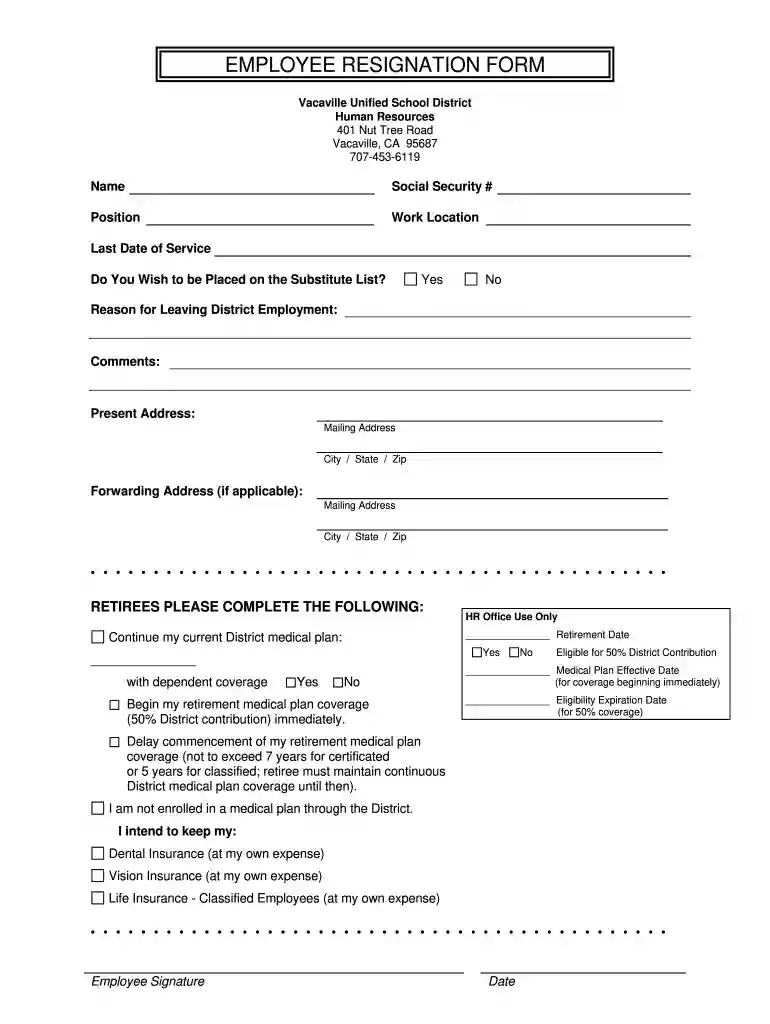
Definition & Meaning of Employee Resignation Form
An employee resignation form serves as an official document submitted by an employee to their employer in order to communicate their intent to leave the company. This form is essential for both the employee and the employer as it formalizes the resignation process and ensures clarity regarding the employee's last working day, reasons for leaving, and potential entitlements. By providing a structured format for resignation communication, it helps maintain professionalism and provides legal protection for both parties.
The standard information contained in an employee resignation form typically includes:
- Employee Details: This section includes the employee's name, department, and position within the company.
- Last Working Day: Employees specify the date when they plan to cease employment, giving employers a clear timeline for transition planning.
- Reason for Leaving: There is usually a section where employees can indicate why they are resigning, which can be useful for the employer in addressing any issues within the organization or ensuring a smooth transition.
- Signature and Date: The employee's signature validates the resignation officially and indicates that the employee understands the terms regarding their leave.
Steps to Complete the Employee Resignation Form
Completing an employee resignation form is a straightforward process that involves several key steps to ensure accuracy and compliance with company policy.
- Download the Form: Obtain the appropriate employee resignation form from the company’s HR department or online portal. Ensure it reflects the latest policy updates.
- Fill in Personal Information: Enter your full name, position, department, and contact details. These are critical for HR to process the resignation efficiently.
- Specify Your Last Day: Clearly state your intended last day of work. Most companies require this to provide adequate notice, usually two weeks.
- Indicate Reasons for Leaving: If comfortable, provide a brief explanation for your resignation. Keeping it professional can contribute positively to your references later.
- Read Company Policies: Review any relevant policies regarding resignation procedures and final paychecks, ensuring you understand your rights and obligations.
- Sign and Date the Form: Your signature confirms that the information is accurate and that you consent to the terms of your resignation.
- Submit the Form: Deliver the completed form to your supervisor or HR department as directed. It is often recommended to keep a copy for your records.
Important Terms Related to Employee Resignation Form
Understanding key terms associated with the employee resignation form can help clarify the resignation process for employees and employers alike.
- Voluntary Resignation: This term refers to an employee's choice to leave the job without coercion or external pressure, often documented using a resignation form.
- Notice Period: The amount of time an employee must continue working after submitting their resignation before their employment officially ends. This period provides the employer with time to transition duties.
- Entitlements: Refers to any remaining benefits, such as unused vacation days and severance packages that an employee may be eligible to receive upon resignation.
- Exit Interview: A meeting held with HR to discuss the employee’s experience and reasons for leaving, often scheduled soon after the resignation is submitted.
- Retirement Benefits: If applicable, this refers to any benefits an employee may be entitled to upon retirement, which must be indicated on the resignation form if relevant.
Legal Use of the Employee Resignation Form
The employee resignation form is not merely a bureaucratic tool; it has legal significance in establishing a clear record of an employee's intent to resign. This formal documentation can serve several legal purposes:
- Mitigating Disputes: A signed resignation form reduces the likelihood of disputes regarding the employee's intent to leave. It serves as proof that the employee voluntarily left their position.
- Compliance with Employment Laws: Many states have specific laws about notification and resignation procedures. A properly filled form can help ensure compliance with these legal obligations.
- Final Pay Calculations: For payroll purposes, the form can clarify the resignation date, helping HR to calculate final payments accurately, including any owed wages or unused leave.
- Reference for Future Employment: The resignation form, along with any exit interview notes, may be referenced in the future if there are questions about the employee’s tenure and reasons for leaving.
Key Elements of the Employee Resignation Form
An effective employee resignation form includes several key elements that ensure it fulfills its purpose while meeting legal, administrative, and organizational needs.
- Comprehensive Personal Information: Employee name, ID number, position, and department should be clearly indicated.
- Clear Statement of Intent: A direct declaration of the employee's intent to resign eliminates any ambiguity concerning motivations or intentions.
- Last Working Day: Including the last day of employment helps set timelines for the transition and handover.
- Reason for Leaving: Although optional, this can aid in organizational analysis and help address any employee retention issues.
- Acknowledgment of Company Policies: A statement confirming that the employee has reviewed and understood the necessary exit policies ensures all parties are on the same page.
Examples of Using the Employee Resignation Form
Using an employee resignation form effectively can vary based on individual circumstances and company policies. Below are a few illustrative examples:
- Plan for Transition: An employee resigning from a managerial position might specify a last working day that allows for the training of a successor, thus minimizing disruption.
- Retirement Scenario: An employee nearing retirement may use the form to provide notice while also indicating preferences regarding retirement benefits, in order to ensure a smooth transition into retirement.
- Workplace Reorganization: For employees in a company undergoing structural changes, the resignation form can serve as a way to formally document their exit while allowing HR to assess employee sentiment during the transition.