






Overview of the 2-DIV Form
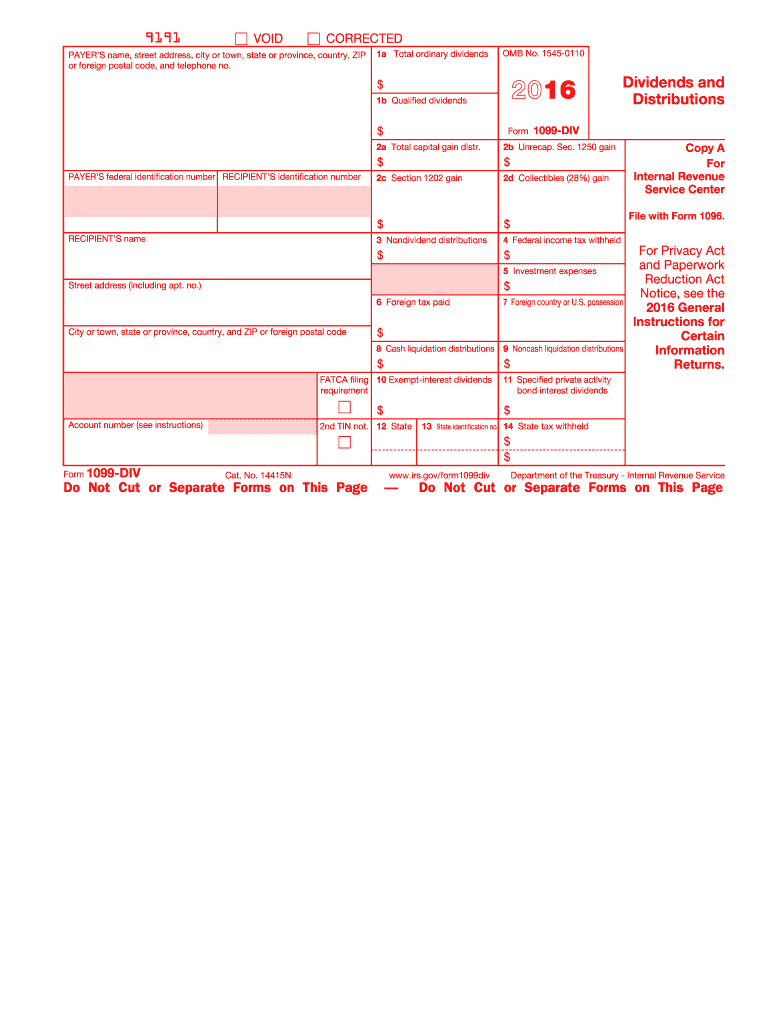
The 2016 Form 1099-DIV is utilized by payers to report dividends and distributions to both recipients and the IRS. It is a crucial document for taxpayers who receive dividend income. The form must comply with specific requirements for scannable submission to the IRS, emphasizing its importance for accurate financial reporting.
Key Elements of the 2-DIV Form
The 2-DIV form consists of several key elements that seek to categorize dividend income and other related distributions. Key elements include:
- Box 1a: Total Ordinary Dividends - Represents the total dividends from stocks and mutual funds.
- Box 1b: Qualified Dividends - Specifies dividends that qualify for reduced tax rates.
- Box 2a: Total Capital Gain Distributions - Includes long-term capital gain distributions from mutual funds.
- Box 3: Nondividend Distributions - Typically returns of capital that reduce the basis of the stock.
- Box 4: Federal Income Tax Withheld - Documents any federal income tax withheld from dividends.
Understanding these components helps taxpayers accurately report income and adhere to tax regulations.
Steps to Complete the 2-DIV Form
Completing the 2-DIV form involves several precise steps to ensure accuracy:
- Enter Payer Information: Begin with the payer's name, address, and federal identification number.
- Include Recipient's Details: Fill in the recipient's name, address, and taxpayer identification number.
- Report Dividend Income: Accurately report dividend income in relevant boxes, including ordinary and qualified dividends.
- Account for Capital Gains: Input amounts related to capital gain distributions.
- Withholding Taxes: Indicate any withholding tax applied to dividend payments.
Meticulous attention to detail is necessary during this process to avoid IRS penalties for incorrect filing.
Who Typically Uses the 2-DIV Form
The 2-DIV form is typically used by:
- Corporations and Mutual Funds: To report dividends distributed to shareholders.
- Individual Taxpayers: Who receive dividend income and need to report it on their tax returns.
- Investment Firms: Handling client portfolios that generate dividend income.
These entities play a critical role in reporting and providing dividend-related documentation to the IRS and stakeholders.


How to Obtain the 2-DIV Form
Obtaining the 2-DIV form can be simplified by understanding the following methods:
- IRS Website: Access copies and instructions directly from the IRS website.
- Tax Software Packages: Such as TurboTax or QuickBooks, which may offer downloadable templates.
- Financial Institutions: Typically provide the required form for clients receiving dividend payments.
These channels ensure that taxpayers and payers have the necessary documentation for accurate tax reporting.
Legal Use of the 2-DIV Form
The 2-DIV form serves a legal purpose in:
- Reporting Income: Required for disclosing dividend and similar income to federal authorities.
- Compliance: Assists both payers and recipients in complying with tax obligations.
- Audit Trails: Provides a documented trail for financial transactions and dividend receipts.
Ensuring the legal use of this form mitigates risks associated with misinformation and non-compliance.
IRS Guidelines for 2-DIV
The IRS provides comprehensive guidelines for completing and submitting the 2-DIV form:
- Submission Format: Requires electronic filing for payers who issue 250 or more forms.
- Copy A Specifications: Must be submitted on a scannable red-ink format to the IRS.
- Corrections: Instructions are available for correcting errors on submitted forms to avoid penalties.
Adhering to these guidelines is critical for maintaining compliance with federal tax laws.
Penalties for Non-Compliance
Failure to properly file the 2-DIV form can lead to penalties:
- Late Filing Penalties: Range based on the delay in filing, starting from $50 per form.
- Incorrect Information: Penalties for providing incorrect information to the IRS.
- Intentional Disregard: Significantly higher penalties if non-compliance is determined to be intentional.
Understanding these penalties highlights the importance of accurate and timely form submission to protect against financial repercussions.
Filing Deadlines and Important Dates
Filing deadlines are crucial for compliance with IRS requirements:
- Recipient Deadline: Payers must provide the form to recipients by January 31 of the following year.
- IRS Submission Deadline: The form must be filed with the IRS by February 28 if paper-filed, and March 31 if filed electronically.
Meeting these deadlines ensures proper documentation and avoids potential fines or extensions.