




01. Edit your illinois sales tax exemption certificate online
Type text, add images, blackout confidential details, add comments, highlights and more.

Type text, add images, blackout confidential details, add comments, highlights and more.

Draw your signature, type it, upload its image, or use your mobile device as a signature pad.

Send tax exempt form illinois via email, link, or fax. You can also download it, export it or print it out.
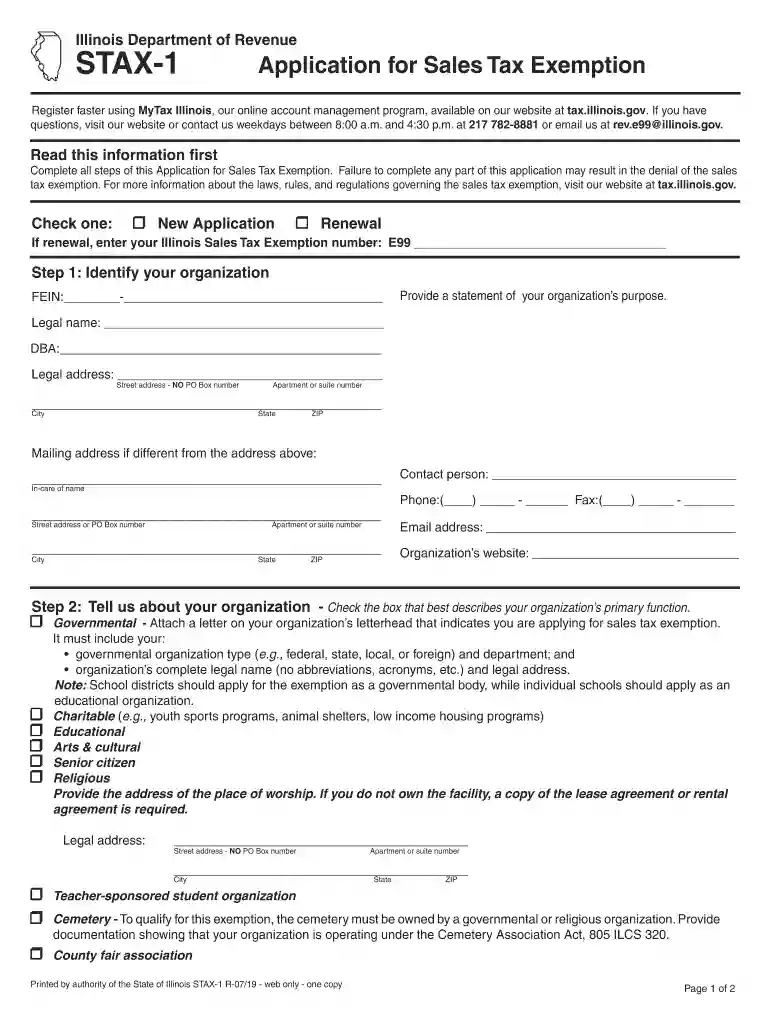
The Illinois sales tax exempt form, also known as the STAX-1 form, serves as an official document used by qualifying organizations to claim an exemption from sales tax on certain purchases. This form is essential for entities that recognize Illinois sales tax, allowing them to conduct transactions without incurring additional tax obligations. The primary purpose of the form is to provide proof to vendors that the purchasing organization qualifies for tax-exempt status under Illinois law. Various organizations, including governmental units, charitable institutions, educational entities, and specific religious organizations, can apply for this exemption.
When an organization submits the Illinois sales tax exempt form to a vendor, it notifies the seller that the buyer does not need to pay sales tax for the provided purchases, provided these purchases serve the organization's exempt purpose. The correct use of this form can lead to significant cost savings for organizations that frequently acquire goods or services related to their exempt functions.
Several organizations can benefit from using the Illinois sales tax exempt form. These typically include:
Governmental Units: Local, state, or federal government agencies can use the form to purchase goods and services necessary for their operations without incurring sales tax.
Charitable Organizations: Nonprofit organizations that operate exclusively for charitable purposes, as recognized by the IRS, may use the exemption for purchases related to their mission.
Educational Institutions: Schools, colleges, and universities can utilize the form when acquiring supplies and materials necessary for their educational programs.
Religious Entities: Churches and other religious organizations can apply for the sales tax exemption for goods used in conducting their activities.
Certain Qualified Businesses: Organizations engaged in specific types of business activities, such as certain types of childcare facilities or medical providers, may also apply for the exemption.
In all cases, organizations must provide supporting documentation to prove their eligibility for tax-exempt status. This ensures that they can legitimately claim the exemption when making purchases.


Completing the Illinois sales tax exempt form requires attention to specific details to ensure accuracy and compliance. The steps include:
Identify the Organization: Clearly write the name of the organization applying for the exemption in the designated field. Ensure that the name matches the legal name listed in official documents.
Provide Contact Information: Include the organization's address, phone number, and any applicable email addresses. This information is crucial for verification and communication purposes.
Specify the Reason for Exemption: Indicate the reason for tax exemption based on the recognized categories, such as charitable, educational, or governmental use. Be precise, as incorrect designations can lead to denial.
Attach Required Documentation: Gather and attach any necessary documentation that supports the exemption claim. This may include IRS determination letters or proof of nonprofit status where applicable.
Signature and Date: Ensure that an authorized representative of the organization, typically an officer or director, signs the form and dates it. This signature certifies the accuracy of the information provided.
Distribution to Vendors: Once completed, distribute copies of the Illinois sales tax exempt form to vendors from whom the organization will be purchasing goods or services.
Accuracy is critical when completing the form, as any errors could result in delayed processing or loss of exemption status.
Understanding essential terminology related to the Illinois sales tax exempt form aids in effective communication and compliance:
Tax Exempt Certificate: A document that grants a purchaser status exempt from paying sales tax on specific purchases.
Qualified Organization: Entities such as nonprofits, government agencies, and educational institutions that meet specific criteria for sales tax exemption.
Use Tax: A tax imposed on the use of goods or services purchased outside of Illinois but used within the state, which can be avoided with a sales tax exemption.
Vendor: An entity or individual that sells goods or services and is responsible for collecting sales tax on taxable transactions unless presented with a sales tax exempt form.
Familiarity with these terms is essential for effectively navigating the exemption process and understanding the implications of utilizing the Illinois sales tax exempt form.
Obtaining the Illinois sales tax exempt form is relatively straightforward and can be accomplished through the following methods:
Online Access: The form is available on the Illinois Department of Revenue website, where users can download a printable PDF version. Ensure the downloaded copy is the most current version to comply with legal standards.
Request from Vendors: Some vendors may have their own copies of the sales tax exempt form for customer use. Organizations may also request a form directly from the vendor.
Contact Local Revenue Office: For organizations unfamiliar with the online process, contacting their local Illinois Department of Revenue could provide assistance and direct access to the form.
Email or Fax Requests: Entities can reach out via email or fax to the Illinois Department of Revenue to request the form, although this may take longer to fulfill compared to online methods.
All organizations should ensure that they are using the most recent version of the form and adhere to any documentation or procedural requirements set forth by the state for successful completion.
Legal usage of the Illinois sales tax exempt form is critical to maintaining compliance with state regulations. The following guidelines should be adhered to:
Authorized Organizations Only: The form should only be issued by organizations that are legally recognized as exempt entities under Illinois tax law.
Specific Purchases: The exemption applies only to purchases directly related to the tax-exempt mission of the organization. Misuse of the form for personal use or unrelated purchases can lead to penalties.
Record Keeping: Maintain thorough records of all transactions made under the exemption, including copies of the Illinois sales tax exempt form provided to vendors.
Renewal and Validity: Be aware that tax-exempt status can change. Reassessing eligibility and renewing the exemption form when necessary is essential to prevent tax liabilities.
Understanding the legal parameters surrounding the use of the Illinois sales tax exemption certificate is crucial to prevent inadvertent misuse that can result in audits, penalties, or loss of exempt status. Organizations should stay informed about changes in tax law related to exemptions and adhere to all compliance requirements set by state authorities.
We've got more versions of the illinois sales tax exemption certificate form. Select the right illinois sales tax exemption certificate version from the list and start editing it straight away!
At DocHub, your data security is our priority. We follow HIPAA, SOC2, GDPR, and other standards, so you can work on your documents with confidence.
You do not need to have a MyTax Illinois account to complete and submit your online application. You may also download the printable form (this is a PDF file).Read more
Enter the total of any. ○ Amounts from Form 1040, lines 27 and 59, and. ○ Uncollected social security and Medicare or tier 1 RRTA taxes shown in box 12 of your.Read more
✓Do not discard - your Illinois Sales Tax Exemption Certificate is an important tax document that authorizes you to purchase tangible personal property for useRead more


