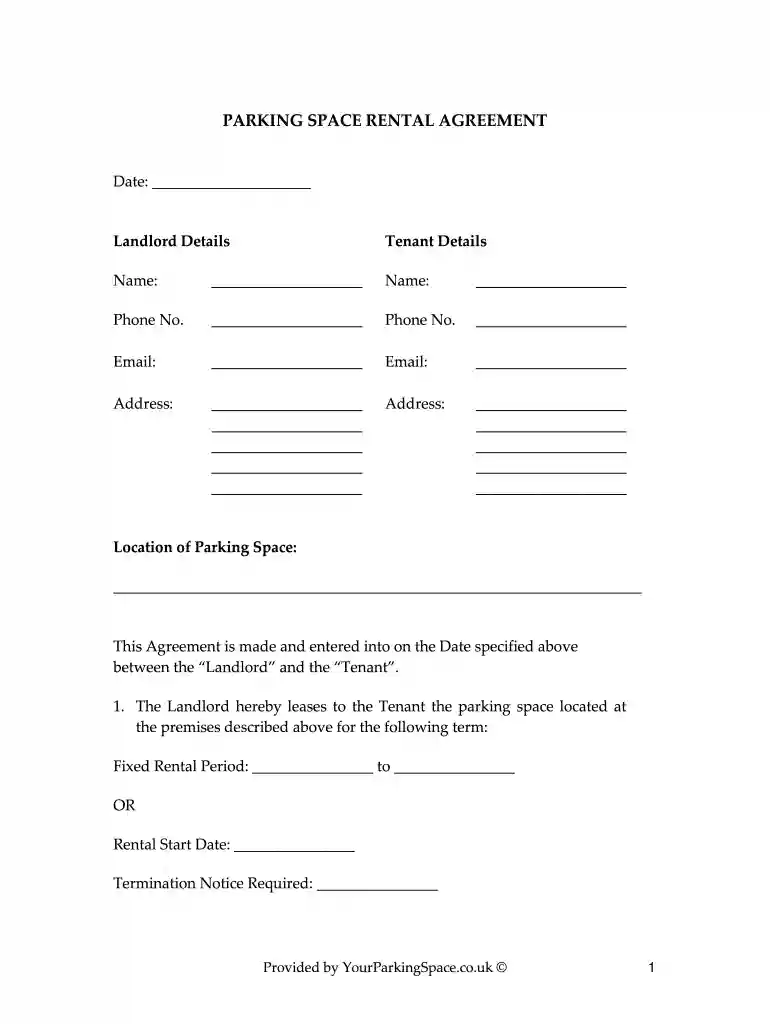
Parking spot rental agreement ontario 2026

Get Form
parking spot rental agreement Preview on Page 1

Here's how it works

01. Edit your parking spot rental agreement online
Type text, add images, blackout confidential details, add comments, highlights and more.

02. Sign it in a few clicks
Draw your signature, type it, upload its image, or use your mobile device as a signature pad.

03. Share your form with others
Send parking rental agreement via email, link, or fax. You can also download it, export it or print it out.

Definition and Meaning of a Parking Spot Rental Agreement in Ontario

A parking spot rental agreement in Ontario is a legal document that outlines the terms and conditions under which a parking space is leased from a landlord to a tenant. This agreement serves to protect the interests of both parties involved by clearly defining responsibilities, rental payment details, and any rules governing the use of the parking spot. It is essential for establishing a formal understanding of the leasing arrangement.

Key Components of the Agreement

  • Parties Involved: Identifies the landlord and tenant by name and contact information.
  • Parking Spot Details: Describes the specific location, size, and features of the parking space.
  • Rental Period: Specifies the duration of the lease, including start and end dates.
  • Payment Terms: Outlines the rental fee, payment methods, and due dates.
  • Security Deposit: States conditions regarding the deposit, including amount and return policies.
  • Liabilities and Responsibilities: Clarifies responsibilities for damages, vehicle safety, and compliance with rules.

Including these components ensures that both the landlord and tenant have a clear understanding of their roles and obligations under the rental agreement.

How to Use the Parking Spot Rental Agreement in Ontario

Using a parking spot rental agreement effectively involves several steps to ensure legal compliance and smooth transactions. This document serves as a formal commitment between the landlord and tenant.

Steps to Utilize the Agreement

  1. Draft the Agreement: Start by including all necessary details such as names, contact information, and specifics about the parking space.
  2. Review Terms: Both parties should carefully read the terms to ensure mutual understanding and agreement.
  3. Sign the Document: Once both parties are in agreement, they should sign and date the document to make it legally binding.
  4. Distribute Copies: Provide copies of the signed agreement to all parties involved for their records.
  5. Follow Up: Maintain open communication to address any issues that arise during the rental period.

By following these steps, both the landlord and tenant can ensure clarity and minimize disputes related to the parking rental.

Important Terms Related to Parking Spot Rental Agreement

Understanding the terminology used in a parking spot rental agreement is crucial for both landlords and tenants. Below are some key terms that are commonly included in these documents.

Common Terms Defined

  • Lease Term: The length of time the parking space will be rented, often specified in months or years.
  • Rental Fee: The amount charged for the use of the parking space, which may vary based on location and availability.
  • Security Deposit: A sum of money collected to cover any potential damages or unpaid rent, refundable at the end of the lease term if conditions are met.
  • Default: A situation where one party fails to fulfill their obligations under the agreement, such as not paying rent on time.

Being familiar with these terms helps both parties understand their commitments and rights, ensuring a smoother rental experience.

Steps to Complete the Parking Spot Rental Agreement in Ontario

Completing a parking spot rental agreement involves several key steps that both parties must follow to ensure a valid and enforceable contract.

Detailed Completion Steps

  1. Identify the Parties: Clearly state the full legal names of the landlord and tenant.
  2. Specify Parking Location: Provide a precise description of the parking spot, including any identifying features or landmarks.
  3. Determine Rental Amount: Agree on a monthly rental fee, specifying how and when payments will be made.
  4. Establish Duration: Define the start and termination dates of the rental period.
  5. Outline Responsibilities: Include clauses about vehicle security, maintenance, and liability for damages.
  6. Sign and Date: Both parties must sign and date the agreement to signify acceptance of the terms.

Completing these steps carefully ensures that the agreement holds up in a legal context and protects both landlord and tenant.

Why You Should Use a Parking Spot Rental Agreement in Ontario

Implementing a parking spot rental agreement in Ontario provides numerous benefits for both landlords and tenants, fostering a more transparent rental experience.

Advantages

  • Legal Protection: The agreement outlines rights and obligations, providing a framework for addressing potential disputes.
  • Clarity: By detailing terms such as rental rates and responsibilities, misunderstandings can be minimized.
  • Accountability: A signed agreement holds both parties accountable for adhering to agreed-upon terms.
  • Record Keeping: Provides a documented history of the rental arrangement for future reference.

Engaging with a formal rental agreement helps cultivate a responsible rental environment that respects the interests of all involved parties.

Legal Use of the Parking Spot Rental Agreement in Ontario

The legal framework underpinning the parking spot rental agreement is critical for ensuring enforceability and compliance with local regulations. Understanding the legal context involves several considerations.

Legal Aspects to Consider

  • Local Regulations: Compliance with municipal bylaws that may govern parking, zoning, and leasing practices is essential.
  • Renter's Rights: Tenants have specific protections under applicable laws, ensuring they are not unjustly evicted or penalized.
  • Liability Clauses: Clear language regarding liability for accidents, theft, or damage will establish accountability for both the landlord and tenant.
  • Dispute Resolution: Including a section on how disputes will be resolved, whether through mediation or court, can streamline conflict resolution.

Ensuring that the agreement aligns with legal standards can help both parties avoid complications and foster a more professional leasing experience.

Examples of Using the Parking Spot Rental Agreement in Ontario

Real-world examples can illustrate how parking spot rental agreements function in practice and the potential issues they can help mitigate.

Practical Illustrations

  • Residential Use: A homeowner rents out a parking space adjacent to their property to a neighbor, facilitating convenient access while providing an additional income stream.
  • Commercial Arrangements: A business owner leases several parking spaces for employees or customers, ensuring adequate parking while maintaining operational efficiency.
  • Conflict Scenario: One tenant leaves their vehicle abandoned in the rented space. The rental agreement specifies that the tenant must remove their vehicle and outlines the process for addressing such situations, preventing disputes.

By examining these scenarios, individuals can understand the application and significance of formalized parking spot rental agreements.

be ready to get more

Complete this form in 5 minutes or less

Get form

Got questions?

We have answers to the most popular questions from our customers. If you can't find an answer to your question, please contact us.
Contact us
Does Microsoft Word have a lease agreement template? Yes, Microsoft Word has a free lease agreement template that you can customize to create your own contract and minimize any potential problems between tenant and landlord.
A tenant that has permission from a landlord to occupy a property without a formal lease is considered a tenant-at-will. Tenancy-at-will is governed by provincial law and may also be called a month-to-month lease.
A lease or rental agreement sets out the rules landlords and tenants agree to follow in their rental relationship. It is a legal contract, as well as an immensely practical document full of crucial business details, such as how long the tenant can occupy the property and the amount of rent due each month.
The Residential Tenancy Agreement or the lease is the contract signed between a landlord and a tenant before the tenancy begins. ing to Ontario Housing Law, landlords should use or follow the terms outlined in the standard lease agreement form.
Generally speaking, you can legally rent any part of your property that you own, or even property youre legally renting, as long as your homeowners association (HOA), lease, or rental agreement doesnt forbid it.

Security and compliance

At DocHub, your data security is our priority. We follow HIPAA, SOC2, GDPR, and other standards, so you can work on your documents with confidence.

Learn more
ccpa2
pci-dss
gdpr-compliance
hipaa
soc-compliance

People also ask

Yes, Microsoft Word has a free lease agreement template that you can customize to create your own contract and minimize any potential problems between tenant and landlord.
Seamless Document Creation and Editing Through integration, users can open pre-written contract templates within Word. The template contains placeholders for essential information, such as names, dates, terms, and conditions.
Can you write your own tenancy agreement? Certainly. Unless youre an attorney, or have an attorney review it, you probably shouldnt, But you certainly can. If you fail to follow your state/local laws to-the-letter, the agreement may be invalid.

parking lease agreement