
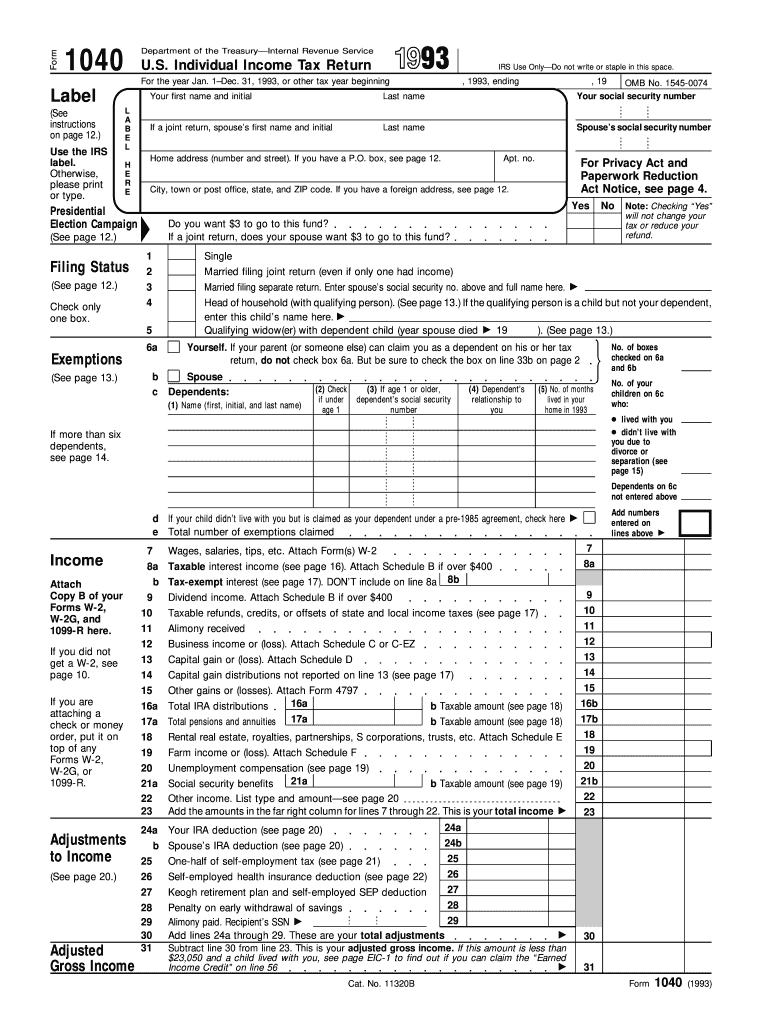







Definition and Purpose of 1993 Form 1040
The 1993 Form 1040 is the standard U.S. federal income tax form used by individuals to file their yearly income tax returns. This document provides a structured way for taxpayers to report their personal and financial information, calculate their total tax liability, and determine whether they owe additional taxes or are eligible for a refund. The form includes sections for personal details, income sources, deductions, credits, and payments, guiding users through the process of accurately declaring their financial activities for the tax year.
How to Use the 1993 Form 1040
To effectively use the 1993 Form 1040, taxpayers must gather all necessary financial records from the relevant tax year, such as W-2s, 1099s, and documentation of other income sources. The form consists of various sections, each requiring specific information:
- Personal Information: Includes name, Social Security number, address, and filing status.
- Income Sources: Covers wages, salaries, interest, dividends, and other income streams.
- Adjustments and Deductions: Requires details on adjustments to income and eligible deductions.
- Tax Computation: Involves calculating the total taxable income and the corresponding tax owed.
- Tax Credits and Payments: Includes documentation of tax credits and payments made during the year.
Completion of the form results in determining the final tax liability or refund amount.
Steps to Complete the 1993 Form 1040
- Gather Documentation: Collect all income statements, receipts for deductions, and previous tax returns.
- Fill Personal Information: Enter your basic personal details and filing status.
- Report Income: List all sources of income. Attach Schedule C if self-employed.
- Apply Deductions and Credits: Itemize deductions or use the standard deduction. Include eligible credits.
- Calculate Tax Liability: Use the tax tables to compute the tax owed based on taxable income.
- Finalize Return: Confirm calculations, attach relevant schedules, and sign the form.
Ensuring accuracy is crucial to prevent errors and potential audits.
Important Terms Related to 1993 Form 1040
Understanding the terminology used in the 1993 Form 1040 is integral to completing it correctly. Key terms include:
- AGI (Adjusted Gross Income): Total income minus specific deductions.
- Filing Status: Classification of your filing category, such as single or married filing jointly.
- Exemptions: Claims for yourself, spouse, or dependents reducing taxable income.
- Tax Credits: Non-refundable and refundable credits applied to reduce overall tax liability.
- Standard Deduction vs. Itemized Deductions: Choice between a flat reduction or listing expenses.
Familiarity with these terms aids in accurate form completion and optimizing potential deductions or credits.
Key Elements of the 1993 Form 1040
The 1993 Form 1040 encompasses several critical components that users must accurately complete:
- Identification Information: Essential for IRS records and communication.
- Income Section: Central for calculating the total taxable income.
- Deductions and Credits: Allows for optimization of tax obligations.
- Refund or Amount Owed: Concludes with total balance for refund or payment.
These elements collectively facilitate comprehensive reporting and compliance with tax laws.
Filing Deadlines and Important Dates
Taxpayers using the 1993 Form 1040 should note key deadlines to avoid penalties:
- April 15: Typical deadline for filing individual income tax returns.
- October 15: Extended deadline for those who file Form 4868 for an automatic extension.
- Estimated Tax Payments: Due dates throughout the year for individuals with independent income streams.
Adhering to these deadlines ensures timely processing and avoids interest or penalties.
Submission of the 1993 Form 1040
Submitting the 1993 Form 1040 can be executed through various methods:
- Mailing: Mailing the completed form to the designated IRS address for the taxpayer's area.
- Electronic Filing (e-File): Despite the age of the form, taxpayers often use modern e-filing for current year submissions, aided by digitized records.
- In-Person Submission: Delivering the form directly to an IRS office if deemed necessary.
Selecting the appropriate submission method depends on resources and convenience.
IRS Guidelines for the 1993 Form 1040
The IRS provides comprehensive guidelines to aid taxpayers in understanding and accurately completing the 1993 Form 1040:
- Publication 17: Offers tax advice and clarifies common questions.
- Tax Instructions for Form 1040: Guides users through each form section with detailed explanations.
- IRS Helpline: Access to assistance from IRS representatives for unresolved issues.
Referencing IRS resources is recommended to resolve doubts and ensure compliance.