




01. Edit your 2009 form 1040 online
Type text, add images, blackout confidential details, add comments, highlights and more.

Type text, add images, blackout confidential details, add comments, highlights and more.

Draw your signature, type it, upload its image, or use your mobile device as a signature pad.

Send 2009 1040 via email, link, or fax. You can also download it, export it or print it out.
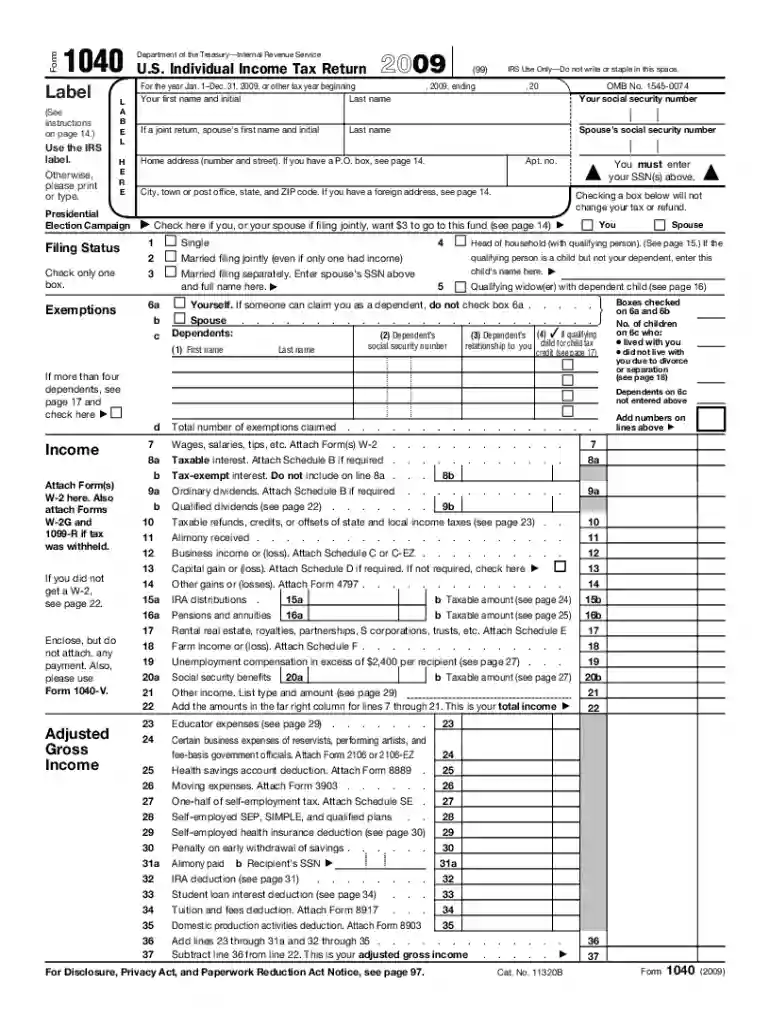
The "2009 form tax" refers to the specific tax form related to United States federal tax filings for the year 2009. This document serves as a critical tool for taxpayers to report their income, calculate their tax obligations, and declare any deductions or credits applicable for that tax year. The form is essential for ensuring compliance with the Internal Revenue Service (IRS) regulations and is used to determine the accurate amount of tax owed or the refund due. Due to changes in tax laws and economic circumstances, the form for this year may feature particular stipulations not found in other years.
To properly utilize the 2009 form tax, taxpayers must follow a structured approach:
Gathering Information: Begin by collecting all necessary documents, including W-2s, 1099s, bank statements, and documentation of any tax-deductible expenses or credits.
Completing the Form: Carefully fill out the form by inputting your personal information, income details, and any deductions or credits. Ensure each section is thoroughly reviewed to avoid errors.
Verification: Double-check all entries for accuracy to prevent discrepancies that could trigger audits or penalties.
Submission: Submit the completed tax form by the specified deadline, choosing between online, mail, or in-person submission options, based on preference and accessibility.
Taxpayers should consult with a tax professional if they encounter complex scenarios or uncertainties during form completion.
Acquiring the 2009 form tax can be achieved through several methods:
Online Download: Visit the IRS website to download a PDF version of the 2009 form tax, ensuring you have a compatible PDF reader for viewing and printing.
Local IRS Office: Obtain a physical copy by visiting a nearby IRS office. It's advisable to call ahead to confirm availability.
Request by Mail: Call the IRS and request a mailed paper version. Be sure to do this well in advance to accommodate any postal delays.
Taxpayers can also find archived versions of the form through various tax preparation software that provides historical tax form access.
Completing the 2009 form tax involves the following steps:
Personal Information: Start by entering your name, address, Social Security number, and filing status to the form.
Income Calculation: Input total income, including wages, interest, dividends, and other applicable earnings, derived from relevant documents like W-2s and 1099s.
Deductions and Credits: Enter deductions and eligible credits, referencing IRS guidelines for accuracy.
Tax Calculation: Use the provided tax tables or software calculators to determine the amount of tax owed.
Final Review and Signature: Sign and date the form, ensuring every section is complete and accurate.
Following these precise steps helps in minimizing errors and ensuring timely submission.
Understanding key terminology associated with the 2009 form tax is crucial:
Familiarity with these terms empowers taxpayers to optimize their filings and enhance comprehension of potential benefits.
The legal utilization of the 2009 form tax must adhere to:
Taxpayers should seek legal counsel or professional tax services when dealing with complex tax issues or significant financial changes.
Being aware of submission deadlines is vital:
Meeting these deadlines avoids late fees and penalties, urging proactive management of tax responsibilities.
Taxpayers have multiple options for submitting the completed 2009 form tax:
Each submission method comes with its own set of protocols and processing times, so it's beneficial to choose based on convenience and reliability preferences.
We've got more versions of the 2009 form 1040 form. Select the right 2009 form 1040 version from the list and start editing it straight away!
| Versions | Form popularity | Fillable & printable |
|---|---|---|
| 2025 | 4.9 Satisfied (56 Votes) | |
| 2024 | 4.5 Satisfied (50 Votes) | |
| 2023 | 4.9 Satisfied (56 Votes) | |
| 2022 | 4.3 Satisfied (60 Votes) | |
| 2021 | 4.8 Satisfied (50 Votes) | |
| 2020 | 4.4 Satisfied (257 Votes) | |
| 2019 | 4.2 Satisfied (85 Votes) | |
| 2018 | 4.4 Satisfied (346 Votes) | |
| 2017 | 4 Satisfied (21 Votes) | |
| 2017 | 4.4 Satisfied (458 Votes) | |
| 2016 | 4.4 Satisfied (657 Votes) | |
| 2015 | 4.3 Satisfied (174 Votes) | |
| 2014 | 4 Satisfied (48 Votes) | |
| 2013 | 4 Satisfied (70 Votes) | |
| 2012 | 4 Satisfied (28 Votes) |
At DocHub, your data security is our priority. We follow HIPAA, SOC2, GDPR, and other standards, so you can work on your documents with confidence.



This is your total tax. 37. 38. Federal income tax withheld from Forms W-2 and 1099. 38. 39. 2009 estimated tax payments and amount applied Form 1040A (2009).Read more
2009 ; Form 1040A, U.S. individual income tax return. ; United States. Internal Revenue Service. ;. Form 1040A, U.S. individual income tax return Available.Read more
Dec 6, 2017 An estate or trust can file an amended Form 1041, U.S. Income Tax. Return for Estates and Trusts. In most cases, you must file an amended return.Read more


