




01. Edit your irs 2014 online
Type text, add images, blackout confidential details, add comments, highlights and more.

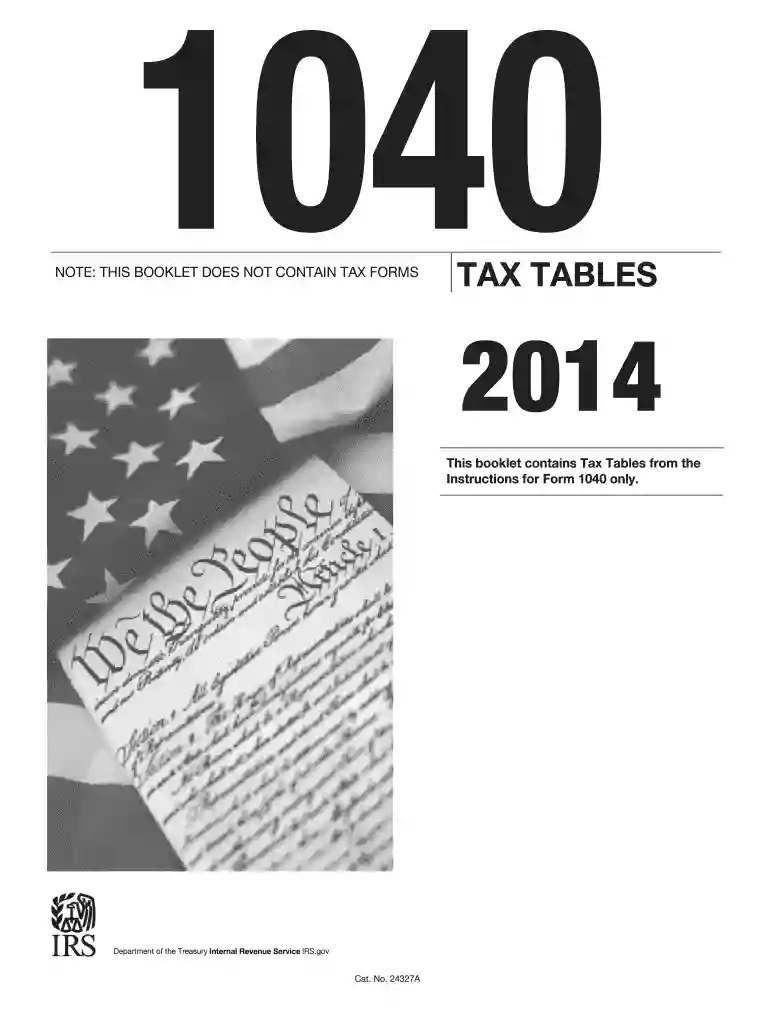
Type text, add images, blackout confidential details, add comments, highlights and more.

Draw your signature, type it, upload its image, or use your mobile device as a signature pad.

Send 2014 tax tables via email, link, or fax. You can also download it, export it or print it out.
The 2014 IRS form refers to the specific tax forms issued by the Internal Revenue Service for that tax year, primarily used for reporting income, calculating tax liabilities, and claiming deductions or credits. These forms are essential for individuals and businesses to accurately calculate and report their yearly tax obligations to the federal government. Common forms from 2014 include the 1040, 1040A, and 1040EZ, each catering to different types of filers based on their income level and complexity of tax situations.
These forms include sections for personal information, income reporting, tax credits, and deductions, which aid in calculating the overall tax owed or refunded.
Securing the 2014 IRS form can be accomplished through several methods. The IRS website offers downloadable PDFs of previous tax year forms, making it convenient to access and print as needed. Additionally, tax software programs from that year may retain archived copies, especially for users who have previously filed. Alternatively, local IRS offices and libraries often kept a physical supply of forms, allowing individuals to request or pick them up.
Completing the 2014 IRS form accurately is crucial to avoid penalties or delays. Below is a detailed step-by-step process for filing the 1040 form, which remains representative of filling out similar forms from that year.
For example, John, a married individual with no dependents, would use the 1040 form if he has complex income sources like rental properties or business income, allowing him to maximize his deductions through itemization.
Taxpayers must remember key deadlines when working with these forms. For calendar year filers, the deadline for submitting the 2014 tax forms was April 15, 2015. Extensions were available, granting additional time until October 15, 2015, if correctly requested by the initial deadline using Form 4868.
Understanding the legal requirements of 2014 IRS forms ensures compliance and avoids penalties. These forms adhere to regulations stipulated by the Internal Revenue Code and related IRS guidelines. Failing to file or misreporting can result in penalties, interest, and potential legal consequences.
The forms from 2014 cater to a range of taxpayers including:


A self-employed worker with various business expenses would use the 1040 normal form for more detailed deductions, while a student with only wage income might utilize the simpler 1040EZ form.
Preparation is key, and having the correct documentation ensures precise reporting. Essentials include:
It might include records from financial statements, proof of charitable contributions, and healthcare coverage documents that were mandatory due to the Affordable Care Act (ACA) regulations.
Submitting the 2014 IRS form offers two primary avenues: electronically and via paper mail.
Electronic Filing:
Paper Filing:
Understanding these methods allows taxpayers to choose the option best suited to their circumstances.
We've got more versions of the irs 2014 form. Select the right irs 2014 version from the list and start editing it straight away!
| Versions | Form popularity | Fillable & printable |
|---|---|---|
| 2024 | 4.8 Satisfied (29 Votes) | |
| 2023 | 4.1 Satisfied (37 Votes) | |
| 2022 | 4.4 Satisfied (37 Votes) | |
| 2021 | 4.8 Satisfied (114 Votes) | |
| 2017 | 4.4 Satisfied (88 Votes) | |
| 2016 | 4.4 Satisfied (108 Votes) | |
| 2015 | 4.2 Satisfied (59 Votes) | |
| 2014 | 4 Satisfied (45 Votes) | |
| 2013 | 4.3 Satisfied (40 Votes) | |
| 2011 | 4.4 Satisfied (64 Votes) |
At DocHub, your data security is our priority. We follow HIPAA, SOC2, GDPR, and other standards, so you can work on your documents with confidence.
To request a Certificate of Tax Clearance, contact the Tax. Commission. We will prepare form TC-2001 and send it to you to complete. Dissolving and withdrawingRead more
U.S. Individual Income Tax Return 2014 OMB No. 1545-0074 IRS Use OnlyDo not write or staple in this space. For the year Jan. 1Dec. 31Read more
Part I. Taxpayer Identification Number (TIN). Enter your TIN in the appropriate box. The TIN provided must match the name given on line 1 to avoid.Read more


