
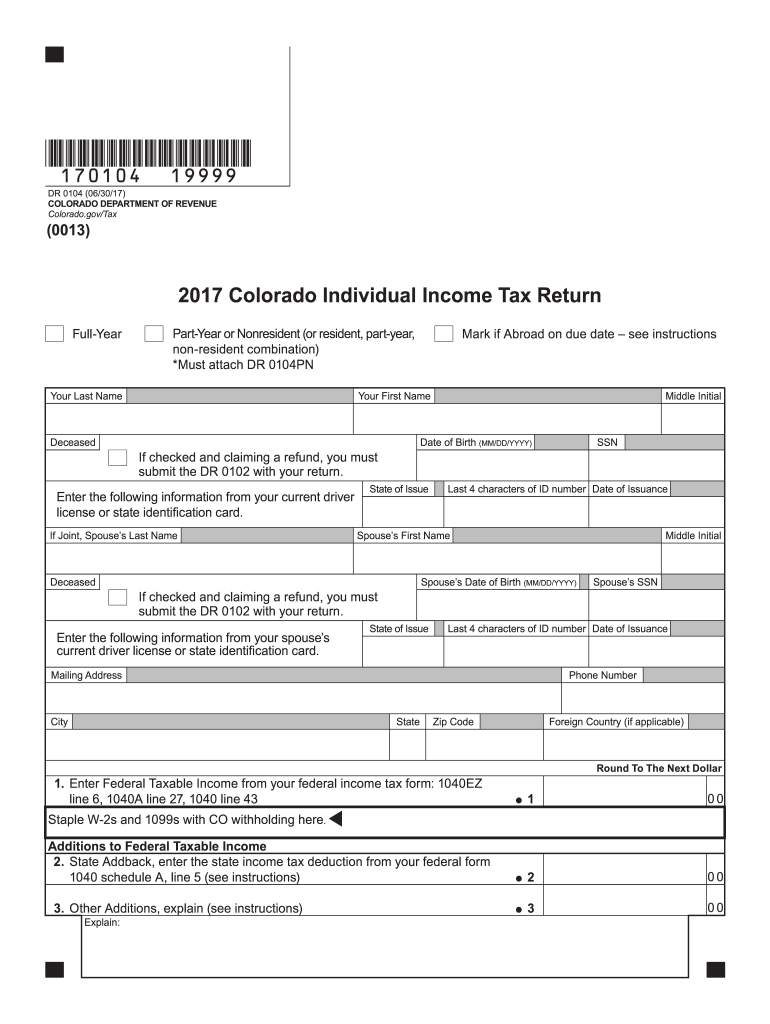







Definition and Purpose of the 2014 Colorado Form 104
The Colorado Individual Income Tax Form 104 for the year 2014 is a pivotal document for residents of Colorado, enabling them to report their income and calculate their state-specific tax liability. This form is crucial for aligning with Colorado’s tax regulations and capturing financial details essential for accurate tax reporting. It includes sections to document personal information, income figures, allowable deductions, tax credits, and relevant tax calculations. By providing detailed instructions alongside the required entries, the form serves as a comprehensive guide to ensuring precise filings and compliance with state tax laws.
How to Use the 2014 Colorado Form 104
Utilizing the form effectively involves several clear steps. To begin, gather all necessary income-related documents, such as W-2s or 1099s. This data is then documented in the designated sections of the form. Taxpayers should carefully follow the instructions provided for each income category and deduction line. The form necessitates the calculation of total income, allowable deductions, and any applicable credits to arrive at the net tax due or refund amount. Taxpayers must ensure each section is filled out completely and accurately to reflect their financial situation for the year accurately.
Steps to Complete the 2014 Colorado Form 104
-
Gather Required Documents:
- Collect all forms detailing income, such as W-2s and 1099s, alongside documentation for deductions and credits.
-
Fill in Personal Information:
- Enter your full name, address, social security number, and filing status.
-
Report Income:
- List all income sources under the appropriate sections, including wages, salaries, and self-employment income.
-
Calculate Deductions and Credits:
- Deduct eligible expenses and apply any applicable tax credits as instructed.
-
Calculate Tax:
- Use the form’s tables to determine your tax amount based on total income minus deductions and credits.
-
Finalize and Review:
- Ensure all calculations are correct. Double-check that all necessary fields are filled out.
-
Submit the Form:
- File electronically or mail a paper return by the deadline.
Filing Deadlines and Important Dates
The standard deadline for submitting the 2014 Colorado Form 104 was April 15, 2015. If you required additional time, it was possible to apply for an extension, which typically extended the deadline by six months. To avoid penalties or interest due to late filing, ensuring timely submission was crucial. It was advisable to keep records of when the form was mailed or the electronic submission was confirmation received.
Required Documents for Completion
When preparing to complete the form, having accurate and detailed documentation is vital:
- Forms W-2 or 1099 showing income earned
- Documentation supporting all claimed deductions
- Receipts or logs for deductible expenses
- Documentation for eligible tax credits
Maintaining organized records helps prevent discrepancies and ensures compliance with tax rules.
Legal Use and Compliance of the 2014 Colorado Form 104
The form adheres to state guidelines established to ensure lawful tax reporting. It helps prevent both overpayment and underpayment of taxes. Taxpayers are legally bound to provide accurate information and are subject to audits and penalties if discrepancies are identified. Understanding the form's role in state taxation ensures that residents meet their civic obligations responsibly.
Key Elements of the 2014 Colorado Form 104
Important components of the form include sections on:
- Personal Information: Ensures correct identification and filing status.
- Income Reporting: Comprehensive detailing of all income types.
- Deductions and Credits: Lists possible reductions in tax liability based on specific expenses or situations.
Accurate completion of each element is crucial for determining your correct tax obligation.
Examples of Using the 2014 Colorado Form 104
For typical usage, consider a salaried employee living in Denver. They would input details from their W-2 to report income, list deductible expenses like charitable contributions, and apply any applicable state tax credits, such as those for education expenses, to the form. Another example involves independent contractors who report through 1099 forms and calculate self-employment deductions need detailed submissions to capture allowable business expenses accurately.
IRS Guidelines and State-Specific Instructions
While the 2014 Colorado Form 104 follows the general structure similar to federal income reporting, it requires adherence to specific state guidelines. This includes recognizing state tax credits specific to Colorado residents and differentiating between federal and state deductions where necessary. Understanding both IRS guidelines and state instructions ensures accurate filing and maximizes potential tax benefits.




